




Follow Us
Cardiovascular disease affects more people worldwide than any other condition. The heart's inadequate blood flow and oxygen supply cause unstable angina, which can lead to a heart attack without proper treatment. Unstable angina pectoris is different from its stable counterpart.
A patient's ability to spot early symptoms improves with knowledge of angina pectoris's pathophysiology. With this you can develop better prevention strategies and seek timely medical help. This article explains what unstable angina is and its causes, symptoms, and treatment options.
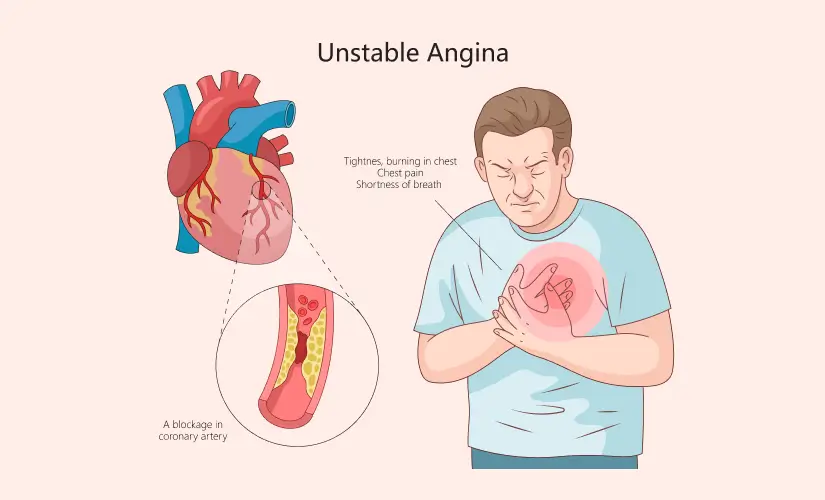
The chest pain from unstable angina comes suddenly without following any pattern. This condition belongs to the spectrum of acute coronary syndromes. Critical narrowing of arteries that supply blood to the heart makes immediate emergency treatment necessary. It strikes without warning—during rest, sleep, or with minimal activity. The pain episodes usually last longer than 15 minutes and don't improve with rest or medication. This condition warns that a heart attack could happen soon.
People with unstable angina might experience:
Coronary artery disease due to atherosclerosis causes most cases. Fatty plaque builds up along artery walls and restricts blood flow. Blood clots can also form on ruptured plaque and suddenly block arteries.
Several factors raise your risk, including:
Medical providers start with a full picture of your medical history and conduct a physical examination. They will listen to your heart for abnormal heart sounds and check for changes in blood pressure.
Diagnostic tests:
In some cases doctors might order additional tests. These include:
Hospital emergency departments typically start the treatment process. Standard approaches are:
Medications:
Doctors may recommend angioplasty with stent placement or coronary artery bypass surgery for severe cases.
Heart attack remains the biggest risk. Other complications include:
Immediately call emergency services if you experience:
You can reduce your risk by adopting some heart-healthy habits. These are
Your body sends a critical warning sign through unstable angina that needs quick action. This dangerous heart condition is different from stable angina, as it occurs without warning and points to a possible heart attack.
Quick diagnosis can save your life. A healthy lifestyle works better than treatment. Basic changes can make a big difference, like exercising regularly, eating heart-healthy foods with plenty of fruits and vegetables, and stopping smoking to lower your risk. People with diabetes or high blood pressure need to keep these conditions in check to protect their hearts.
Note that knowing the symptoms and risk factors helps you spot warning signs early and save vital minutes during a heart emergency. You can prevent most heart attack cases through awareness and active health care. Your heart never stops working for you, so it needs your care and protection through smart choices and quick medical help when needed.
Stable angina has a predictable pattern that occurs during activity and gets better with rest. Unstable angina strikes without warning, even during rest. The pain lasts more than 15 minutes and doesn't improve with rest or medicine.
Both conditions reduce blood flow, but unstable angina doesn't permanently damage your heart. It acts as a warning sign that a heart attack could happen soon. Without treatment, about 50% of unstable angina patients have heart attacks within 30 days.
Warning signs are:
Your risk goes up with age (average 62 years), smoking, high blood pressure, unbalanced cholesterol, and your family's heart disease history. Black patients typically show symptoms earlier than other groups.
Doctors recommend bypass surgery if you have severe blockages, especially in your left main artery or multiple affected arteries. You might need surgery if medications don't help or your heart function declines.
Yes, diabetes by itself raises complication risk in unstable angina patients. Women with diabetes face almost twice the risk compared to those without diabetes.
Yes, but not in every case. ST-segment depression or T-wave inversion on ECG might indicate unstable angina. A normal ECG doesn't rule out coronary artery disease, since only some patients show ST-segment depression at admission.
To Book an Appointment, call:
 +91 406 810 6585