




Follow Us
Back pain at night could indicate spinal tumour symptoms you shouldn't ignore. Night pain becomes worse and stands out as the most common warning sign when tumours develop in the spine.
Spinal cord tumours account for 15% of all central nervous system tumours. These masses of abnormal tissue grow within the spinal column or cord and can press against sensitive nerves. While less common than other cancers, these growths can have devastating effects. Secondary spinal tumours, which
spread from cancer elsewhere in the body, make up the majority of all spine tumours. Research shows that spine metastasis affects many cancer patients. The spinal column houses most spinal cancers, which usually don't reach the spinal cord. Early detection of spinal cord tumours is vital for diagnosis and treatment.
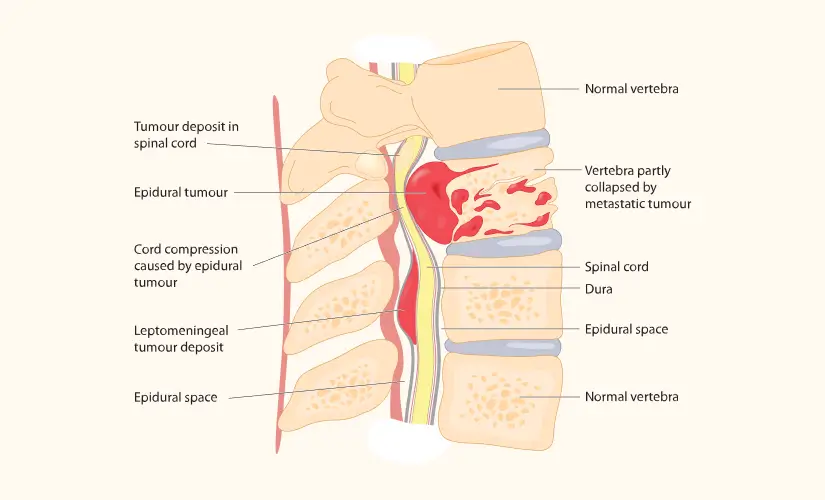
Spinal cord tumours emerge as abnormal masses that grow within or around the spine.
Doctors classify these tumours by their location:
Ependymomas and astrocytomas dominate the intramedullary tumour category. Adults typically develop ependymomas, whereas children more commonly face astrocytomas. Hemangioblastomas, meningiomas, schwannomas and neurofibromas represent other significant spinal cord tumour types.
Back pain remains the most telling sign, which often becomes worse at night. Other spinal cord tumour symptoms are:
Some tumours start directly in the spine (primary), while others spread from cancers elsewhere in the body (secondary). Scientists haven't pinpointed the exact cause of primary tumours yet, but environmental factors and genetic predisposition might play a role.
Risk factors include:
Spinal tumours can lead to permanent disability or death if left untreated. Surgery comes with its own set of risks including bleeding, infection, nerve damage, and spinal instability.
Doctors need a detailed approach to detect spinal cord tumours. They start with a full neurological examination to get a complete picture of reflexes, muscle strength, and coordination.
The diagnostic process may include several tests:
Each patient's treatment plan depends on their tumour type, location and overall health. Spinal cord tumour treatment options are:
You should talk to a doctor right away if you:
Treatment outcomes improve substantially with early diagnosis and help prevent serious complications.
Spinal cord tumours affect hundreds of thousands each year, despite their seemingly rare occurrence. The most telling warning sign is back pain that gets worse during the night. This condition might be frightening, but knowing what to look for can save lives.
Each type of tumour needs its own treatment plan. Early detection significantly improves a patient's outcome. Your body will often signal something's wrong through numbness, weakness, difficulty walking, or bladder problems along with persistent back pain.
These warning signs deserve your attention. Modern medical treatments work better than ever. Swift action helps prevent serious complications and boosts your recovery chances. Your spine supports every movement you make, so it deserves careful attention.
Spinal tumours are rare. Spinal cord tumours account for just a small percentage of all tumours in the central nervous system.
Treatment works effectively for many spinal tumours. Many patients live beyond five years if detected on time. Your prognosis depends on age, tumour type, and overall health.
Back pain stands out as the most common early warning sign and gets worse at night. Other signs include:
Most cases appear during a person's sixties, with the forties and fifties being the next most common ages. The numbers show the lowest rates in children.
Recovery spans weeks to months depending on the surgery type. Patients can usually start light activities after 3-4 weeks. Complex cases might need 3-6 months or more for full rehabilitation.