




Follow Us


Chat With Our Experts
Get second opinion on Whatsapp
Do heavy periods make your daily life difficult leaving you feeling drained and desperate for solutions? You're not the only one. Many women in India deal with severe symptoms from uterine fibroids often unsure about what to do with treatment options. Uterine artery embolisation gives women a way to treat fibroids while keeping their uterus. The procedure's minimally invasive nature helps treat fibroids and controls heavy uterine bleeding from different causes, including postpartum haemorrhage.
This article explains what UAE involves, its treatment process, benefits and risks, and answers common questions about this popular fibroid treatment option.
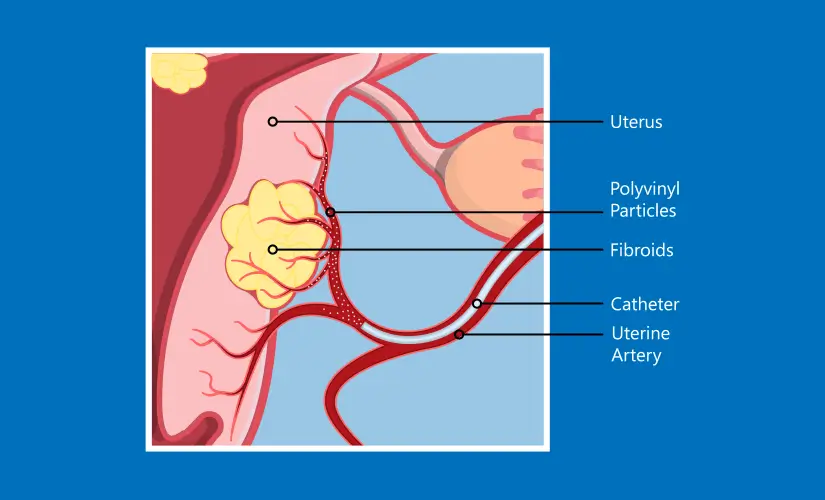
Fibroids are the most common non-cancerous growths in the uterus. Women who want to keep their uterus intact can benefit from uterine artery embolisation instead of major surgery. The procedure blocks blood flow to specific areas in the uterus. Uterine fibroids and other problematic tissues gradually shrink as their blood supply disappears. This smart approach lets you keep your uterus while treating several conditions effectively.
An interventional radiologist usually does this procedure. These experts treat conditions without major surgery by using small tools & innovative technology. Most women get UAE as outpatients with sedation and local anaesthesia instead of general anaesthesia.
UAE treats several conditions:
UAE doesn't suit everyone. You shouldn't get this procedure if you're pregnant, have a pelvic infection, suffer from blood vessel diseases, react badly to contrast dyes, or have fibroids without symptoms.
UAE lets doctors treat multiple fibroids at once and recovery happens faster than with traditional surgery. The procedure works well even if you have abdominal scar tissue from previous surgeries.
Best Uterine Artery Embolisation Doctors in India
Doctors recommend UAE when fibroids cause the following problems:
Before the Procedure
Your doctor needs a full picture of your health through a history review and diagnostic tests like MRI, hysteroscopy or ultrasound to find the cause of bleeding. A biopsy might be needed to check for cancer cells. You should stop taking aspirin, NSAIDs and blood thinners before treatment and fast according to instructions.
During UAE
An interventional radiologist performs this outpatient procedure that usually takes about 90 minutes. The doctor numbs your groin area with a local anaesthetic and makes a tiny puncture in your femoral artery. They make a small cut where your leg meets your pelvis (groin area). A thin, flexible tube called a catheter goes through this tiny opening into your leg artery. The doctor guides this catheter into your uterine arteries using X-rays, CT scans, or MRI.
The doctor injects small particles—about the size of sand grains—through the perfectly positioned catheter into your blood vessels. These particles stick to vessel walls and create clots that block blood flow to the fibroids. Your fibroids start shrinking over time without their blood supply.
After UAE
UAE helps the majority of women with fibroids get partial or complete symptom relief. Other benefits include:
UAE is generally safe but comes with potential risks:
Uterine artery embolisation (UAE) is an excellent choice for women dealing with uterine fibroids or abnormal bleeding. This gentle treatment helps shrink problematic growths and preserves your uterus - something that matters deeply to many patients. The recovery is quick. Most patients go home the same day and resume their regular routine in just 7-10 days. The disruption to daily life is minimal compared to major surgery.
Women need options to deal with fibroid issues. The UAE provides a middle ground between taking no action and having major surgery. Your doctor will help you determine if this treatment fits your needs.
UAE shows how far medicine has come. It handles complicated UAE cases with minimally invasive methods rather than major surgery. This treatment helps many women who struggle with heavy bleeding, pelvic pressure or pain. It revolutionises their life quality without the long recovery time or risks that come with more invasive procedures.
UAE results last differently for each person. Studies show remarkable success rates. Symptoms might return in some women within 3-5 years, and they might need more treatment. A second UAE procedure remains an option for persistent symptoms.
UAE causes less discomfort than a hysterectomy. The procedure avoids surgical incisions, which means:
Patients usually feel cramping for 2-7 days after UAE. Hysterectomy brings surgical pain and takes longer to heal. Notwithstanding that, both treatments help improve quality of life.
Long-term outcomes of UAE are:
Still Have a Question?