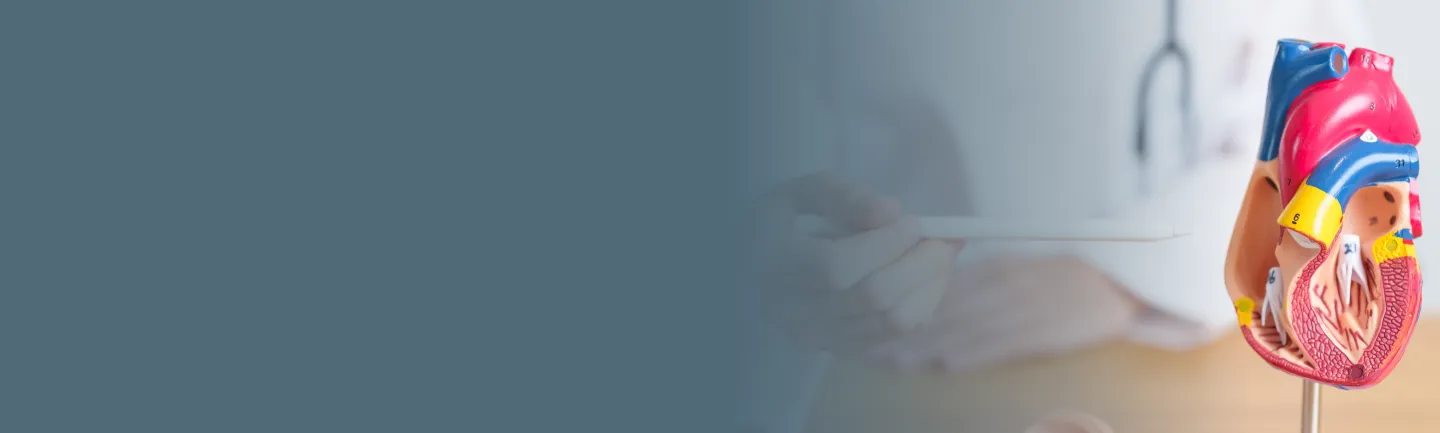
Coronary artery disease (CAD) is the most common cardiovascular disease worldwide. It develops when fatty deposits build up inside the arteries that supply blood to the heart muscles, narrowing them and reducing blood flow. In India, diagnoses are rising fast, driven by tobacco use, uncontrolled diabetes, high blood pressure, and poor diet. Ramkrishna CARE Hospitals, Raipur, offers full CAD evaluation and treatment ranging from non-invasive stress tests and CT (computed tomography) coronary scans to complex stenting and bypass surgery through a specialist heart team on call 24 hours a day.
Symptoms of Coronary Artery Disease
CAD can cause no symptoms at all (more common in diabetics), or it can cause serious chest pain. The type of symptom depends on how badly the artery is narrowed and how stable the fatty deposit is:
- Stable angina, including tight, heavy chest pain spreading to the left arm or jaw that comes on with exercise and goes away within five minutes of rest or a GTN (glyceryl trinitrate) tablet.
- Unstable angina, including chest pain at rest or with minimal effort signals a destabilised or partly clotted plaque and needs immediate hospital assessment.
- Breathlessness on effort without chest pain especially in women, older patients, and diabetics
- Palpitations during exercise.
Causes of Coronary Artery Disease
CAD develops over many years. Damage to the artery wall starts the process, and lifestyle and medical factors speed it up. Damage to the thin artery lining (endothelial dysfunction) allows LDL (low-density lipoprotein - harmful cholesterol) to leak into the wall, where white blood cells engulf it and form foam cells that clump into fatty streaks and grow into plaques. Thin-capped plaques are unstable and can rupture, triggering a clot that blocks the artery within minutes. High blood pressure, diabetes, raised cholesterol, tobacco, obesity and chronic kidney disease all accelerate this process.
Diagnosis of Coronary Artery Disease
Diagnosis combines clinical assessment, non-invasive tests for ischaemia and imaging to see the arteries directly:
- Resting ECG (electrocardiogram): Shows scarring or conduction problems, but a normal result does not rule out CAD.
- TMT (treadmill exercise stress testing): Generates a Duke Treadmill Score stratifying patients by cardiovascular risk.
- Stress echocardiography: Ultrasound during exercise or medicine infusion detects reduced wall movement and is preferred when the resting ECG is abnormal.
- MPI (myocardial perfusion imaging): Maps blood flow under stress
- CTCA (CT coronary angiography): Takes images of the arteries without a catheter;
- CAC (coronary artery calcium) score: Measures calcium deposits in the coronary arteries to estimate the risk of coronary artery disease
- Angiography: Invasive coronary angiography with FFR (fractional flow reserve) or iFR (instantaneous wave-free ratio) remains the most accurate method and guides treatment decisions.
Treatment for Coronary Artery Disease
Treatment is based on symptom severity, how much heart muscle is at risk, and the pattern of artery narrowing:
- OMT (optimal medical therapy) forms the foundation: high-intensity statins to lower LDL, antiplatelet drugs to prevent clots, a beta-blocker for angina, and an ACE inhibitor to lower blood pressure.
- PCI: Percutaneous coronary intervention or angioplasty is a wrist-access keyhole procedure in which a drug-eluting stent keeps the opened artery patent.
- CABG: Coronary artery bypass grafting is open-heart surgery in which the left internal mammary artery from the chest wall creates a new route around the blocked coronary artery. CABG gives better long-term results than PCI for complex three-vessel disease, left main disease, or multivessel disease.
- Cardiac rehabilitation after PCI, CABG or acute coronary syndrome reduces the risk of cardiovascular complications.
Risk of Coronary Artery Disease
Several factors raise the lifetime risk of developing CAD and many of them can be changed with treatment or lifestyle modification. They are:
- Hypertension (sustained systolic pressure above 130 mmHg) doubles coronary event risk at any given cholesterol level.
- Dyslipidaemia - raised LDL, raised triglycerides, and low HDL cause plaque buildup.
- Type 2 diabetes raises CAD risk two to fourfold.
- Tobacco, including bidi and smokeless tobacco activates platelets and raises clotting proteins.
- Chronic stress and depression also raise CAD risk through HPA (hypothalamic-pituitary-adrenal) axis activation.
Complications of Coronary Artery Disease
Left untreated or poorly managed, CAD leads to serious complications caused by worsening blood flow and unstable plaques:
- Acute MI (myocardial infarction or heart attack) from plaque rupture
- Ischaemic cardiomyopathy causes heart failure with reduced ejection fraction
- Sudden cardiac arrest from ventricular fibrillation
- Refractory angina
Why Choose Ramkrishna CARE Hospitals for Coronary Artery Disease Treatment in Raipur?
Ramkrishna CARE Hospitals, Raipur, brings together interventional cardiologists, cardiac surgeons, imaging specialists and rehabilitation physiotherapists to review complex cases at a weekly heart team meeting. Treadmill stress testing, stress echocardiography, CTCA with calcium scoring, and cardiac MRI are available in our hospital. The catheterisation laboratory runs 24 hours a day, achieving door-to-balloon times within 60 minutes for primary PCI, with same-day FFR and iFR assessment for planned procedures.
Complex PCI including left main intervention, bifurcation stenting, and rotational atherectomy, is guided by OCT imaging. CABG with donor artery grafting uses fast-track extubation to shorten hospital stays. Every patient after a revascularisation procedure is enrolled in cardiac rehabilitation and a secondary prevention programme, with regular cholesterol, blood pressure, and blood sugar checks to reduce the risk of further events.