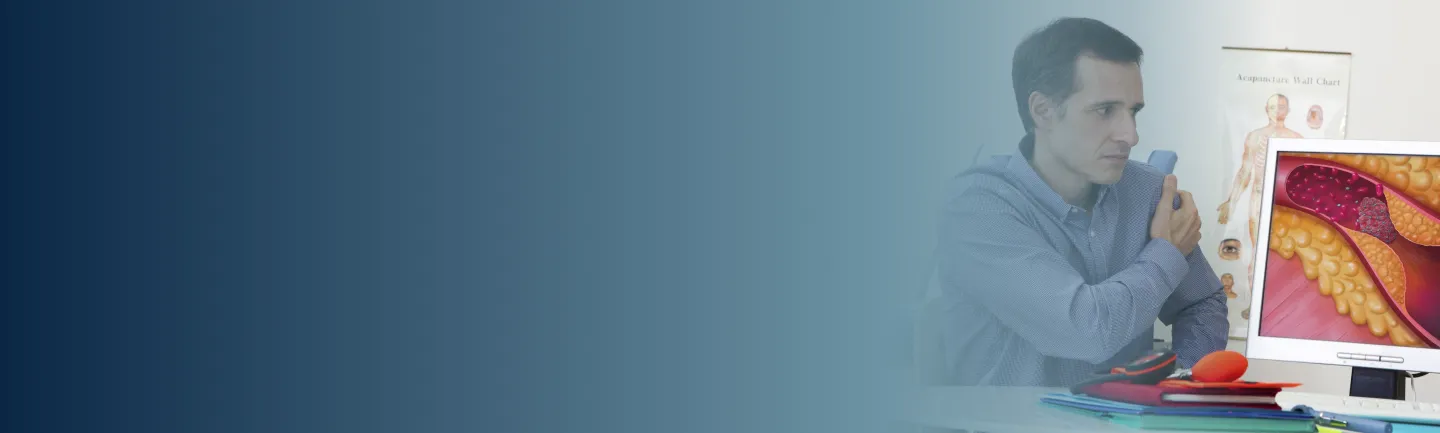
Peripheral artery disease (PAD) occurs when atherosclerosis (the build-up of cholesterol-rich plaque in artery walls) narrows or blocks arteries supplying the legs, arms, or abdominal organs. Reduced blood flow causes pain on walking, poor wound healing and, in severe cases, limb-threatening tissue necrosis. India has millions of people with PAD, significantly under-diagnosed particularly in patients with diabetes and tobacco use. Ramkrishna CARE Hospitals, Raipur provides complete peripheral artery disease assessment and treatment.
Symptoms of Peripheral Artery Disease
PAD symptoms depend on which arteries are affected and the severity of narrowing; the disease is often silent in its early stages. Common symptoms are:
- Intermittent claudication: It involves cramping pain in the calf, thigh, or buttock on walking that resolves with rest, caused by leg muscles outstripping their blood supply during exercise is the hallmark symptom of PAD.
- Rest pain: Persistent aching in the foot and toes, worse at night, relieved by hanging the leg indicates critical limb ischaemia (CLI) - severely reduced blood flow threatening limb viability. CLI also presents with non-healing ulcers, tissue gangrene or infection in the foot or lower leg.
Causes of Peripheral Artery Disease
Atherosclerosis is the major cause of the majority of PAD cases; the same arterial disease process that causes coronary artery disease affects the peripheral arteries:
- Lipid-rich plaque: They get deposited in the arterial intima (inner wall), triggering inflammation, smooth muscle proliferation, and progressive luminal narrowing.
- Tobacco: Smoking is the single most powerful PAD risk factor. Nicotine and carbon monoxide directly damage the arterial endothelium (inner lining), accelerate plaque formation, and cause blood vessel narrowing.
- Diabetes: It damages both large arteries through accelerated atherosclerosis and small arteries through microvascular disease making PAD in diabetic patients particularly severe and difficult to treat.
Diagnosis of Peripheral Artery Disease
Diagnosis is confirmed by measuring limb blood flow and imaging the affected arteries to plan treatment:
- ABI: Ankle-brachial index is the ratio of ankle systolic blood pressure to brachial systolic blood pressure, measured with a Doppler ultrasound probe. It is the standard screening test
- Duplex ultrasound: It locates the site and severity of stenosis (narrowing) or occlusion (complete blockage).
- CTA (computed tomographic angiography): It is a CT scan with contrast dye to detect blockage
- MRA (magnetic resonance angiography): It provides detailed mapping of the arterial tree
- Conventional catheter angiography: It is used when endovascular treatment is planned in the same session.
Treatment for Peripheral Artery Disease
Treatment aims to relieve symptoms, prevent limb loss, and reduce the very high cardiovascular risk that accompanies PAD:
- Medical management: It is the foundation of PAD treatment regardless of whether revascularisation is performed:
- Antiplatelet therapy reduces arterial clot risk.
- High-intensity statins lower LDL and stabilise plaque.
- ACE inhibitors reduce cardiovascular risk independently of blood pressure.
- Smoking cessation: It is the single most effective intervention to slow PAD progression and reduce major cardiovascular events.
- Endovascular revascularisation: It includes percutaneous transluminal angioplasty (PTA) - inflating a balloon inside the narrowed artery often followed by stent placement to maintain the lumen.
- Surgery: Surgical bypass grafting routes blood around a blocked arterial segment using a vein or synthetic graft. It is preferred for long or complex occlusions not suitable for endovascular treatment and for below-knee disease in critical limb ischaemia.
- Supervised exercise rehabilitation: It reduces claudication walking distance and is recommended for all patients with claudication.
Risk Factors for Peripheral Artery Disease
Most PAD risk factors overlap with those for coronary artery disease:
- Tobacco
- Diabetes mellitus
- Hypertension or high blood pressure
- Dyslipidaemia (abnormal blood lipids)
- Chronic kidney disease
- Age above 50
- A family history of cardiovascular disease
Complications of Peripheral Artery Disease
Untreated PAD leads to progressive limb and systemic vascular complications:
- Critical limb ischaemia causing rest pain, non-healing ulcers, and gangrene
- Myocardial infarction (heart attack)
- Stroke
- Acute limb ischaemia causing pain, pallor, pulselessness, and paralysis.
Why Choose Ramkrishna CARE Hospitals for Peripheral Artery Disease Treatment in Raipur
Ramkrishna CARE Hospitals, Raipur provides comprehensive PAD care through a dedicated vascular team of cardiologists and vascular surgeons. Diagnosis includes ABI measurement, duplex ultrasound, CTA angiography, and conventional angiography. All peripheral artery disease patients receive systematic risk factor optimisation including lipid lowering, antiplatelet therapy, smoking cessation support, and diabetes management before and after any revascularisation.
The hospital performs both endovascular revascularisation (balloon angioplasty and stenting) and open surgical bypass, with access to a hybrid operating theatre supporting complex multi-level arterial disease. Critical limb ischaemia cases are managed by a multidisciplinary limb salvage team. All patients are enrolled in a supervised exercise rehabilitation programme and long-term cardiovascular follow-up - serving patients from Raipur and across Chhattisgarh.