A generation ago, removing a cancer from the colon, stomach, or kidney meant a long abdominal incision, a week or more in the hospital, and months of recovery before a patient returned to normal life. Today, the same operations are routinely performed through three or four small incisions the size of a fingertip, with the surgeon viewing a magnified, high-definition image of the operative field on a monitor and controlling instruments that give far greater visualisation than open surgery could provide through a conventional incision.
Minimally invasive oncosurgery has transformed cancer surgery over the past three decades. For appropriate patients it achieves equivalent oncological outcomes with less pain, faster recovery, lower complication rates, and a return to normal life in weeks rather than months. At Ramkrishna CARE Hospitals, Raipur, laparoscopic oncosurgery is performed using HD Endovision and 3D laparoscopy by surgical oncologists with specialised training in minimally invasive surgery across gastrointestinal, urological, gynaecological and thoracic cancer surgery.
What is Minimally Invasive (Laparoscopic) Oncosurgery?
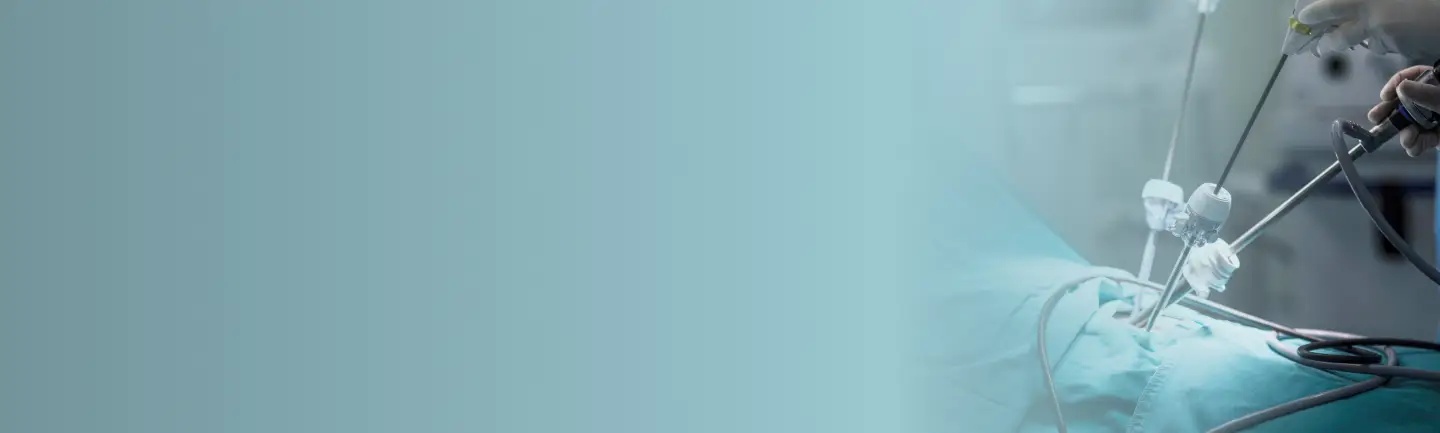
Laparoscopic surgery also called keyhole or minimally invasive surgery uses small ports of 5 to 12mm inserted through the abdominal or thoracic wall, through which a camera (laparoscope) and surgical instruments are introduced. Carbon dioxide gas is used to inflate the body cavity, creating the working space in which the surgeon operates. The surgeon views the operative field on a high-resolution monitor and at Ramkrishna CARE Hospitals, through HD Endovision systems providing magnified, crystal-clear visualisation of tissue planes, blood vessels and tumour anatomy.
3D laparoscopy provides depth perception not available with conventional 2D laparoscopy, allowing the surgeon to judge distances and tissue relationships with open surgery confidence. At Ramkrishna CARE Hospitals 3D laparoscopy bridges the gap between traditional laparoscopy and robotic surgery for complex cancer dissections.
Laparoscopic oncosurgery encompasses a wide range of cancer operations from laparoscopic colectomy to gastrectomy, nephrectomy and thoracoscopic lung resection. The oncological principles are identical to open surgery: clear resection margins, adequate lymph node clearance and tumour handling that minimises dissemination. Multiple randomised controlled trials confirm equivalent cancer control outcomes with better short-term recovery.
Why is Minimally Invasive Oncosurgery Performed?
Minimally invasive oncosurgery is performed to remove cancer effectively while giving comparable and better advantages:
- Equivalent cancer control: Randomised evidence confirms laparoscopic resection provides the same locoregional disease control and long-term outcomes as open surgery for colon, rectum, kidney and other sites
- Reduced complications: Lower wound infection, incisional hernia and post-operative ileus rates than large open surgery
- Faster access to adjuvant therapy: Shorter recovery means chemotherapy or radiation begins sooner in better nutritional and performance status
- Better pain management: Smaller incisions generate substantially less pain, allowing earlier mobilisation, deeper breathing and lower opioid requirements
- Shorter hospital stay: Discharge within two to five days versus a week or more for equivalent open surgery
- Earlier return to normal life: Light activity within two to three weeks and full activity within four to six weeks versus six to twelve weeks after open surgery.
Conditions Treated with Laparoscopic Oncosurgery
Laparoscopic oncosurgery is used to treat a variety of cancers where minimally invasive surgery offers safe and effective tumour removal. They are:
- Colorectal cancer: Laparoscopic colectomy and anterior resection are the most extensively performed laparoscopic cancer operations. Multiple studies confirm equivalent cancer outcomes with better short-term recovery. 3D visualisation significantly aids total mesorectal excision quality for low rectal cancer
- Gastric cancer: Laparoscopic gastrectomy with D2 dissection is commonly performed oncosurgery. It is a technically demanding surgery that gives equivalent nodal yield and cancer control to open gastrectomy in experienced hands
- Renal cell carcinoma: Laparoscopic radical and partial nephrectomy are performed for RCC. Partial nephrectomy for tumours less than 4cm preserves nephron function that provides equivalent cancer control to open surgery with less blood loss and shorter recovery
- Gynaecological cancers: Laparoscopic radical hysterectomy with pelvic lymph node dissection for cervical cancer and hysterectomy with staging for endometrial cancer
- Lung cancer: VATS lobectomy and segmentectomy for early-stage NSCLC and give equivalent cancer outcomes to open thoracotomy with significantly less chest wall pain and faster recovery
- Adrenal tumours: Laparoscopic adrenalectomy for adrenal adenomas, phaeochromocytoma and selected carcinoma is the near-universal standard approach
- Liver and pancreatic surgery: Selected laparoscopic liver resections for colorectal metastases and HCC and laparoscopic distal pancreatectomy for body & tail tumours that require advanced expertise and careful patient selection
- Gallbladder cancer: Laparoscopic surgery is used for selected early-stage gallbladder cancers, including incidentally detected cases and for carefully selected patients requiring additional cancer surgery
- Oesophageal cancer: Hybrid minimally invasive oesophagectomy combines thoracoscopic upper dissection with laparoscopic abdominal phase to remove the cancer while reducing surgical trauma and lowering the risk of lung related complications compared with conventional open two-cavity oesophagectomy.
Symptoms That May Require Laparoscopic Oncosurgery
Certain symptoms may indicate an underlying cancer that can be treated with laparoscopic oncosurgery:
- Haematuria leading to CT urogram and renal mass identification
- An incidentally discovered renal or adrenal mass on imaging
- A pulmonary nodule growing or metabolically active on PET CT, in a patient suitable for VATS resection
- Weight loss or early satiety leading to gastroscopy and gastric cancer diagnosis
- Jaundice or abdominal mass leading to CT diagnosis of a resectable hepatic or pancreatic tumour.
Diagnosis Before Laparoscopic Cancer Surgery
A detailed preoperative evaluation helps confirm the diagnosis, determine the stage of cancer and ensure the eligibility of laparoscopic surgery:
- Histological confirmation: Tissue biopsy confirming malignancy, cancer type and grade, determining surgical approach, resection extent and lymph node clearance required
- CT staging: Contrast-enhanced CT provides the anatomical roadmap including tumour size, local invasion, nodal involvement and vascular relationships determining whether laparoscopic resection is technically feasible
- MRI for specific indications: MRI pelvis for rectal cancer staging (mesorectal fascia involvement); MRI liver for hepatic lesion characterisation before resection
- PET CT - uMI 550: Suggested for cancers where occult distant metastases would make laparoscopic resection futile like gastric, colorectal, lung and gynaecological cancers. The uMI 550's 2.76mm resolution and Time-of-Flight imaging identify distant spread before committing to major surgery, preventing unnecessary operations in patients with occult metastatic disease
- Preoperative fitness assessment: Cardiac evaluation, lung function for thoracic procedures, nutritional status and medication review are done to identify and mitigate modifiable risk factors before surgery.
Risks and Possible Complications
Although Laparoscopic oncosurgery is safe but like other surgeries it carries certain risks. They are:
- Port-site complications: Bleeding, infection or hernia at port insertion sites generally less common than wound complications of larger open incisions
- Conversion to open surgery: In some cases, anatomical findings, adhesions or unexpected bleeding lead to conversion that is a clinical safety decision, not a failure and oncological outcomes are not compromised
- Organ injury: Injury to adjacent structures (ureter, bowel, major vessels, bile duct) during dissection
- Oncological risks: Positive margins, inadequate lymph node clearance or tumour cell dissemination during port-site insertion or specimen retrieval that can be minimised by appropriate technique including retrieval bags and frozen section margin analysis
- General surgical risks: Bleeding, infection, thromboembolic events and anaesthetic complications that are generally lower rates after laparoscopic versus open resection.
Benefits of Laparoscopic Oncosurgery
Laparoscopic surgery is a minimally invasive alternative to open surgery with several benefits:
- Smaller incisions: 3 to 4 ports of 5 to 12mm versus a 15 to 30cm open incision, producing significantly less pain and lower wound complication rates
- Magnified operative view: HD laparoscopy provides up to 10× magnification of tissue planes, vascular anatomy and nerve structures therefore the margin of error is minimal
- 3D depth perception: Restores spatial depth of the operative field for confident dissection in anatomically complex regions
- Less blood loss: Improved visualisation of small vessels reduces blood loss in most laparoscopic cancer procedures
- Lower infection rates: Smaller incisions and closed body cavity minimise wound infection and bacterial contamination
- Faster bowel recovery: Reduced bowel handling results in earlier return of bowel function and oral feeding
- Earlier mobilisation: Less pain allows earlier standing & walking, reducing deep vein thrombosis and pulmonary complication risk
- Equivalent oncological outcomes: The evidence base consistently demonstrates equivalent cancer control, lymph node clearance and long-term survival to open surgery in appropriate patients.
Why Choose Ramkrishna CARE Hospitals for Laparoscopic Oncosurgery in Raipur?
Choosing the right hospital for laparoscopic oncosurgery depends on surgical expertise, advanced technology and comprehensive cancer care and Ramkrishna CARE Hospitals offers all these:
- HD Endovision and 3D laparoscopy: Our theatres are equipped with HD Endovision and 3D laparoscopy for complex cancer dissections where depth perception is critical like rectal surgery in the pelvis, gastric D2 dissection and thoracoscopic dissection near mediastinal structures
- Subspecialty-trained surgical oncologists: laparoscopic cancer surgery is performed by surgical oncologists with specific advanced minimally invasive training. Outcome quality in laparoscopic oncosurgery is directly related to surgeon volume and subspecialty focus
- Multidisciplinary tumour board: Every patient is reviewed by surgical, medical, and radiation oncologists and radiologists before surgery is planned
- PET CT staging - uMI 550: 2.76mm resolution and Time-of-Flight imaging identifies occult metastatic disease before surgery preventing futile laparoscopic resection in patients whose disease has spread beyond what local surgery could address
- Integrated adjuvant therapy: Laparoscopic surgery is the surgical component of a complete programme and our team coordinates adjuvant chemotherapy and radiation therapy on the Elekta Versa HD with IMRT precision afterwards.
Conclusion
Minimally invasive oncosurgery has moved from innovation to clinical standard for many cancer types. Laparoscopic colectomy, nephrectomy, gastrectomy, hysterectomy and thoracoscopic lung resection are routinely performed with results equivalent to open surgery on cancer control and substantially better on recovery, pain and complication rates.
At Ramkrishna CARE Hospitals, Raipur laparoscopic oncosurgery is performed with HD Endovision and 3D laparoscopy by expert surgical oncologists, guided by uMI 550 PET CT staging and followed by integrated adjuvant therapy. For patients across Chhattisgarh, this level of surgical oncological care is available in Raipur.