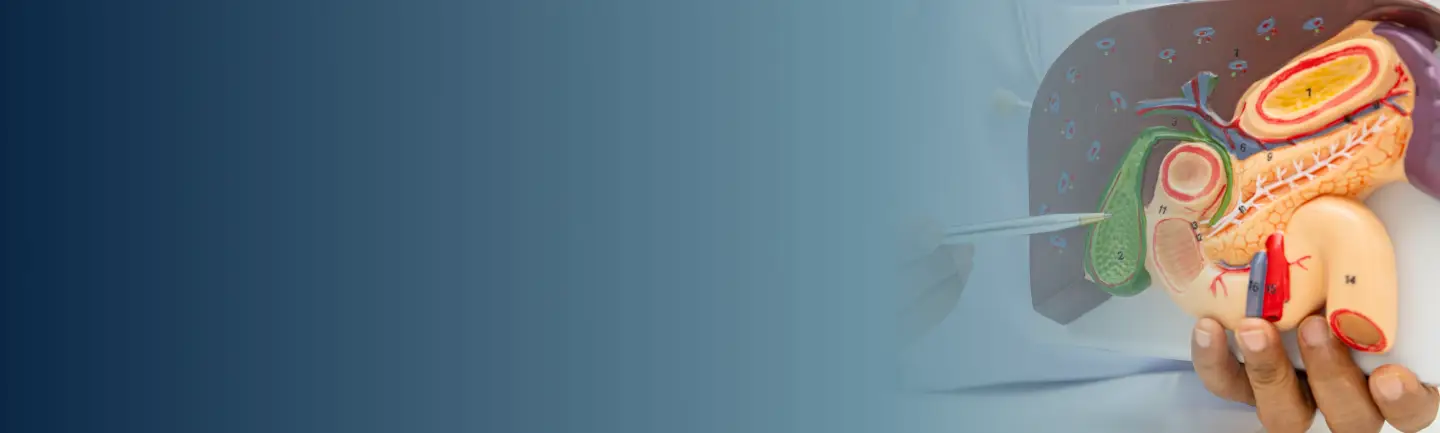
Gallbladder cancer is an uncommon but serious cancer that develops in the gallbladder, the small pear-shaped organ beneath the liver that stores bile. It is frequently discovered during a routine gallbladder removal for gallstones or diagnosed only once it has advanced enough to cause jaundice or noticeable pain. This tendency toward late detection is precisely why awareness, prompt evaluation of persistent symptoms, and access to experienced surgical oncology matter so much. For patients and families researching gallbladder cancer treatment in Raipur, understanding the disease, its warning signs, and the treatment pathway available locally can make the difference between an early, more treatable diagnosis and one found only at an advanced stage. This article explains what gallbladder cancer is, its symptoms, causes, and the treatment options available at each stage.
What Is Gallbladder Cancer
The gallbladder is a small organ tucked beneath the liver that stores and concentrates bile, a digestive fluid used to break down fat in the small intestine. Gallbladder cancer develops when cells within the gallbladder wall grow abnormally. The most common form is adenocarcinoma, cancer arising from the glandular cells lining the organ. Because the gallbladder sits directly against the liver so tumours can invade liver tissue relatively early in the disease course and the organ's thin wall offers little natural barrier against local spread.
When Should You Seek Treatment for Gallbladder Cancer?
Timing matters enormously with this disease, and certain situations warrant immediate evaluation and treatment:
- Any suspicious finding on gallbladder imaging, including irregular wall thickening or a mass.
- A gallbladder polyp larger than one centimetre.
- Persistent right upper abdominal pain lasting more than a few weeks particularly alongside weight loss or jaundice.
- An incidental cancer finding during routine gallbladder removal for gallstones requires immediate referral for staging and extensive treatment.
- Because porcelain gallbladder, a condition where the gallbladder wall becomes calcified, carries an elevated cancer risk, it is generally treated with removal even without confirmed cancer.
Symptoms of Gallbladder Cancer
Early gallbladder cancer frequently causes no symptoms at all, which is a major reason it is often diagnosed later than other cancers. When symptoms develop, they can cause:
- Persistent pain in the right upper abdomen, sometimes mistaken for ordinary gallstone pain.
- Jaundice (a yellowing of the skin and eyes) develops once a tumour blocks the bile ducts.
- Nausea and vomiting, often intermittent in earlier stages and more persistent as the disease progresses.
- Because a growing tumour can be felt on physical examination in some patients, an abdominal lump or mass is occasionally the first noticed sign.
- Unintended weight loss frequently accompanying more advanced disease.
- Abdominal bloating or a feeling of fullness as the disease progresses.
- Fever particularly when a blocked bile duct leads to infection within the biliary system.
- Dark urine and pale stools can accompany jaundice once bile flow becomes significantly obstructed.
Causes of Gallbladder Cancer
The precise trigger is not always identifiable though several well-documented pathways contribute to the disease. They are:
- Chronic gallstone disease is the most strongly established risk factor, with larger and longer-standing stones carrying greater associated risk.
- Porcelain gallbladder where calcium deposits harden the gallbladder wall is linked to a higher cancer risk.
- Gallbladder polyps, particularly larger ones can occasionally represent early cancerous or precancerous change.
- Chronic bacterial infection of the gallbladder including long-term carriage of Salmonella typhi, has been linked to increased cancer risk in some populations.
- Congenital abnormalities of the bile duct pancreatic junction raise risk because abnormal drainage increases exposure of gallbladder tissue to digestive enzymes.
- Chronic inflammation of the gallbladder wall over many years may cause the cellular changes that lead to cancer gradually.
- Exposure to certain industrial chemicals has been suggested as a contributing factor in some occupational studies.
Risks of Gallbladder Cancer
Certain groups face a distinctly higher likelihood of developing this cancer. They are:
- Women are diagnosed with gallbladder cancer considerably more often than men.
- Age above 65, since risk climbs steadily with advancing age.
- A long-standing history of gallstones, particularly large stones present for many years.
- Obesity, which is independently linked to both gallstone formation and gallbladder cancer risk.
- A diagnosis of porcelain gallbladder or gallbladder polyps larger than one centimetre.
- Because genetics can influence gallstone formation and gallbladder structure, a family history of gallbladder cancer or gallstone disease raises individual risk.
Complications
Because of how close the gallbladder sits to the liver and major bile ducts, complications can develop relatively early in the disease. These are:
- Direct invasion into the liver is common, given the gallbladder's position immediately adjacent to the liver surface.
- Bile duct obstruction causes jaundice and can lead to infection within the biliary system if not addressed.
- Spread to nearby lymph nodes is frequently present even at the time of diagnosis, which significantly affects staging and treatment planning.
- Distant spread most often to the liver, lungs, or peritoneum can occur in more advanced disease.
- Bowel obstruction can develop in advanced cases where the tumour or its spread affects nearby digestive structures.
- Recurrent infection of the biliary system (cholangitis) can occur when bile flow remains obstructed for an extended period.
Diagnosis of Gallbladder Cancer
Diagnosis typically combines imaging, blood tests and tissue confirmation to establish both the presence and extent of disease. Investigations are:
- Abdominal ultrasound is often the first test performed and can reveal gallbladder wall thickening or a mass.
- CT or MRI imaging of the abdomen provides more detailed staging information and checks for spread to the liver, lymph nodes or distant sites.
- MRCP (magnetic resonance cholangiopancreatography) gives a detailed view of the bile duct system, particularly useful when jaundice suggests ductal involvement.
- Tumour markers including CA 19-9 and CEA can support the diagnosis.
- A biopsy obtained through fine-needle aspiration or during surgery provides definitive tissue confirmation.
- Staging laparoscopy is occasionally used before major surgery to check for small-volume disease spread not visible on standard imaging.
- Liver function blood tests help assess the extent to which bile flow has been affected and guide the urgency of further intervention.
Treatments of Gallbladder Cancer
Treatment depends heavily on the stage at diagnosis:
- Simple cholecystectomy: Removal of the gallbladder alone is sufficient for very early-stage cancers confined to the inner lining.
- Extended or radical cholecystectomy: Removing the gallbladder along with a margin of liver tissue and nearby lymph nodes is required for more advanced but still resectable disease.
- Chemotherapy: Chemotherapy is used both after surgery (to reduce recurrence risk) & in unresectable or metastatic disease as the primary treatment approach.
- Radiation therapy: This can be used alongside chemotherapy in select cases particularly when surgical margins are of concern.
- Stenting: For patients with a blocked bile duct, stenting can relieve jaundice and improve comfort, particularly when curative surgery is not possible.
- Palliative care: Focused on symptom control and quality of life, it plays an important role in advanced disease alongside any active cancer treatment.
- Adjunctive treatment: Pain management, nutritional support, and psychological care are integrated throughout treatment regardless of disease stage.
Benefits of Early Gallbladder Cancer Treatment
Catching and treating gallbladder cancer at an earlier stage produces a meaningfully better outlook across several measures. They are:
- Complete surgical removal is far more achievable when the cancer is confined to the gallbladder wall itself.
- Survival rates for early-stage gallbladder cancer are substantially higher than for disease diagnosed at a later stage.
- Earlier treatment often means a smaller operation since extensive liver resection becomes unnecessary when the cancer has not spread beyond the gallbladder.
- Complications like jaundice, bile duct obstruction, and liver invasion are less likely when treatment begins before the disease progresses.
- Because less extensive treatment is generally needed, recovery time and overall quality of life during treatment tend to be better with earlier intervention.
- Long-term follow-up burden is generally lighter after early-stage treatment as the risk of recurrence is meaningfully lower.
Prevention
While gallbladder cancer cannot always be prevented, several steps meaningfully reduce risk. They are:
- Prompt treatment of symptomatic gallstones rather than prolonged watchful waiting reduces years of chronic gallbladder inflammation.
- Regular monitoring and surgical removal (where appropriate) of gallbladder polyps larger than one centimetre.
- Because a porcelain gallbladder carries a clear cancer association, surgical removal is generally recommended once this condition is identified.
- Maintaining a healthy body weight reduces both gallstone formation and independent gallbladder cancer risk.
- Treating chronic gallbladder infections promptly limits the long-term inflammation linked to cancer development.
- Patients with a strong family history of gallbladder cancer or gallstone disease benefit from earlier more attentive monitoring.
- A diet enriched in fruits and vegetables with limited processed and fatty foods supports overall gallbladder & digestive health.
Why Choose Ramkrishna CARE Hospital for Gallbladder Cancer Treatment in Raipur?
Ramkrishna CARE Hospital, Raipur brings together surgical oncologists with specialised expertise in hepatobiliary surgery along with medical oncologists and radiation specialists to manage gallbladder cancer at every stage. Advanced imaging including CT, MRI and MRCP, combined with an on-site pathology laboratory, allows accurate staging and surgical planning without the delays of coordinating between multiple centres, which matters considerably given how quickly this disease can progress.
Every patient seeking gallbladder cancer treatment in Raipur benefits from a review by a multidisciplinary tumour board where surgeons, oncologists, and radiologists agree together on the most appropriate combination of surgery, chemotherapy and radiation. Comprehensive post-operative care including pain management and structured recovery support, along with coordinated follow-up monitoring, ensures continuity of care from the first consultation through long-term surveillance for patients across Raipur and the surrounding region.