



-
Centre of Excellence
Specialties
Treatments and Procedures
 HyderabadCARE Hospitals, Banjara Hills CARE Outpatient Centre, Banjara Hills CARE Hospitals, HITEC City CARE Hospitals, Nampally Gurunanak CARE Hospitals, Musheerabad CARE Hospitals Outpatient Centre, HITEC City CARE Hospitals, Malakpet
 Raipur
 Bhubaneswar
 Visakhapatnam
 Nagpur
 Indore
 Chh. Sambhajinagar
 Clinics & Medical Centers


-

-

-

-

-

-
Follow Us

Epicondylitis
Symptom, Causes, Diagnosis and Treatment
Epicondylitis (Tennis/Golfer’s Elbow)
Golfer's elbow isn't just a problem for golf players, despite what its name suggests. Medically called medial epicondylitis, this tendonitis creates pain & inflammation in the tendons (linking the forearm to the elbow). People don't usually notice the condition right away because it develops slowly over weeks or months.
The main symptom shows up as pain running from the elbow to the wrist along the palm side of the forearm. The condition is different from tennis elbow (golfer's elbow hurts on the inner elbow while tennis elbow affects the outer side). These problems become more frequent with age, and people over forty face the highest risk. Patients who do not seek treatment might end up with lasting issues like chronic pain, a weaker grip and limited elbow mobility.
Let's look at the complete picture of epicondylitis to understand what triggers it, who needs to be careful, how doctors spot it, what treatments work best, and ways to keep your elbows healthy without pain.
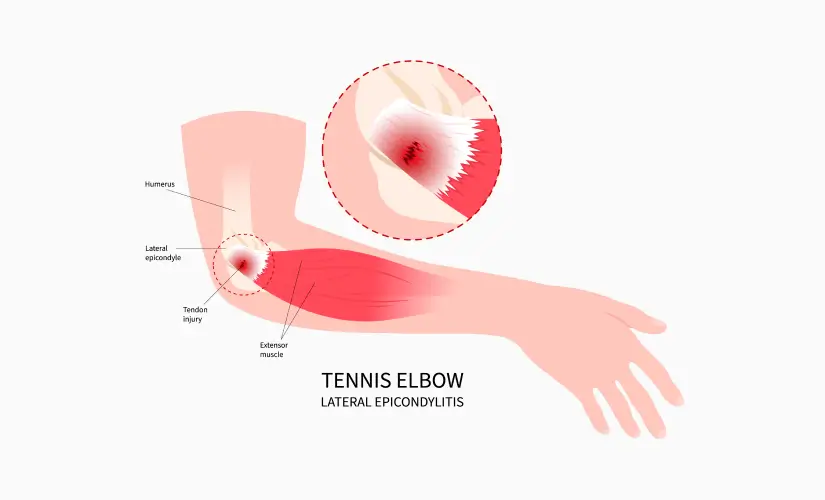
What is Epicondylitis (Tennis Elbow)
Tennis elbow (lateral epicondylitis) affects the outer elbow's tendons that help bend the wrist backwards. The extensor carpi radialis brevis (ECRB) muscle takes most of the strain. Only 10% of people with this condition are tennis players.
Golfer's elbow (medial epicondylitis) shows up on the elbow's inner side and affects tendons that bend the wrist toward the palm. Both conditions create tiny tears in tendon attachments, known as tendinosis.
Symptoms of Epicondylitis
Pain stands out as the main symptom of epicondylitis. People with tennis elbow experience:
- Sharp or burning pain in their elbow's outside
- Pain that runs down from the forearm to the wrist
- More pain when they twist or bend their arm
- A weaker grip
- Stiffness with occasional swelling
Daily activities make the pain worse, especially those that need gripping or extending the wrist. Simple tasks become challenging—turning doorknobs, opening jars, or shaking hands hurts. The dominant arm usually shows these symptoms.
Causes of Epicondylitis
Overuse leads to epicondylitis. The tendon degenerates from tiny tears caused by repeated stress on the forearm muscles.
Activities that often trigger this condition include racquet sports, golf, painting, carpentry, typing, and using vibrating tools. Using the wrong techniques in sports or unsuitable equipment can make things worse.
Risk Factors
Your chances of developing epicondylitis increase with certain factors:
- Age: People between 30-50 years face the highest risk
- Sex: Women's risk is higher than men's
- Occupation: Manual labour raises the risk
- Regular lifting of objects over 20kg
- Repetitive movements for more than two hours daily
- Smoking and obesity
- Weak shoulder and wrist muscles
Complications
If not treated, epicondylitis can lead to:
- Chronic pain lasting months or years
- Permanent grip weakness
- Limited motion
- Risk of tendon rupture
- Chronic tendinosis
Diagnosis
Doctors use several epicondylitis tests (including but not limited to):
- Physical examination: The doctor checks for specific pain points and movements that trigger discomfort
- X-rays: These help rule out arthritis or fractures
- MRI scans: These reveal tendon damage and the extent of injury
- EMG (electromyography): This test helps eliminate nerve compression as a cause
Treatment of Epicondylitis
- Nonsurgical approaches help the majority of patients recover.
- Rest serves as the lifeblood of recovery and allows small tendon tears to heal. Patients typically recover in 6 to 12 months.
- Applying ice packs for fifteen to twenty minutes (3-4 times daily) helps reduce inflammation.
- Over-the-counter pain relievers help ease discomfort.
- Wearing a counterforce brace on the forearm reduces strain on injured tendons
- Physical therapy exercises help strengthen forearm muscles. On top of that, doctors might recommend:
- Steroid injections to provide short-term relief
- Platelet-rich plasma (PRP) injections using your own blood platelets
- Shock wave therapy to promote healing
- Surgery: Doctors consider surgery after six to twelve months of unsuccessful conservative treatment. Open surgery or arthroscopic techniques show higher success rates.
Advent of Low-Dose Radiation Therapy (LDRT) in Epicondylitis Treatment
Low-Dose Radiation Therapy (LDRT) is a new ray of hope that has arrived as a non-surgical and painless treatment option for chronic epicondylitis. With the help of small doses of ionizing radiation to the affected tendon area, LDRT brings up anti-inflammatory and pain-relieving effects without damaging your healthy tissue. LDRT can reduce pain, improve mobility and decrease the need for surgery in chronic joint pain patients. It modulates inflammatory cytokines and stimulates tissue repair processes, making it a valuable adjunct or alternative in managing chronic epicondylitis.
When to See a Doctor
You should seek medical attention right away if:
- Your elbow looks misshapen
- The area feels hot with fever
- You can't bend your elbow
- Your hand feels numb or weak
Prevention of Epicondylitis
Your body's movement patterns and response to repeated activities hold the key to preventing epicondylitis. Strong forearms are vital to avoid both golfer's elbow and tennis elbow.
- Proper warm-up makes everything work better before you start any physical activity. A light jog or brisk walk for 5-10 minutes will get blood flowing to your muscles. Your forearm muscles need stretching next to boost flexibility and ready them for action.
- Strengthen your forearm muscles with these exercises:
- Wrist curls and reverse wrist curls with light weights
- Tennis ball squeezes to build grip strength
- Eccentric exercises that target the wrist extensor muscles
The right technique makes all the difference, especially in sports. Golfers should keep their balance with slightly bent knees and hips and avoid slouching. Tennis players need to rotate their upper body and hips together when hitting the ball. Professional coaching helps ensure your form doesn't strain your tendons unnecessarily.
Your equipment choice matters a lot. Golfers might want to switch to lighter graphite clubs instead of heavier traditional ones. Tennis players should pick racquets that match their body type in grip size and weight.
Your body sends important signals. Pain serves as a warning system—any activity should stop immediately if the pain level is high. Taking breaks every 30-60 minutes during repetitive tasks lets tissues recover properly.
People in recovery should stay away from certain activities. Bench presses, push-ups, chin-ups, and dumbbell curls put too much stress on the elbow joint. The risk runs higher for painters, plumbers, carpenters and butchers because of their job requirements.
Prevention goes beyond physical methods. Risk factors like excess weight, an inactive lifestyle or smoking can raise your chances of developing epicondylitis by a lot.
Conclusion
Epicondylitis might seem like a complex medical term, but knowing this condition helps you spot early warning signs and get treatment before complications arise. Tennis and golfer's elbow happen because repetitive strain damages the tendons connecting your forearm muscles to your elbow. These conditions don't just affect athletes, despite what their names suggest. Anyone who makes repeated arm movements risks developing them.
Taking preventive steps works better than treating the condition later. A few simple changes can significantly help. Your body sends signals through pain. Pushing through discomfort can turn a minor problem into a long-term issue that lasts months or years. Epicondylitis usually improves with proper care. Knowledge about why it happens, its symptoms and prevention strategies can help protect your elbows. This maintains the strength & mobility you need for daily activities. The care you give your elbows today will make your future self grateful.
FAQs
1. What is the main cause of epicondylitis?
Repetitive arm movements are the biggest trigger for epicondylitis. Your tendons develop microscopic tears when you grip, twist or extend your wrist repeatedly, causing pain & inflammation. People who work with their hands (painters, plumbers & carpenters) have a higher risk.
2. How long does it take for epicondylitis to heal?
Most people recover within 6-12 months with proper care. Recovery time depends on how severe your condition is and how well you follow treatment plans. The good news is that the majority of patients make a full recovery within a year. Mild cases often show rapid improvement (in just six to twelve weeks).
3. What is the fastest way to heal elbow tendonitis?
Rest is the lifeblood of recovery. Here's what helps:
- Ice the area for 15 minutes several times each day
- Use a counterforce brace to protect your tendon
- Take anti-inflammatory medications as prescribed
- Do targeted strengthening exercises
4. What should I avoid with elbow tendonitis?
Your symptoms will tell you what to avoid. Don't push your elbow into extreme positions—either too straight or too bent. Your grip and twisting movements need to be limited. Lifting heavy objects with a straight arm is a big no-no. Stop any activity right away if you feel pain.
5. What happens if elbow tendonitis goes untreated?
Untreated epicondylitis can turn into chronic tendonitis with scar tissue. Your tendons might weaken and could even rupture, leading to surgery. The condition can worsen into tendinosis—where your tendons degenerate and develop abnormal blood vessels. Simple daily tasks like eating or brushing your teeth become painful challenges.

Still Have a Question?


