



-
Centre of Excellence
Specialties
Treatments and Procedures
 HyderabadCARE Hospitals, Banjara Hills CARE Outpatient Centre, Banjara Hills CARE Hospitals, HITEC City CARE Hospitals, Nampally Gurunanak CARE Hospitals, Musheerabad CARE Hospitals Outpatient Centre, HITEC City CARE Hospitals, Malakpet
 Raipur
 Bhubaneswar
 Visakhapatnam
 Nagpur
 Indore
 Chh. Sambhajinagar
 Clinics & Medical Centers


-

-

-

-

-

-
Follow Us

Rotator Cuff Tendinitis
Symptom, Causes, Diagnosis and Treatment
Rotator Cuff Tendinitis
Shoulder pain can strike at any age, and rotator cuff tendinitis stands out as one of the most common culprits. Doctors have found that shoulder impingement and related rotator cuff problems cause about half of all shoulder pain cases. The condition doesn't happen overnight—it builds up slowly as repeated stress damages the rotator cuff tendons. Your risk goes up substantially as you age. Left untreated, rotator cuff tendinitis can get worse and tear the tendon completely. Here's the bright side—most people bounce back completely when they get the right diagnosis and treatment. This article explains the rotator cuff tendinitis symptoms, causes, and natural solutions to rotator cuff pain.
What is Rotator Cuff Tendinitis?
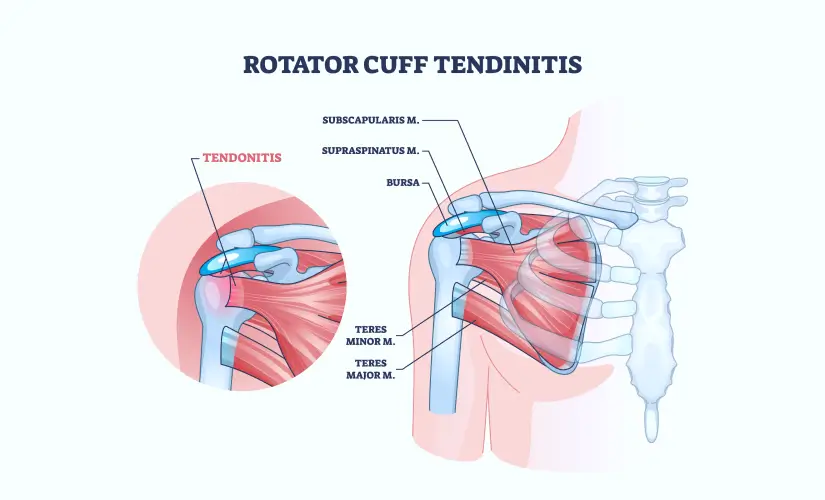
Your shoulder tendons can become swollen and painful, resulting in rotator cuff tendinitis. The rotator cuff has four muscles that keep your shoulder joint stable and help you move your arm, especially overhead. You won't notice this condition right away—it develops slowly as your tendons experience repeated stress. The bursa, a small fluid-filled sac that cushions your joint, often becomes inflamed among other tendons.
Symptoms of Rotator Cuff Tendinitis
Rotator cuff tendinitis starts with mild symptoms that get worse and appear as:
- Dull pain and swelling around your shoulder
- Limited arm movement and weakness
- Pain during arm raising or lowering
- Discomfort while reaching behind your back
- Clicking sounds as you move your shoulder
- Night pain that affects your sleep
- Stiffness and reduced mobility
Causes of Rotator Cuff Tendinitis
Overuse causes most cases of rotator cuff tendinitis. Your rotator cuff tendon can get pinched between your upper arm bone and acromion (part of the shoulder blade) when you lift or move your arm overhead repeatedly. This pinching, called impingement, irritates your tendon. Calcium deposits in tendons, direct shoulder injuries, or repetitive arm movements can also cause this condition.
Risk Factors
Your risk of developing this condition increases with:
- Age over 50 years
- Diabetes
- Work that needs arm elevation above 90°
- Sports with overhead movements (swimming, tennis, baseball)
- Jobs that require repetitive lifting or overhead reaching
- Loose joints or unusual shoulder anatomy
Complications
Rotator cuff tendinitis can lead to serious problems without proper treatment.
- Partially or completely tear
- Chronic pain
- Loss of significant motion or strength
- Your damaged tendons can gradually weaken, making everyday activities like getting dressed or reaching for objects more painful and difficult.
Diagnosis of Rotator Cuff Tendinitis
Doctors use these diagnostic tools:
- Physical examination - Testing the range of motion and checking for pain with specific movements
- X-rays - These can show bone spurs or rule out other conditions
- MRI or ultrasound - Shows inflammation, fluid build-up, or possible tears in the rotator cuff
Your doctor might use a numbing agent before the evaluation because pain can make it hard to test strength properly.
Treatment of Rotator Cuff Tendinitis
The treatment focuses on reducing inflammation and getting your function back.
- Non-surgical treatments:
- Rest - Take breaks when activities cause pain
- Ice therapy - Use ice packs for 15-20 minutes multiple times each day
- Anti-inflammatory medications - Over-the-counter NSAIDs help with pain and swelling
- Physical therapy - You will do exercises to build strength and mobility once pain decreases
- Corticosteroid injections - These can give temporary relief for ongoing pain
- Surgical intervention: Surgery might become necessary if pain persists after months of standard treatment. Doctors use surgical options to create more space for the rotator cuff by removing inflamed bursa tissue or bone spurs. The recovery time ranges from two to four weeks, though tough cases could take several months.
Low-Dose Radiation Therapy (LDRT) for Rotator Cuff Tendinitis
Low-Dose Radiation Therapy is a non-invasive alternative that can bring immense relief to you if you have persistent inflammation or pain. It uses highly targeted, low doses of radiation and reduces inflammatory cell activity within your shoulder tissues.
LDRT can ease pain, improve mobility and help control chronic inflammation when medications, physical therapy, or injections are not providing lasting relief. The treatment is completely non-surgical, painless, and well-tolerated. It is performed in short outpatient sessions and may help delay or avoid the need for surgery.
When to See a Doctor
You should contact your doctor if you notice:
- Pain that doesn't go away with rest
- Discomfort even when resting
- Numbness or weakness moving down your arm
- Pain that gets worse with movement
- Swelling you can see near your shoulder joint
Prevention
You can prevent rotator cuff tendinitis much easier than treating it after it develops. Age might be beyond our control, but several practical steps can reduce your risk of this painful shoulder condition.
- Good posture is the foundation of shoulder health. Your rotator cuff tendons strain when you sit or stand with rounded shoulders. A straight spine and pulled-back shoulders help distribute forces evenly across your shoulder joint. This simple change makes a big difference, especially if you spend long hours at your desk.
- Using proper technique matters just as much, particularly when moving your arms. Learning to lift objects correctly at work or in the gym protects your shoulders from extra stress. Quick, jerky shoulder movements can cause tiny tears in your tendons, so it's best to avoid them.
- Smart workplace changes help people who need to reach overhead often. Regular breaks, task rotation & properly adjusted work surfaces reduce the strain on your shoulders.
- If you play sports with overhead movements like tennis or swimming, go for proper conditioning first. You should start slowly & gradually build up intensity to give your tendons time to adapt.
- A balanced exercise programme should include these:
- Gentle shoulder stretches to maintain flexibility
- External and internal rotation exercises using resistance bands
- Scapular stabilisation movements to support shoulder function
- Core strengthening to improve overall posture
Even with perfect prevention strategies, watch for early warning signs. Don't ignore mild shoulder stiffness or discomfort during overhead activities. Address these issues before they turn into serious tendinitis.
Easy-to-adapt habits (mindful daily activities, appropriate exercise and quick attention to minor problems) protect your vital joints throughout life.
Conclusion
Rotator cuff tendinitis affects countless people, particularly those over 50. This shoulder condition creeps up slowly and gets worse if you don't take care of it. The good news is that most patients make a complete recovery with proper treatment. Quick action can make a huge difference. A minor inflammation could turn into a torn tendon if you wait too long, and that might need surgery.
A pain-free life is possible even after shoulder problems. Your shoulders handle countless daily tasks and deserve proper care. Healthy shoulders throughout life depend on understanding risks, getting prompt treatment, and developing good habits. Small changes today ward off major problems tomorrow.
FAQs
1. How long does it take for rotator cuff tendonitis to heal?
The healing time depends on how bad the injury is.
- Mild cases (Grade 1) usually get better in 2-4 weeks.
- Moderate tendonitis (Grade 2) can take several weeks to months to heal
- Severe cases (Grade 3) might need 3-6 months.
- Some stubborn cases take more than six months to heal completely.
Your recovery speed really depends on rest, proper treatment, and following your doctor's advice.
2. How to tell the difference between a rotator cuff tear and tendonitis?
Tendonitis means inflammation, but tears show actual damage to the structure. Pain from tendonitis gets better with rest, but tear pain stays intense and won't go away. Tendonitis causes mild to moderate pain that gets worse with certain movements. Tears hurt even when you are not using your shoulder. You can spot another key difference: tendonitis hurts, but your strength stays normal, while tears cause both pain and weakness.
3. How to tell the difference between rotator cuff tendinitis vs frozen shoulder?
The biggest difference shows up in how you can move. Rotator cuff problems might limit your movement, but you can still lift your arm with help. A frozen shoulder makes lifting hard whatever help you get. A frozen shoulder also develops in stages—freezing, frozen, and thawing. The pain from rotator cuff problems feels sharper and stays in one area.
4. What to avoid with rotator cuff tendonitis?
Stay away from reaching or lifting things above your head, and don't throw anything. Skip exercises like dips, overhead presses, lat pulldowns, and upright rows. Mild pain isn't something to ignore—it could make inflammation worse. Don't sleep on the sore shoulder or carry things on that side. Remember that just taking medicine won't fix why it happens.

Still Have a Question?


