



-
Centre of Excellence
Specialties
Treatments and Procedures
 HyderabadCARE Hospitals, Banjara Hills CARE Outpatient Centre, Banjara Hills CARE Hospitals, HITEC City CARE Hospitals, Nampally Gurunanak CARE Hospitals, Musheerabad CARE Hospitals Outpatient Centre, HITEC City CARE Hospitals, Malakpet
 Raipur
 Bhubaneswar
 Visakhapatnam
 Nagpur
 Indore
 Chh. Sambhajinagar
 Clinics & Medical Centers


-

-

-

-

-

-
Follow Us
Knee Pain When Bending: Causes, Diagnosis, and Treatment Options
Bending the knee is something people do hundreds of times a day, such as sitting down, climbing stairs, and squatting to pick something up. When that movement starts to hurt, it affects far more than just physical comfort. Knee pain when bending has several possible causes. Sports injuries, worn cartilage, a torn meniscus, an inflamed tendon, and a swollen bursa each produce pain in a slightly different location and in a different pattern. This article explains what causes knee pain when bending, how it is investigated, and what treatment looks like.
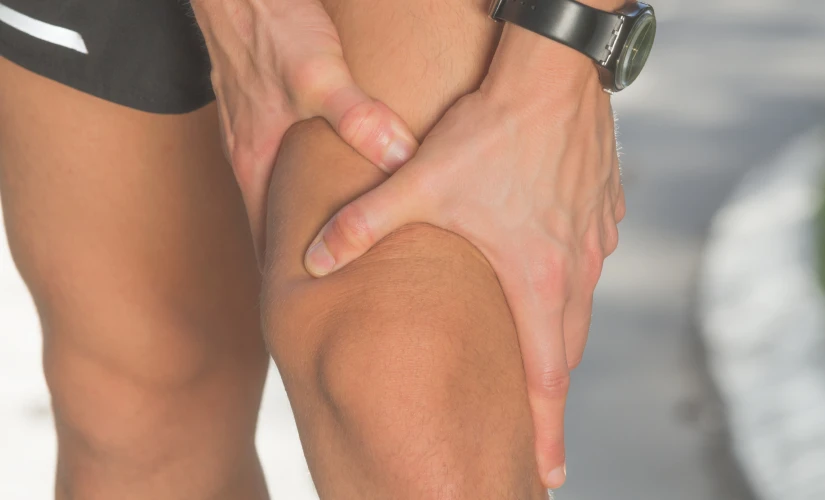
Causes of Knee Pain When Bending
- Patellofemoral Pain Syndrome: The kneecap sits in a groove at the end of the thigh bone and glides along it with every knee movement. When this tracking is off or when the cartilage beneath it wears down, the result is a dull, aching pain at the front of the knee that is worse during squatting, stair climbing or sitting with the knee bent for long periods.
- Meniscus Tear: A meniscus tear from twisting, a sports injury or gradual degeneration causes pain on the inner or outer side of the knee that sharpens with bending.
- Osteoarthritis: Cartilage wear in the knee joint is the leading cause of bending pain in people over 45. Morning stiffness, a grating sensation, swelling after activity and slow worsening over months are the patterns.
- Bursitis and Patellar Tendinitis: Bursae are fluid-filled sacs that cushion the knee. Repeated pressure or trauma causes them to swell. Patellar tendinitis inflames the tendon connecting the kneecap to the shin bone. Both produce pain during bending and are worsened by activity and load.
- Baker’s Cyst and Ligament Injuries: A Baker's cyst forms at the back of the knee when excess joint fluid accumulates in a pocket behind the joint. Fully bending the knee compresses it and increases the discomfort. Ligament injuries particularly ACL or MCL tears cause immediate pain, instability and rapid swelling after a traumatic event such as a tackle or a bad landing.
Diagnosis of Knee Pain When Bending
Doctors ask about when the pain started, whether there was a triggering injury, exactly where on the knee it is felt, and whether the joint swells. The doctor checks for joint line tenderness, assesses range of movement, looks for swelling or heat, and performs specific tests to stress the ligaments and menisci. In many cases the examination alone points clearly to the diagnosis.
Diagnostic tests:
- X-ray to identify arthritis, joint space narrowing and bone changes.
- MRI is the most useful test for menisci, ligaments, cartilage and tendons.
- Ultrasound assesses tendons, bursae and Baker's cysts in real time.
- Blood tests help detect inflammatory arthritis or infection.
- Joint aspiration & fluid analysis identifies gout, infection or joint bleeding.
Treatment for Knee Pain When Bending
The treatment follows the diagnosis. These include:
- Patellofemoral pain and tendinitis: Physiotherapy is the main treatment. Strengthening the quadriceps and hip muscles improves kneecap tracking. Anti-inflammatory medicines, activity modification and a gradual return to exercise manage most cases. Taping and bracing provide support during recovery.
- Meniscus tears: Small, stable tears often heal with physiotherapy and rest. Larger tears or those causing locking symptoms need arthroscopic surgery to repair or trim the damaged cartilage.
- Osteoarthritis: Weight loss significantly reduces joint load. Physiotherapy, anti-inflammatory medicines, topical gels, and intra-articular injections manage most patients well. Knee replacement is considered when conservative treatment no longer controls symptoms adequately.
- Bursitis: Rest, ice and anti-inflammatory medicines settle most cases. A corticosteroid injection into the bursa speeds recovery when swelling is significant. Infected bursitis needs antibiotics and sometimes surgical drainage.
- Ligament injuries and Baker’s cyst: Partial ligament tears are managed with physiotherapy and bracing. Complete ACL tears in active patients usually require surgical reconstruction. A Baker's cyst resolves when the underlying cause is treated.
When to See a Doctor
Contact a doctor if:
- Bending pain has not improved after two to three weeks of rest and pain relief
- Daily activities like stairs, sitting, walking are being restricted
- The knee swelled rapidly after an injury
- The joint locks and will not fully straighten
- The knee gives way or feels completely unstable
- Fever accompanies significant swelling, warmth and redness (indicating joint infection)
- Numbness or weakness has developed in the leg or foot.
Conclusion
Knee pain when bending is not something to push through indefinitely. The knee has several structures that can each produce this symptom differently, and what works for one cause does not work for another. If bending has become a source of pain in your daily life, get it properly evaluated. Getting the right diagnosis early expands the treatment options and, in many cases, prevents a manageable problem from becoming a surgical one.
FAQs
1. Why does my knee hurt only when bending?
Bending loads and compresses the knee in a way that standing straight does not. Damaged or inflamed structures like cartilage, meniscus, bursa, and patellar tendon are put under direct stress the moment the knee flexes. A worn kneecap cartilage is comfortable at rest but painful the instant it is pressed against the thigh bone during a squat. A meniscus tear gets pinched between joint surfaces when the knee closes fully. Bursitis gets compressed as the joint flexes.
2. How do I know if my knee pain is serious?
Rapid swelling within the first hour or two after an injury is a warning indicator; it usually means a ligament has torn or there is bleeding inside the joint. A knee that locks and cannot be straightened needs a same-day assessment. Instability and the joint feeling like it will give way also warrant early review. Fever with a hot, swollen, red knee suggests joint infection, which is a medical emergency. Pain that builds slowly without injury and does not improve after two to three weeks of rest is less urgent but still needs investigation.

Still Have a Question?


