



-
Centre of Excellence
Specialties
Treatments and Procedures
 HyderabadCARE Hospitals, Banjara Hills CARE Outpatient Centre, Banjara Hills CARE Hospitals, HITEC City CARE Hospitals, Nampally Gurunanak CARE Hospitals, Musheerabad CARE Hospitals Outpatient Centre, HITEC City CARE Hospitals, Malakpet
 Raipur
 Bhubaneswar
 Visakhapatnam
 Nagpur
 Indore
 Chh. Sambhajinagar
 Clinics & Medical Centers


-

-

-

-

-

-
Follow Us

Spinal Headache: Causes, Symptoms, Diagnosis and Treatment
A spinal headache usually develops when you have a spinal tap or receive spinal anaesthesia. These cause a throbbing headache that worsens when sitting or standing and improves when lying down. About one third of patients develop headaches after lumbar puncture, with symptoms appearing within 48 to 72 hours of the procedure. This common complication can last from a few hours to several days and brings considerable discomfort to those affected. This guide explains what spinal headache causes are, its symptoms, when you should seek medical help, and effective ways to prevent and treat it.
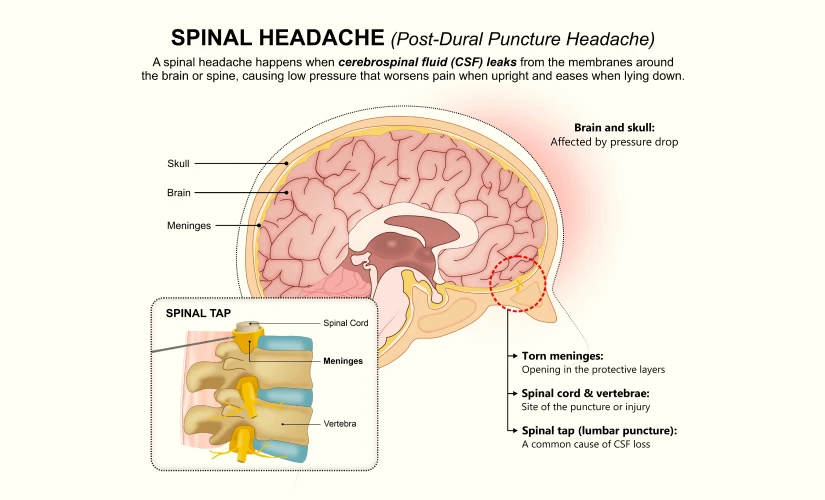
What Is Spinal Headache?
A spinal headache develops after cerebrospinal fluid leaks through a puncture hole in the dura mater, the membrane surrounding the spinal cord. This leakage decreases fluid pressure around the brain and causes it to sag downward. Brain tissue stretches nerves and membranes within the skull as it moves position. This triggers head pain. Doctors also call this condition post-dural puncture headache or post spinal headache.
What Causes Spinal Headache?
Lumbar puncture procedures are the most common cause of spinal headache. Doctors insert a needle into the spinal canal. They will then withdraw cerebrospinal fluid for testing (sometimes they deliver anaesthesia during these procedures). Spinal anaesthesia and epidural injections can trigger this condition as well. Other causes are:
- Traumatic injuries
- Ruptured spinal cysts
- Tears in connective tissue may lead to fluid leaks.
Symptoms of a Spinal Headache
The hallmark feature is pain that worsens during sitting or standing upright and improves during lying flat. Other spinal headache symptoms are:
- Dull or throbbing pain in the front or back of the head
- Neck stiffness and pain between the shoulder blades
- Nausea, vomiting and dizziness
- Light sensitivity and ringing in the ears
- Vision changes and difficulty concentrating.
Symptoms appear within 48 to 72 hours after the procedure in most cases.
Is a Spinal Headache Serious?
Most cases resolve on their own within five to seven days. But untreated leaks can cause complications like meningitis, subdural bleeding or hearing problems. Seek medical attention if headaches persist beyond 24 hours.
Diagnosis of Spinal Headache
The most common methods to identify spinal headache are medical history and physical examination. Doctors ask about recent spinal procedures - epidural or lumbar puncture. The positional nature of pain helps confirm the diagnosis. Lying flat brings relief and standing worsens discomfort. MRI scans may detect cerebrospinal fluid leaks in complex cases.
Spinal Headache Treatment
Spinal headache treatment begins with conservative measures.
- Bed rest and increased fluid intake can ease mild cases.
- Pain relievers reduce discomfort.
When these spinal headache treatment at home do not provide relief doctors perform an epidural blood patch. They inject a small amount of the patient's blood near the puncture site to seal the leak. This procedure offers relief within hours for most patients.
When to See a Doctor for a Spinal Headache
Contact a doctor if:
- Headache persists beyond 24 hours
- Headache intensifies despite rest
- You have fever, seizures, vision changes or severe neck stiffness.
Tips to Prevent Spinal Headache
Prevention strategies are many. These include:
- Smaller-gauge needles during spinal procedures
- Good hydration before and after procedures
- Rest from strenuous activities during the first 24 hours post-procedure
- Flat positioning for several hours after a spinal tap.
- These simple steps substantially reduce risk.
Why Choose Our CARE Hospitals for Ankylosing Spondylitis Treatment?
Choosing the right hospital for spinal headache treatment makes all the difference in recovery speed and comfort. CARE Hospitals brings together experienced neurologists and pain management specialists who have a deep understanding of the nuances of post dural puncture headaches providing compassionate care that addresses both physical discomfort and emotional concerns.
The hospital's approach combines advanced diagnostic tools with proven treatment methods. Specialists perform epidural blood patch procedures with precision and use state-of-the-art equipment that minimises discomfort while maximising success rates. The philosophy centres on each patient and ensures treatment plans tailored to individual needs rather than one-size-fits-all solutions.
Recovery rooms designed for comfort allow patients to rest in positions that reduce symptoms. Our Nursing staff with expertise in spinal headache management monitors progress and takes fast action (if needed). The multidisciplinary team coordinates seamlessly during every stage of the patient journey from diagnosis through treatment and follow up care.
Conservative measures sometimes prove insufficient. The hospital's interventional pain management unit stands ready with solutions right away. Availability around the clock ensures that severe cases receive prompt attention and prevent complications before they develop. This complete support system transforms what can be a frightening experience into a manageable situation with clear pathways to relief.
FAQs
1. What does a spinal headache feel like?
A spinal headache feels like a severe, throbbing ache (mostly originating at the front or back of your head radiating down to your neck and shoulders). Standing up feels unbearable while lying down brings relief. Some people describe it as feeling like their brain is pulling downward inside their skull.
2. How long does a spinal headache last?
Symptoms begin one day to one week after the procedure. Most headaches last a few hours to several days, but some persist for two weeks.
3. Can spinal headache go away on its own?
Yes the majority of cases resolve without treatment. Two-thirds of people experience spontaneous resolution within one to two weeks.
4. How to get instant relief from spinal headaches?
Lie flat. Drink caffeinated beverages like coffee or tea. Take over the counter pain relievers for pain. Stay hydrated through the day.
5. What happens if a spinal headache is untreated?
If spinal headache is left untreated it might cause several rare complications. These include:
- Subdural hematoma
- Cerebral venous thrombosis
- Seizures
- Brain herniation
- Syringomyelia.
6. What should you avoid with spinal headaches?
Avoid:
- Heavy lifting
- Straining and strenuous activities
- Limit screen time and exposure to bright lights
- Avoid dehydration.
7. How is a spinal headache different from migraine?
Spinal headaches are occipitofrontal and non-pulsatile. They improve when lying down. Migraines are pulsatile, felt near temples, and position does not affect them.
8. How Long Does a Spinal Headache Last?
Duration varies from hours to days. Most resolve within one to two weeks of onset.

Still Have a Question?


