


-
Centre of Excellence
Specialties
Treatments and Procedures
 HyderabadCARE Hospitals, Banjara Hills CARE Outpatient Centre, Banjara Hills CARE Hospitals, HITEC City CARE Hospitals, Nampally Gurunanak CARE Hospitals, Musheerabad CARE Hospitals Outpatient Centre, HITEC City CARE Hospitals, Malakpet
 Raipur
 Bhubaneswar
 Visakhapatnam
 Nagpur
 Indore
 Chh. Sambhajinagar
 Clinics & Medical Centers


-

-

-

-

-

-
Follow Us

Plantar Fasciitis
Plantar Fasciitis
Low-Dose Radiation Therapy for Plantar Fasciitis
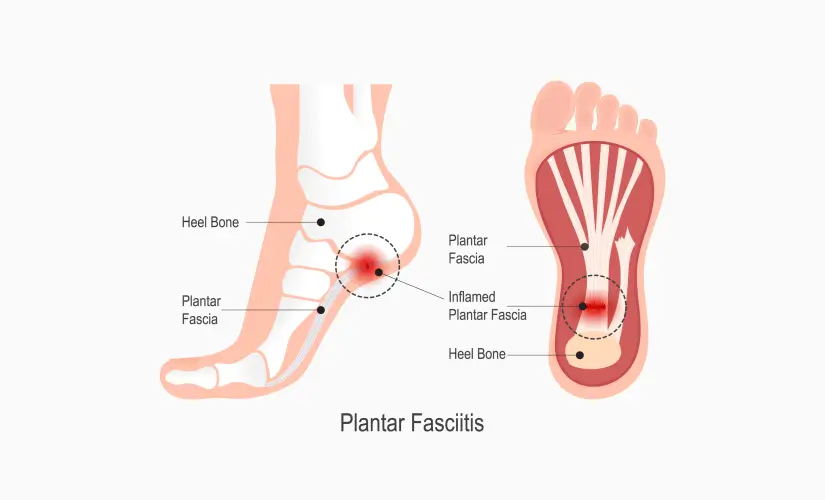
While radiotherapy is often projected as a cancer treatment, Low-Dose Radiotherapy (LDRT) can be a perfect, noninvasive treatment for many benign conditions, like chronic plantar fasciitis. The very name reveals that this type of radiotherapy involves much more minimal doses of radiation when compared to what's given for cancer treatments. This well-proven and efficient treatment has been used with success for persistent heel pain that has been considered unresponsive to usual therapies such as medications, steroid injections, or physical therapy.
At CARE Hospitals Hyderabad, we offer Low-Dose Radiation Therapy (LDRT) as a successful non-invasive option for the treatment of patients with chronic plantar fasciitis. Because this treatment uses very low doses of radiation, it is able to precisely target the inflamed tissue in the heel. LDRT offers valuable, lasting relief by dramatically decreasing the inflammation and chronic pain of patients who either have not had success with more conventional treatments or wish to avoid surgery.
How it Works
In this therapy, low-dose radiation is delivered onto the affected heel area for plantar fasciitis, thereby providing healing and relief from debilitating pain. The following is how LDRT works upon the patient:
- Reduces inflammation: Low-dose radiotherapy is capable of acting rapidly upon the inflammation of the plantar fascia, which is a thick band of tissue situated at the bottom of one's foot. It diminishes the production of inflammatory chemicals and prevents inflammatory cells from accumulating in the pitiable area, thereby affording lasting relief.
- Pain Relief: It addresses the pain by diminishing swelling and inflammation. It contributes to the abatement of the pain receptor sensitivity in the heel, which is of particular significance for a patient in constant agony caused by sharp heel pain interfering with ambulation.
- Tissue Modulation: This therapy modulates the healing response within the fascia tissue when LDRT is applied to prevent abnormal fibrous tissue growth that exhibits pain whilst, in most cases, aborting the chronic inflammation that keeps the patient in aggravation.
Ideal Candidates for LDRT for Plantar Fasciitis
CARE Hospitals have been providing low-dose radiotherapy to chronic, painful benign conditions. You are an ideal candidate for LDRT if you have:
- Chronic, Stubborn Pain: Heel pain persisting for at least six months, which severely restricts your daily mobility.
- Failed Prior Therapies: Conditions that have resisted medications, customized orthotics, steroid injections, or physical therapy in providing lasting relief.
- Looking for an Alternative to Surgery: LDRT is an ideal option for the patient to avoid the lengthy recovery period and the complications that may arise from surgical release of the plantar fascia.
Why Try Low-Dose Radiotherapy for Plantar Fasciitis?
If you are struggling with chronic, debilitating heel pain, low-dose radiation therapy might be the gentle yet highly effective solution you need. Unlike certain medications with side effects or prolonged surgical recovery, LDRT is noninvasive, painless, and has almost no side effects (at most, temporary mild skin redness). It is a proven, evidence-based treatment that successfully reduces inflammation and pain, allowing you to walk comfortably again.
Why Choose CARE Hospitals for Low-Dose Radiation Therapy (LDRT) for Plantar Fasciitis?
CARE Hospitals Hyderabad treats chronic plantar fasciitis with Low-Dose Radiation Therapy. The hospital pairs modern linear accelerator technology with day-to-day patient support to stop heel pain that lasts for months.
- Expert Team: The center employs radiation oncologists who have delivered low-dose radiation to thousands of people with benign pain; they direct each beam at the plantar fascia and avoid other healthy tissues.
- Cutting-Edge Technology: We offer an advanced VersaHD linear accelerator that shapes and locks radiation on the inflamed fascia. The machine limits exit dose to skin, fat along with bone that lie outside the target.
- Personalized Treatment Plans: Our team measures heel tenderness, reviews earlier scans and draws a field that matches the patient's exact pain site.
- Patient-Centric Pain Management: LDRT forms part of a non-surgical plan in treating pain & inflammatory conditions.
- Proven Results: Clinical records show that pain scores drop and walking time rises after the short course. Most people resume market trips but also stair climbing without sharp heel pain.
- Cost-effective Treatment: LDRT is cost-effective, providing long-term relief at a lower cost than the ongoing expenses of continued medications and physical therapy.
- Continuous Support: We provide continuous patient support and care throughout the entire management of an osteoarthritis condition, from the first office visit to aftercare.
Frequently Asked Questions
LDRT involves low-dose radiation treatment targeted at the inflammation of the heel. Apart from painful inflammation of the plantar fascia, which is really the major source of chronic pain and swelling, it suppresses the activity of inflammatory cells and brings about relief.
However, for chronic heel pain lasting six months and beyond and that has poorly responded to conservative methods, including physical therapy, orthotics, or steroid injections, LDRT should be considered as a very strong non-surgical method.
Generally, plantar fasciitis is treated in 6 to 10 sessions that are very short and spaced over two to three weeks for the best low-dose application from the anti-inflammatory perspective.
Pain relief is not immediate with LDRT, and it is a gradual process. Most patients would start to feel relief at an appreciable and sustained level two to three months following the further treatment sessions.
It is quite effective for almost all patients; in fact, the reported success rates for chronic conditions are almost good. The individual results may vary depending on how long and how severe the patient's condition has been.
The ideal and perfect candidate is a patient with a chronic, painful heel that is debilitating and is seeking a defined non-surgical treatment option, with a history of non-response to traditional forms of treatment.
Yes, LDRT would normally be avoided in pregnant women and in patients previously treated with high-dose radiation to the exact same area. A medical consult with the radiation oncologist will need to happen to confirm eligibility.
Still Have a Question?


