



-
Centre of Excellence
Specialties
Treatments and Procedures
 HyderabadCARE Hospitals, Banjara Hills CARE Outpatient Centre, Banjara Hills CARE Hospitals, HITEC City CARE Hospitals, Nampally Gurunanak CARE Hospitals, Musheerabad CARE Hospitals Outpatient Centre, HITEC City CARE Hospitals, Malakpet
 Raipur
 Bhubaneswar
 Visakhapatnam
 Nagpur
 Indore
 Chh. Sambhajinagar
 Clinics & Medical Centers


-

-

-

-

-

-
Follow Us

Septic Arthritis
Symptom, Causes, Diagnosis and Treatment
Septic Arthritis
Septic arthritis affects lakhs of people each year. This very painful joint infection develops faster. Harmful bacteria invade one or more joints in this serious condition, and the knees are the most affected area. Staphylococcus aureus (staph) bacteria cause most cases and can destroy joint cartilage. Without treatment, permanent damage occurs. The infection can affect anyone, but children get it more often than adults. People who are older or have existing joint problems face higher risks. Quick treatment is vital to prevent long-term joint breakdown, so knowing about this condition could save someone's joint function if they have sudden, severe joint pain.
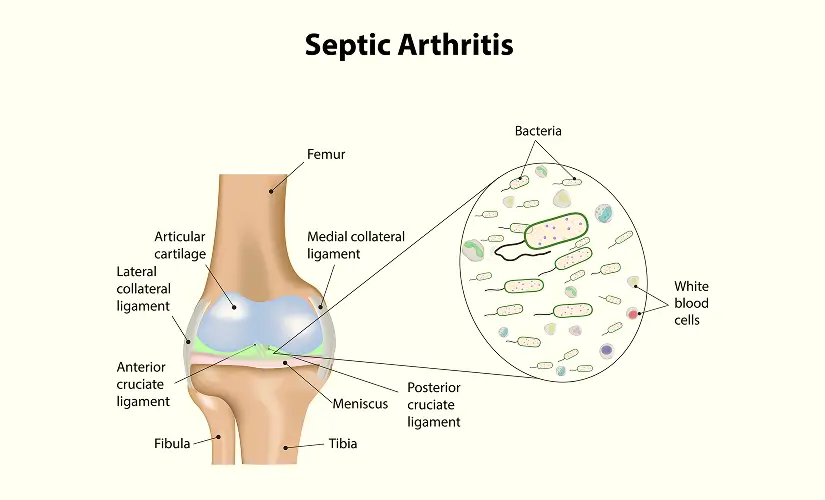
What is Septic Arthritis?
Septic arthritis occurs when microorganisms cause an infection in a joint space. The condition happens when bacterial, fungal, mycobacterial or viral pathogens trigger joint inflammation. A single large joint like the knee or hip usually gets affected, though sometimes multiple joints can develop the infection.
Septic Arthritis Symptoms
You will notice these key signs of septic arthritis:
- Sharp, intense pain that comes on suddenly in affected joints
- The joint area becomes swollen and warm
- Joints develop redness on the skin
- Moving becomes difficult, or putting weight causes pain
- Your body temperature rises, and you feel generally unwell
- Children might get cranky, stop eating, and try not to move the affected joint.
Causes of Septic Arthritis
Bacteria stand out as the main cause, and Staphylococcus aureus shows up in most cases. The infection typically spreads to joints through the bloodstream from another infected area. On top of that, it can directly enter joints after surgery, injury, or injection.
Risk of Septic Arthritis
Some groups are more vulnerable to septic arthritis. These are:
- People who already have joint conditions like rheumatoid arthritis or osteoarthritis face a higher risk.
- Those with artificial joints are more susceptible to infection.
- People with certain medical conditions like diabetes or kidney disorders have a higher risk.
- People with a weakened immune system become more vulnerable.
- The risk also goes up if you've had recent joint surgery or experienced joint injury.
Complications of Septic Arthritis
Septic arthritis can permanently damage joints without quick treatment. Patients might develop:
- Chronic pain
- Osteomyelitis
- Osteonecrosis
- Differences in leg length
- Sepsis
Diagnosis of Septic Arthritis
Many doctors use joint fluid testing as the gold standard for diagnosis. Doctors extract fluid from the affected joint with a needle to check for bacteria and white blood cells. A count above 50,000 white cells with 90% neutrophils strongly indicates bacterial infection.
Blood investigations (complete blood count, erythrocyte sedimentation rate, and C-reactive protein) further confirm the diagnosis. Doctors also recommend imaging studies. Imaging are:
- X-rays - show widened joint spaces and soft tissue swelling.
- Ultrasound - identifies joint fluid and guides aspiration.
- MRI - even detects early changes and assesses cartilage damage
Treatment of Septic Arthritis
Doctors should start treatment quickly. The main treatment approaches are:
- Antibiotics - given through IV at first, then orally for 2-6 weeks total.
- Joint drainage - through needle aspiration, arthroscopy, or open surgery.
- Physical therapy - restores joint function.
Patients with artificial joint infections might need their prosthesis removed. Doctors replace it with an antibiotic cement spacer before installing a new joint.
When to See a Doctor
Joint pain with fever, redness, or warmth requires immediate medical attention. Septic arthritis needs treatment to resolve as any delay can cause permanent damage in your joints.
Conclusion
Septic arthritis is a dangerous condition. It warrants our immediate attention. It affects only a small percentage of people each year but joint damage can occur rapidly without early detection. The symptoms are hard to miss (severe joint pain, swelling, redness, and fever should never go unchecked).
Bacteria like Staphylococcus aureus pose a serious threat once they enter joint spaces. Anyone who experiences sudden joint pain with fever must get medical help right away. Every hour counts with this condition. A delay of just one or two days can lead to permanent joint damage that doctors cannot fully repair.
Quick action determines full recovery chances. Modern medicine has advanced, but septic arthritis still has a high death rate. A person's joint health depends on spotting these warning signs early. Medical teams stand ready to help, but you must reach out before it's too late.
FAQs
1. What are the long term complications of septic arthritis?
Untreated joint infections can destroy your health. The complications include:
- Osteomyelitis (bone inflammation)
- Chronic pain
- Osteonecrosis
- Sepsis
Some patients need special shoes or surgery because their legs grow to different lengths.
2. How long does it take for septic arthritis to heal?
Your recovery time depends on when you start treatment. Most patients spend about 2 weeks in the hospital. You will start feeling better soon after beginning antibiotics. But you will need to take oral antibiotics for 2-6 weeks after leaving the hospital. Full healing could take months, especially if your joints are damaged. Physical therapy is a vital part of getting your movement back and keeping your joints flexible.
3. What are the early signs of arthritis?
You might first notice a dull aching or burning pain in your joints that won't go away. Many people feel stiff in the morning and take time to get moving. Your joints might swell as inflammation increases the synovial fluid around them. You could hear clicking or grinding sounds (crepitus) when you move. Feeling tired and uncomfortable often comes with these symptoms.
4. Which joints are most commonly affected by septic arthritis?
Septic arthritis can affect any joints but the knees take the biggest hit. Hips come in second, followed by shoulders. Other affected joints are:
- Ankles and wrists
- Hip infections
People who inject drugs tend to get infections in unusual spots like sacroiliac or sternoclavicular joints.
5. How long does it take to recover from septic arthritis?
Your recovery depends on several things. Quick treatment often leads to full recovery. Still some patients end up with poor function and severe deterioration. Most people need several weeks to months to recover. Physical therapy helps you get your joint working again and prevents permanent stiffness. If you have an infected artificial joint, recovery might take longer if doctors need to remove it.
6. Can septic arthritis be prevented?
The best defence is to reduce infection risks. Taking care of wounds properly helps keep bacteria out of your joints. Quick treatment of infections anywhere in your body stops them from spreading through your blood. If you have artificial joints, you might need antibiotics before dental work or certain medical procedures. Staying current with your vaccinations, especially pneumonia shots, helps fight off bacteria that could cause joint problems.
7. Who is at higher risk of developing septic arthritis?
Your risk goes up with certain factors.
- People over 80 face much higher risks.
- If you have joint conditions like rheumatoid arthritis or osteoarthritis, you are more likely to get infected.
- Diabetes, HIV, or a weak immune system also increase your chances.
- Artificial joints (especially right after replacement surgery) raise your risk
- Recent joint injuries or surgeries let bacteria enter more easily.
- IV drug users face high risks because of frequent injections.

To Book an Appointment, call:
 +91 40-68106529
Still Have a Question?


