


-
Centre of Excellence
Specialties
Treatments and Procedures
 HyderabadCARE Hospitals, Banjara Hills CARE Outpatient Centre, Banjara Hills CARE Hospitals, HITEC City CARE Hospitals, Nampally Gurunanak CARE Hospitals, Musheerabad CARE Hospitals Outpatient Centre, HITEC City CARE Hospitals, Malakpet
 Raipur
 Bhubaneswar
 Visakhapatnam
 Nagpur
 Indore
 Chh. Sambhajinagar
 Clinics & Medical Centers


-

-

-

-

-

-
Follow Us
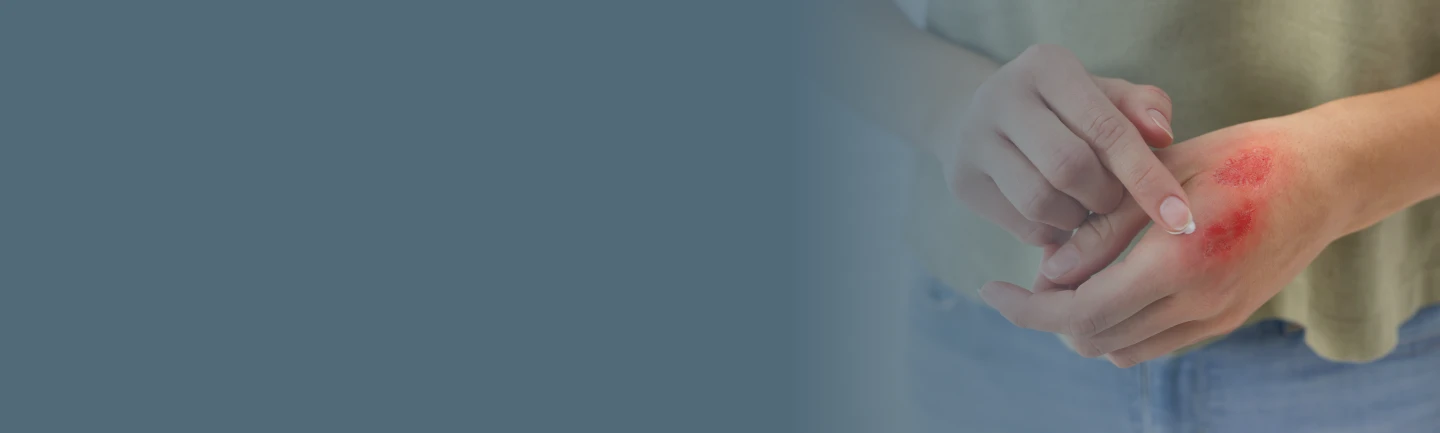
Emergency Care for Burns
Burns are among the most common household and occupational injuries in India and among the most undertreated. The first instinct is often wrong: butter on the wound, ice on the skin, a cloth pressed over blisters. Each worsens the injury. Emergency care for burns in the first few minutes significantly reduces injury depth, pain, and infection risk. For serious burns, delayed or incorrect care results in sepsis, systemic toxicity, and permanent scarring. This article explains the warning signs of burns, immediate first aid, and how to treat burns.
Types of Burns
Burns are classified based on the depth of skin damage:
- Superficial (first-degree) burns: Affect only the epidermis. Red, dry, and painful. No blisters. Heal within 3–5 days without scarring. Sunburn and brief hot water contact are typical examples.
- Partial-thickness (second-degree) burns: Extend through the epidermis into the dermis. Blistered, moist, intensely painful, and blanch on pressure. Superficial partial-thickness burns heal within 14–21 days and deep partial-thickness burns may not heal without grafting and leave scarring.
- Full-thickness (third-degree) burns: Destroy epidermis, dermis, and underlying subcutaneous tissue. Appear white, leathery, charred, or waxy. Paradoxically painless in the burn centre itself because nerve endings are destroyed. Always require surgical grafting.
- Fourth-degree burns: Extend to muscle, tendon, or bone. Associated with electrical injury, prolonged flame contact or chemical exposure. Limb-threatening and potentially fatal.
- Burns are classified by total body surface area (TBSA) using the Rule of Nines: 9% per arm, 9% head, 18% anterior trunk, 18% posterior trunk, 18% per leg, 1% perineum. Burns exceeding 20% TBSA in adults or 10% in children require ICU management.
Warning Signs and Symptoms of Burns
Burn depth can take 24–72 hours to fully declare. These features indicate a serious burn requiring emergency assessment:
- Burns to the face, hands, feet, genitalia, perineum, or major joints - functional sites where even moderate burns cause permanent disability
- Circumferential burns of a limb or the chest - circular full-thickness burns restrict tissue expansion, causing compartment syndrome in limbs and respiratory failure in chest burns
- Inhalation injury - hoarseness, stridor, carbonaceous sputum, singed nasal hairs, or facial burns after fire in an enclosed space
- Chemical burns - progressive tissue destruction even after the chemical source is removed
- Electrical burns — entry and exit wounds may appear small while deep tissue destruction along the current path is extensive
- Burns in children under five or adults over 60 - thinner skin burns deeper for the same exposure
- Any burn with systemic features like fever, confusion, rapid heart rate, or hypotension indicating systemic inflammatory response
- Burns covering more than 10% TBSA in children or 20% TBSA in adults.
Burn First Aid
Remove from the source immediately. Switch off electrical current before touching an electrical burn victim. Remove the patient from fire or chemical exposure. Time of contact determines depth.
- Cool the burn with running water for at least 20 minutes. Do not use ice or cold water. Water temperature should be 15–25°C: cold enough to reduce heat in the tissue, not so cold as to cause hypothermia particularly in children.
- Remove clothing and jewellery near the burn. Clothing retains heat and continues burning. Rings, watches and bracelets cause constriction as oedema develops. Do not attempt to remove clothing adhered to the wound.
- Cover with a clean, non-fluffy material. A clean plastic bag works for hand burns.
- Do not apply butter, oil, or toothpaste. All retain heat, introduce infection, and interfere with clinical assessment.
- Do not burst blisters. Blister fluid is sterile and the blister roof provides a biological dressing. Deliberately rupturing blisters converts a closed wound to an open one.
- Call emergency services for serious burns. Face, hands, genitalia, major joints, circumferential, inhalation injury, child, or elderly.
When to Seek Emergency Care for Burns
Go to emergency if:
- Any burn to the face, hands, feet, genitalia, or over a major joint
- Suspected inhalation injury like hoarseness, stridor, soot in airway, fire in enclosed space
- Circumferential burn of any limb or the chest
- Electrical or chemical burns regardless of apparent surface area
- Burns exceeding 5% TBSA in children, 10% TBSA in adults
- Full-thickness burns of any size
- Burns in patients under five or over 60, or in any immunocompromised patient
- Burns with signs of systemic involvement like fever, confusion, rapid pulse, hypotension
- Burns where adequate cooling was delayed or home management was applied
Emergency Treatment at the Hospital for Burns
Burn injury treatment includes:
- Airway assessment and early intubation: Inhalation injury causes progressive laryngeal and airway oedema. Therefore early intubation is critical. Delay until stridor is established means intubation may be impossible without surgical airway.
- Fluid resuscitation: The Parkland formula (4 ml/kg/% TBSA over 24 hours, half in the first 8 hours) guides IV crystalloid for burns exceeding 20% TBSA.
- Wound assessment and cleaning: Accurate TBSA estimation using the Rule of Nines or Lund and Browder chart. The emergency staff will clean the burn wound with chlorhexidine solution, assess the blistered skin for viability, and apply dressings.
- Analgesia: IV morphine or ketamine for significant burn pain.
- Escharotomy: Circumferential full thickness burns cause compartment syndrome - rising oedema pressure compromises circulation. Longitudinal incisions through the eschar release pressure and restore perfusion.
- Surgical debridement and grafting: Deep partial-thickness and full-thickness burns require excision and split-thickness skin grafting within 48–72 hours. Early grafting reduces infection risk and improves functional outcome.
- Tetanus prophylaxis: Tetanus toxoid and immunoglobulin as indicated by vaccination history.
- ICU management: Burns exceeding 20% TBSA in adults or 10% in children for multiorgan monitoring, nasogastric nutritional support (burns cause massive caloric demand), daily wound care, and infection surveillance.
Do's and Don'ts During Burns
Do's:
- Cool the burn with running water immediately and continuously for 20 minutes
- Remove clothing and jewellery near but not adhered to the burn
- Cover with cling film or a clean non-fluffy material
- Give paracetamol for pain
- Call emergency services for any serious burn
Don'ts:
- Do not apply butter, oil, toothpaste, egg white, or any home remedy
- Do not apply ice or iced water
- Do not burst blisters deliberately
- Do not wrap the burn tightly
- Do not remove clothing stuck to the burn wound
- Do not delay cooling while waiting for the ambulance.
Diagnostic Tests for Burns
Investigations include:
- TBSA estimation: Estimate the degree of burn by the rule of Nines or Lund and Browder chart (more accurate in children)
- Full blood count: Detect haemoconcentration (in early hypovolaemia) and anaemia (developing over 24–48 hours from red cell destruction)
- Urea, creatinine, and electrolytes: Detect renal function and hyperkalaemia
- Serum lactate: Elevated in inadequate resuscitation and tissue hypoperfusion
- Carboxyhaemoglobin (COHb): Measures arterial blood gas, significant for carbon monoxide poisoning
- Chest X-ray: Baseline test for inhalation injury
- ECG: Electrical burns frequently cause arrhythmia so all electrical injury patients require cardiac monitoring
- Blood cultures: For suspected wound infection or sepsis
- Myoglobin and CK: Elevated in electrical burns; guides fluid rate to prevent renal tubular myoglobin precipitation.
Complications of Untreated Burns
If left untreated burns might cause:
- Wound infection and sepsis
- Hypovolaemic shock
- Inhalation injury and respiratory failure
- Compartment syndrome
- Acute kidney injury
- Contracture and permanent scarring
- Toxic shock syndrome from infected burns.
Why Choose CARE Hospitals for Emergency Burns Care
Serious burns require simultaneous management of airway, fluid, wound and ICU needs. CARE Hospitals burns unit provides specialist burns surgery including early excision and skin grafting with ICU nursing ratios that large burns demand. Inhalation injury is managed with fibreoptic bronchoscopy and ventilatory support. Escharotomy is available in the emergency bay for circumferential burns. Nutritional support via nasogastric tube is commenced within 6 hours of admission, and physiotherapy is integrated into the care pathway from day one. Paediatric burns receive specialist anaesthesia and age-specific fluid protocols.
Conclusion
If a person get burn simple first aid like twenty minutes of running water and clean & non-adherent coverage is critical. Do not use butter or ice on the burn site. Go to the hospital for any burn that involves the face, hands, feet, or genitalia, electrical or chemical burn, or circumferential burn of any limb or the chest. At CARE Hospitals, burns are managed by a team equipped for the full spectrum including wound assessment and grafting to ICU-level support for inhalation injury.
FAQs
1. What is the first step in treating a burn?
Remove from the source then apply cool running water (15–25°C) for 20 minutes continuously. This reduces burn depth and pain. Do not apply ice, butter, toothpaste, or any home remedy.
2. How long should I cool a burn?
Twenty minutes of continuous cool running water. Starting within 3 minutes produces the greatest benefit, but cooling up to 20 minutes after injury still reduces depth. Keep the rest of the body warm in children to prevent hypothermia.
3. When should I go to the hospital for burns?
Go immediately for:
- Any burn to the face, hands, feet, or genitalia
- Any electrical or chemical burn
- Any suspected inhalation injury
- Full-thickness burns of any size
- Burns over 5% TBSA in children or 10% in adults
- Circumferential burns
- Any burn in a child under five or adult over 60.
4. Can burns get infected?
Yes Pseudomonas aeruginosa and Staphylococcus aureus are the most common burn wound pathogens, and infection is the leading cause of death in hospitalised burn patients. Daily wound assessment and appropriate dressings are the primary prevention strategy.
5. Can minor burns be treated at home?
Superficial burns under 5 cm in healthy adults that are red, dry, and have no blistering can be managed at home with cool water cooling, a non-adherent dressing changed daily, and analgesics. Any blistering, sensitive site, or vulnerable patient warrants medical assessment.
6. Can hot water cause serious burns?
Yes water at 60°C causes a serious burn in under five seconds and at 54°C, in 30 seconds. Scalds from hot water or steam can be deep, requiring grafting. Scalds are the most common burn injury in children under five.
7. Can children recover from burns quickly?
Children burn deeper than adults for the same thermal exposure, dehydrate faster and are more vulnerable to hypothermia during cooling. Paediatric burns should always be medically assessed regardless of apparent size.
8. When should I call an ambulance?
Call an ambulance for burns to the face, hands, genitalia or over a joint; electrical or chemical burns; suspected inhalation injury; circumferential burns; full-thickness burns; burns in children or older adults; any burn the patient cannot cool adequately or safely at home; or any burn with systemic symptoms like fever, confusion, and rapid pulse.

Still Have a Question?


