


-
Centre of Excellence
Specialties
Treatments and Procedures
 HyderabadCARE Hospitals, Banjara Hills CARE Outpatient Centre, Banjara Hills CARE Hospitals, HITEC City CARE Hospitals, Nampally Gurunanak CARE Hospitals, Musheerabad CARE Hospitals Outpatient Centre, HITEC City CARE Hospitals, Malakpet
 Raipur
 Bhubaneswar
 Visakhapatnam
 Nagpur
 Indore
 Chh. Sambhajinagar
 Clinics & Medical Centers


-

-

-

-

-

-
Follow Us


Cryoablation Treatment in Hyderabad
Cryoablation is an advanced treatment procedure that destroys a tumour by freezing it. In this the doctor uses a thin needle instead of a large surgical cut. Doctors watch the whole process on a live scan so they can see exactly where the freezing is happening while keeping the needle away from nearby healthy tissue. This is a treatment of choice for people whose tumours are in places difficult to reach or for those for whom a major operation would be too risky. This article explains how cryoablation works, who it can help & what actually happens on the day.
What Is Cryoablation?
A doctor places one or more very thin needles (called probes) straight into the tumour. A scan, usually CT, MRI or ultrasound, guides this placement so the needle ends up in exactly the right spot. Cold gas then flows through the tip of each probe dropping the temperature so low that a visible ball of ice forms around the tumour. This ice breaks the tumour cells apart from the inside and cuts off their blood supply. The area is usually frozen and allowed to thaw, then frozen a second time, as two rounds give a more complete result than one.
What Conditions Can Be Treated with Cryoablation?
This treatment is used for a fairly wide range of tumours.
- Small kidney tumours are a common target as freezing can remove the tumour while leaving the rest of the kidney working.
- Liver tumours (whether they started there or spread from another cancer) are often treated this way when surgery would be riskier.
- Certain lung tumours can be frozen too, particularly in people who are not fit enough for a lung operation.
- Some early prostate cancers are treated with cryoablation instead of more extensive surgery.
- Bone tumours that have spread from another cancer can be frozen purely to ease pain, even when a full cure is not the goal.
- Certain breast lumps, including some early cancers and benign growths, can also be treated with this method.
- Some tumours in the adrenal gland, the small gland sitting above each kidney, are also suitable candidates in certain cases.
Types of Cryoablation
The way cryoablation is carried out depends on the tumour's location.
- Percutaneous cryoablation is the most common type. The needle goes straight through the skin (guided by a scan) with no cutting involved.
- During laparoscopic cryoablation your doctor makes a few small cuts along with a camera useful when a tumour cannot be reached easily through the skin alone.
- Intraoperative cryoablation happens during an open operation often when a tumour is being treated at the same time as another planned surgery.
- Endoscopic cryoablation reaches tumours inside the body, such as in the food pipe, using a thin tube passed through a natural opening.
Who May Need Cryoablation?
Certain patients tend to be well suited to this treatment. They are
- If you have a small tumour that has not spread far
- Anyone who would rather avoid the longer recovery (always comes with a full operation)
- Older patients or those with other health problems who would find major surgery risky
- Patients whose cancer has come back after earlier treatment & need a gentler option this time.
- Anyone for whom keeping as much healthy organ tissue as possible is very important
- People whose tumour is hard to reach with a standard operation.
When Is Cryoablation Recommended?
Doctors recommend this treatment in a few clear situations. They are:
- Scans show a tumour that is the right size, type and position for freezing to work well.
- Surgery carries a higher risk given the patient's age or general health
- Saving as much of the organ as possible matters, which comes up often with kidney tumours.
- The main aim is pain relief, especially with a bone tumour that has spread from elsewhere.
How to Prepare for Cryoablation
Preparation mainly involves confirming the details of the tumour and checking the patient is fit for the procedure.
- Scans, usually CT or MRI, map out exactly where the tumour sits before the day of treatment.
- Blood tests check how well the blood clots and how well the relevant organs are working
- Your doctor might pause blood-thinning medicines for a short time beforehand.
- Patients are usually asked to stop eating and drinking for some hours before sedation or a general anaesthetic.
- Patients are encouraged to ask any questions they have about the process, as feeling informed tends to make the day itself less stressful.
Cryoablation Procedure
Steps are:
- The procedure starts with anaesthesia (chosen by the doctor based on where the tumour is and how the patient is doing overall).
- Once the patient is settled, a scan guides the probes into the tumour with care
- Cold gas then runs through the probes, and the ice ball that forms is watched closely on screen to make sure it fully covers the tumour.
- After the first freeze, the area is left to thaw & then frozen again for a more thorough result.
- Once treatment finishes, the doctor removes the probes and places a small dressing to cover the site.
- Depending on how complicated the case is, the whole thing usually takes one to three hours.
Benefits of Cryoablation
Cryoablation has several clear advantages over a full operation. They are:
- A thin needle takes the place of a large cut, so giving your body far less trauma overall.
- Nearby healthy tissue and organ function are protected much better than with surgical removal
- Recovery is usually a lot quicker than after open surgery.
- If any tumour is left behind or a new one appears later, the treatment can simply be repeated.
- Patients who cannot safely have surgery still get access to an effective targeted treatment.
- Live imaging throughout lets the team adjust in real time to protect nearby structures.
- Because the procedure is so targeted (patients often experience less pain overall) than they would after a traditional operation.
Risks and Complications of Cryoablation
Cryoablation is generally safe. However, it does carry some risks depending on the part of the body treated.
- Some bleeding or bruising can happen where the needle went in.
- Infection is uncommon, but it remains a possibility with any procedure that breaks the skin.
- Nearby structures can occasionally be affected if the ice spreads slightly further than planned.
- Kidney treatments carry a small risk of urine leaking, and lung treatments carry a small risk of a collapsed lung.
- Soreness at the treatment site in the days afterwards is common and usually settles on its own.
- Sometimes, the tumour is not fully destroyed the first time and a repeat treatment is needed.
- As with any procedure using anaesthesia, there is a small general risk tied to the anaesthetic.
Why Choose CARE Hospitals for Cryoablation?
CARE Hospitals has a team of interventional radiologists and cancer specialists who regularly perform cryoablation for kidney, liver, lung and bone tumours. With CT MRI and ultrasound all available, the team can guide each probe precisely and watch the treatment closely from start to finish. A team of specialists discusses every case, so cryoablation is recommended only when it is genuinely the best option. Regular follow up scans check that treatment has worked and pick up quickly on anything that needs further attention.
Conclusion
Cryoablation gives doctors a precise way to treat tumours without the larger operation that surgery would usually involve, which matters most for people who want to protect organ function or avoid a bigger procedure. Because it relies so heavily on live imaging, treatment can be shaped closely around the exact size and place of each tumour. Knowing whether a tumour is a good match for this approach and what recovery actually involves makes the whole decision much easier to think through.
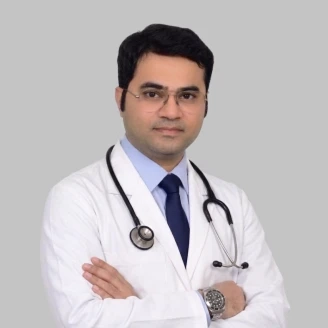
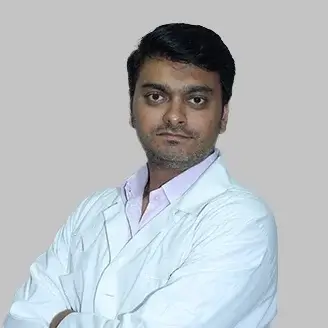
Our Doctors
-

Dr. Alok Kumar Udiya
MBBS, MD, PDCC (Neuro-radiology and Gastro-radiology)
Interventional Radiology
View More
-

Dr. Amol Lahoti
MBBS, MD, FVNIR
Interventional Radiology
View More
-
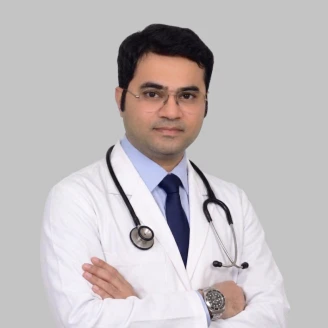
Dr. K. Chinmaya Deepak Patro
MBBS, DNB (Radio Diagnosis), Fellowship in Vascular and Interventional Radiology, Fellowship in Stroke and Neuro Interventional Radiology
Interventional Radiology
View More
-

Dr. Rajesh Poosarla
MBBS, MD, DNB, DM (Gold Medalist), EBIR, FIBI, MBA (HA)
Interventional Radiology
View More
-

Dr. Vivek Jaju
MBBS, MD (Radiology)
Interventional Radiology
View More

Frequently Asked Questions
Couldn’t find what you were looking for?
Need any help? Get a Call Back.

Still Have a Question?


