



-
Centre of Excellence
Specialties
Treatments and Procedures
 HyderabadCARE Hospitals, Banjara Hills CARE Outpatient Centre, Banjara Hills CARE Hospitals, HITEC City CARE Hospitals, Nampally Gurunanak CARE Hospitals, Musheerabad CARE Hospitals Outpatient Centre, HITEC City CARE Hospitals, Malakpet
 Raipur
 Bhubaneswar
 Visakhapatnam
 Nagpur
 Indore
 Chh. Sambhajinagar
 Clinics & Medical Centers


-

-

-

-

-

-
Follow Us


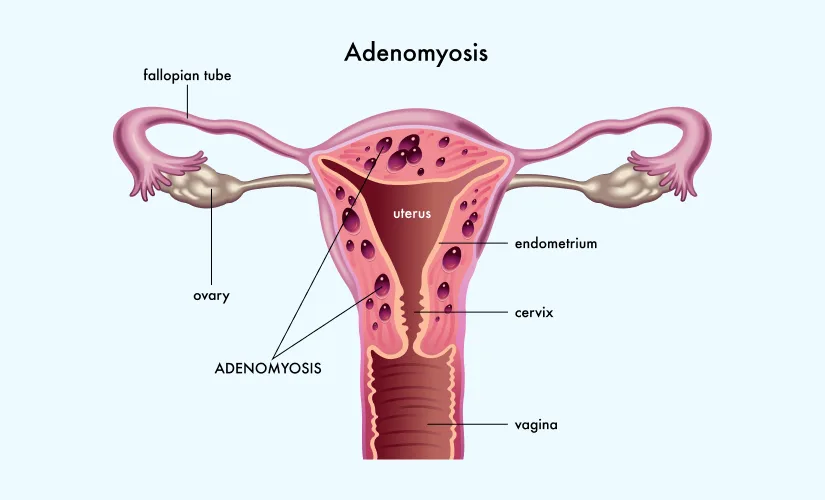
Adenomyosis is a gynecological condition that causes the endometrium to invade the uterus's muscular wall, which leads to the formation of an adenomyotic uterus. The condition leads to heavy menstrual bleeding and severe pelvic pain and painful periods and fertility problems in certain women. Early stages of adenomyosis remain mild, but later stages of the condition create major disruptions to a woman’s daily activities.
CARE Hospital offers top-notch medical care that is based on an awareness of and commitment to treating adenomyosis patients. Each patient receives an individual plan developed by our highly expert team of gynecologists to provide the highest level of precision when diagnosing and treating their symptoms, while also ensuring the highest level of fertility and overall health.
Our highly trained and experienced gynecologists for adenomyosis treatment employ advanced diagnostic tools to find initial indications of adenomyosis and they develop treatment plans according to the patient's age, current medical symptoms, disease advancement and reproductive objectives.
Why Choose CARE Hospitals for Adenomyosis Treatment in Hyderabad?
Choosing the right hospital for adenomyosis treatment is crucial for women seeking lasting relief and quality care. Here's why CARE Hospitals is a top choice:
- Experienced Gynecologists with Proven Expertise in Adenomyosis Management
- Cutting-Edge Diagnostic and Treatment Facilities for Precise Treatment
- Conservative and Fertility-Sparing Approaches for Younger Women
- Tailored Treatment Strategies Based on the Individual’s Condition
- Comprehensive, Integrated Care From Diagnosis to Recovery
- Round-the-Clock Emergency and Specialist Support for all Your Gynecological Concerns
What is Adenomyosis?
Adenomyosis is a benign uterine condition that causes endometrial tissue to invade the uterine muscle, resulting in an enlarged and painful uterus. The condition causes uterine wall inflammation together with thickening, which produces both pain and excessive bleeding.
In early stages of adenomyosis, patients may show either mild symptoms or a complete absence of symptoms. The disease progression causes women to develop increased menstrual pain together with abnormal bleeding, which needs medical treatment.
Adenomyosis Symptoms
The condition's different stages with their varying degrees of severity will show different symptoms. Some of the common symptoms of adenomyosis include
- Heavy or Prolonged Menstrual Bleeding: Women experience heavier than normal menstrual bleeding that extends beyond the typical duration, resulting in weakness and discomfort.
- Severe Menstrual Cramps (Dysmenorrhea): Women experience painful cramps that start during their periods and become worse with time, which leads to difficulty in maintaining their regular activities.
- Chronic Pelvic Pain: Chronic lower belly pain that is still present at times other than scheduled menstrual periods.
- Enlarged or Tender Uterus: Due to a swollen and painful uterus, there is a heavy fullness in the complete pelvic area.
- Pain During Intercourse: There is deep pelvic pain during or after sexual intercourse due to a swollen uterus and thicker uterine muscles.
- Fatigue and Anemia due to Heavy Bleeding: Continuous heavy bleeding causes anemia, which results in fatigue, dizziness, and low energy.
Adenomyosis Causes
While the exact cause of adenomyosis is not yet clear, many factors seem to play a role, including
- Endometrial Tissue Invading the Uterine Muscle: The endometrial tissue's invasion of the uterine muscle wall can produce heated inflammatory processes, thickening of the muscle wall, and pain during menstruation.
- Hormonal Imbalances: Excessive estrogen can lead to abnormal tissue growth in the uterus, causing the pressure and cramping symptomology associated with adenomyosis.
- Previous Surgeries of the Uterus (Cesarean Section or Fibroid Removal): The prior surgical procedure performed on the uterus may have weakened the wall of the uterus, allowing for growth of the tissue invading the muscle area.
- Subsequent Changes to the Uterus After Childbirth: The changes in the uterus after childbirth may affect the structure of the uterus, as well as increase the risk of adenomyosis developing.
- Uterine Inflammation After Childbirth: Uterine inflammation after childbirth may alter the boundaries between different types of tissue, thereby contributing to the development of adenomyosis in some women.
These adenomyosis reasons can lead to gradual thickening of the uterine wall and symptom progression.
Adenomyosis Stages
Based on the severity of the symptoms, adenomyosis is categorized into the following four stages:
- Stage 1 – Early Adenomyosis: The condition results in mild symptoms, which make it difficult to detect, while patients experience heavier menstrual flow and mild pelvic pain. The patient must see a doctor when their symptoms continue to exist.
- Stage 2 – Moderate Adenomyosis: The condition causes more severe symptoms, which include intense cramps and lengthened menstrual cycles and pelvic discomfort. Blood clots may occur. Patients should visit a doctor to obtain a diagnosis.
- Stage 3 – Severe Adenomyosis: The condition causes the uterus to expand, which results in ongoing pelvic discomfort and bloating and multiple restroom visits. The situation requires patients to seek immediate medical assistance.
- Stage 4 – Advanced Adenomyosis: Patients experience intense pelvic pain, severe exhaustion, and painful sexual encounters. The situation requires immediate medical treatment, which includes multiple treatment approaches that range from medication to surgical procedures.
Doctors need to be consulted whenever patients experience any changes that cause them to worry, because early detection helps control symptom development and complication progression.
Adenomyosis Complications
Untreated adenomyosis may result in the following complications:
- Severe Anemia to Heavy Menstrual Bleeding: Heavy prolonged periods can decrease the women’s overall numbers of hemoglobin, resulting in weakness, tiredness, and shortness of breath from anemia.
- Chronic Pelvic Pain Impacts on Daily Activities: Continuous pelvic pain could impede routine activities, i.e., attending work or moving around may cause additional pain and discomfort due to limitations.
- Challenges with Fertility: Adenomyosis can change the woman’s uterus, therefore making it difficult for some women to get pregnant.
- Decreased Quality of Life: Continuous pain and heavy bleeding will affect women’s personal, social, and professional lives negatively.
- Emotional/Mental Stress: Long-term symptoms may create anxiety, stress, or emotional fatigue. The daily pain and health uncertainty can create a great deal of stress for women.
Adenomyosis Treatment
Treatment for adenomyosis requires assessment of three factors, which include the intensity of current symptoms, the disease progression, and the patient's age, along with their future family planning needs.
- Monitoring and Observation: For people who have mild/early adenomyosis without pain or heavy bleeding, routine medical management typically includes monitoring their condition through regular doctor visits and routine follow up examinations. Treatment is not typically required for these patients.
- Medical Management
- Pain Relief Medications: NSAIDs (non-steroidal anti-inflammatories) can help alleviate cramping and pelvic pain due to heavy menstrual bleeding.
- Hormonal Therapies & Medications: The treatment category includes both oral contraceptives and injectable contraceptive methods and hormonal IUDs, which all provide heavy menstrual bleeding treatment through their hormone altering effects that lead to reduced or complete elimination of associated pain.
- Hemostatic Medications: The primary function is to reduce excessive menstrual bleeding while maintaining stable hormone levels in patients.
- Minimally Invasive & Uterus-Preserving Procedures
- Adenomyomectomy: A surgical procedure that removes adenomyotic tissue from the uterine muscle while preserving the uterus, suitable for selected women wishing to retain fertility.
- Uterine Artery Embolization (UAE): The procedure reduces blood flow to adenomyotic tissue through its minimally invasive approach, which helps to alleviate pain and heavy bleeding for specific patients.
- MRI-Guided Focused Ultrasound: For selected individuals a non-surgical method exists for the treatment of adenomyosis through the use of focused ultrasound energy to destroy or eliminate adenomyosis tissue.
- Surgical Treatments
- Hysterectomy: For women who have serious adenomyosis symptoms and have completed their reproductive years, uterine removal is recommended as a permanent solution to their problem. Following surgery, there will be no more menstrual periods.
Conclusion
Adenomyosis has a significant effect on a woman’s quality of life, but through early diagnosis and individualized treatment, adenomyosis symptoms can be managed effectively. Advanced medical and surgical options may relieve pain, provide control over heavy menstrual bleeding, and restore general uterine health.
Our expert gynecologists perform comprehensive assessments of each patient through diagnostic studies that allow us to develop tailored treatment options for each patient.
Our Doctors
-

Dr. Aditi Laad
MBBS, DNB
Woman & Child Institute
View More
-

Dr. Chetna Ramani
MBBS, DGO
Woman & Child Institute
View More
-
Dr. Sushmita Mukherjee Mukhopadhyay
MBBS, DGO, MD, DNB, FICOG
Woman & Child Institute
View More
-

Dr. Neena Agrawal
MBBS, MS, FICOG, Diploma in Gynaecology, Endoscopy
Woman & Child Institute
View More
-

Dr. Abhinaya Alluri
MS (OBG), FMAS, DMAS, CIMP
Woman & Child Institute
View More
-

Dr. Alakta Das
MBBS, MS (O&G), FMIS
Woman & Child Institute
View More
-

Dr. Alka Bhargava
MBBS, MS
Woman & Child Institute
View More
-
Dr. Amatunnafe Naseha
MBBS, DNB, FRM
Woman & Child Institute
View More
-

Dr. Aneel Kaur
DGO
Woman & Child Institute
View More
-

Dr. Anjali Masand
MBBS, MD (OBG)
Woman & Child Institute
View More
-

Dr. Arjumand Shafi
MBBS, DGO
Woman & Child Institute
View More
-

Dr. Kranthi Shilpa
MBBS, MS (ObGyn), FRM, Fellowship in Infertility
Woman & Child Institute
View More
-

Dr. Krishna P Syam
MBBS, DGO, DNB
Woman & Child Institute
View More
-

Dr. Neha V Bhargava
MS, DNB (obgyn), MNAMS, Fellow (Gynae Oncology)
Woman & Child Institute
View More
-

Dr. Prabha Agrawal
MBBS, MD, FMAS, FICOG, Fellowship in minimal access surgery
Woman & Child Institute
View More
-

Dr. Prathusha Kolachana
MBBS, MS (Obstetrics and Gynecology), Post-Doctoral Fellowship in Endogynecology (Laparoscopy)
Woman & Child Institute
View More
-

Dr. Ruchi Srivastava
MBBS, DGO, DNB
Woman & Child Institute
View More
-

Dr. Sindhuri Gorantla
MBBS, MS(Obgyn, Gold Medalist), FICOG(Rep.Medicine), FMAS, Diploma in ICCG
Woman & Child Institute
View More
-

Dr. Sonal Lathi
MBBS, MD, DNB
Woman & Child Institute
View More
-

Dr. Sushma J
MBBS, MS (OBG)
Woman & Child Institute
View More
-

Dr. Thajammul Samrin
MBBS, MS, FICOG, FMAS
Woman & Child Institute
View More



















Frequently Asked Questions
Couldn’t find what you were looking for?
Need any help? Get a Call Back.

Still Have a Question?


