

-
Centre of Excellence
Specialties
Treatments and Procedures
 HyderabadCARE Hospitals, Banjara Hills CARE Outpatient Centre, Banjara Hills CARE Hospitals, HITEC City CARE Hospitals, Nampally Gurunanak CARE Hospitals, Musheerabad CARE Hospitals Outpatient Centre, HITEC City CARE Hospitals, Malakpet
 Raipur
 Bhubaneswar
 Visakhapatnam
 Nagpur
 Indore
 Chh. Sambhajinagar
 Clinics & Medical Centers


-

-

-

-

-

-
Follow Us

Best Hospital for Hysterectomy Surgery in Hyderabad
- Advanced Technology
- Shorter Hospital Stay
- Pre & Post-Operative Care
- All Insurance Accepted

Chat With Our Experts
Get second opinion on Whatsapp
25 lakhs+
Happy Patients
Experienced and
skilled surgeons
17
Health Care Facilities
Top most Referral Centre
for Complex Surgeries
Advanced Hysterectomy Surgery
Hysterectomy is increasingly recognized as a crucial and well-considered treatment option for women facing significant gynecological issues that impact their daily lives, comfort, and overall health. Many women today prioritize long-term health and quality of life, especially when these troubling conditions arise. Continuous advances in medical technology and less invasive methods have made hysterectomies safer, sharper, and individualized for every woman's condition. With these advancements, one can get back to being comfortable and confident regarding their health.
Why Choose CARE Hospitals for Hysterectomy Surgery in Hyderabad?
Choosing the finest hospital for hysterectomy surgery plays a major role in one’s treatment plan. CARE Hospitals could be your best option for hysterectomy surgery in Hyderabad due to the following aspects:
- Gynecologists Having a Lot of Expertise Associated With Women's Health
- Advanced Hysterectomy Procedures That Are Specific to the Condition
- Customized Treatment Plans for the Best Results
- Continuous Care, From Diagnosis to Full Recovery
- Modern Surgical Facilities That Ensure Safety and Accuracy
- Less Invasive Methods for a Quicker Recovery and Less Pain
Best Hysterectomy Surgery Doctors in India

























What is Hysterectomy Surgery?
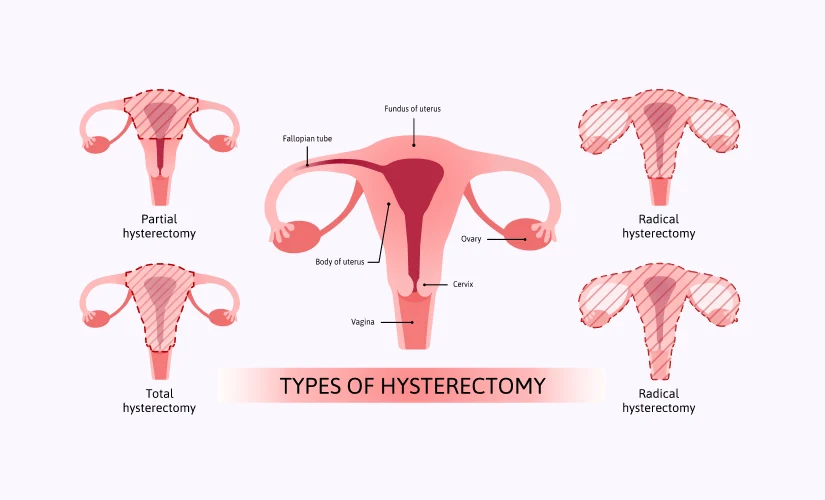
A hysterectomy is a surgical procedure that removes the uterus and sometimes the surrounding female reproductive organs, such as the cervix, ovaries, or fallopian tubes. It is often recommended after the failure of other treatment options to alleviate chronic gynecological conditions. Once a woman undergoes a hysterectomy, she will no longer have menstrual cycles and will not be able to conceive; thus, the procedure is considered a conclusive solution for a number of uterine concerns.
Types of Hysterectomy Surgery
The different types of hysterectomy surgeries are performed based on the medical reason, the degree of severity, and the preferences of the patient. The following are the common hysterectomy types:
- Total Hysterectomy: The total hysterectomy removes the uterus together with the cervix and is the most common type of hysterectomy performed. It is frequently suggested for such conditions as uterine fibroids, endometriosis, chronic pelvic pain, abnormal bleeding, or even some cancers. The procedure generally prevents the developing of either cervical or uterine cancer by removing the cervix together with the uterus.
- Subtotal (Partial or Supracervical) Hysterectomy: The operation consists of the removal of only the upper part of the uterus while the cervix remains untouched. This kind of hysterectomy is suggested when the medical problem is not affecting the cervix or when the patient wishes to keep the cervix for sexual or personal reasons. Keeping the cervix may contribute to enhancing the support for the pelvic floor and might lower the incidence of some postoperative complications.
- Radical Hysterectomy: A radical hysterectomy is an extensive surgical procedure mainly used in the treatment of certain cancers, namely cervical or uterine cancer. It entails the removal of the uterus, cervix, upper part of the vagina, and the surrounding tissues, including the parametria and possibly pelvic lymph nodes. This is generally suggested when the cancer has progressed beyond the uterus or cervix but has not yet spread to distant organs.
- Hysterectomy with Bilateral Salpingo-Oophorectomy: This operation involves the removal of the uterus along with the ovaries and fallopian tubes on both sides. It is typically carried out when there is a likelihood of ovarian or fallopian tube disease, e.g. cancer, or in cases of serious endometriosis or chronic pelvic inflammatory disease. The removal of the ovaries causes surgical menopause, which means that the patient will stop producing ova (egg cells).
Indications of Hysterectomy
Hysterectomy is advised when certain gynecological conditions significantly affect health and quality of life. Common hysterectomy indications include:
- Uterine Fibroids: Chronic fibroids can lead to continuous pain or abundant menstrual flow.
- Endometriosis/Adenomyosis: If a woman suffers from extreme conditions of endometriosis or adenomyosis and has tried all other treatments, she might have no other choice but to undergo a hysterectomy.
- Uterine Prolapse: The uterus slipping down into the vagina is known as prolapse, a condition that significantly reduces the patient's quality of life.
- Abnormal Uterine Bleeding: Hysterectomy is indicated in a scenario where a patient has uncontrolled bleeding that refuses to respond to any medical or surgical intervention.
- Gynecological Cancers: The uterus is usually removed in cases of cancers like uterine or cervical cancer.
- Chronic Pelvic Pain: Hysterectomy can be a way out for persistent pelvic pain related to uterine disorders.
Hysterectomy Procedure
The hysterectomy steps involve a comprehensive process beginning with pre-surgical evaluations, followed by the surgical procedure itself, and concluding with post-operative care. Understanding these steps helps patients prepare effectively and ensures a smoother recovery.
- Preparation Before Hysterectomy: Before the hysterectomy surgery, patients are subjected to thorough evaluations, which comprise blood tests, imaging, and consultations with the gynecologists. Then the gynecologists clarify the process and the expected recovery time and answer the queries requested by the patients/representatives.
- During Hysterectomy: The hysterectomy surgery may be done either by open abdominal surgery, laparoscopy, vaginally, or robotically assisted. The uterus is removed with utmost care to avoid damaging the adjacent organs.
- After Hysterectomy: After the hysterectomy surgery, the patients are kept under observation for the control of pain, monitoring of vital signs, and encouragement of early mobilization. The patients are also given pain relievers and antibiotics to control the pain and prevent infection, respectively.
Complications of Hysterectomy
Even though hysterectomy is a procedure that is performed quite often and has a good safety profile, it is not without certain risks in very rare cases. A proper understanding of these hysterectomy complications might assist the patient in making informed choices and also in getting ready for the recovery process:
- Infection: The surgical wound and the patient’s body can be mildly to moderately infected, with the infection being treated with antibiotics.
- Excessive Bleeding: Excessive loss of blood during or after the operation is not common but is still a case that might need medical help.
- Damage to the Nearby Organs: The organs that are close to each other, such as the bladder, bowel, or ureters, might be damaged in some rare situations.
- Blood Clots: If the patient doesn’t move around soon after the surgery, the possibility of clots forming in the legs or lungs increases.
- Hormonal Changes: The symptoms of early menopause, like hot flashes and mood swings, will be experienced by the patients who had their ovaries removed; however, these symptoms can be managed later.
- Pain or Discomfort: Pain or discomfort in the pelvic area or abdomen is a common occurrence during the early recovery process, and the patient will eventually be pain-free.
Hysterectomy Recovery
The hysterectomy recovery time is determined by the kind of surgery performed. A minimally invasive surgery usually results in quicker recovery, with the patients getting back to their usual activities after a few weeks. Proper sleep at night, follow-up visits, medication adherence, and following doctors' orders regarding the post-operative care are the main aspects of quick healing and overall health.
Conclusion
Hysterectomy is a safe and effective surgical option for women who are suffering with long-term gynecological problems. At CARE Hospitals, we provide the minimally invasive and robotic hysterectomy surgeries with a patient-centric approach that ensures safety, comfort, and rapid recovery. Our experienced gynecologists and customized treatment plans help women to get better health, symptom relief, and a better quality of life.
Best Hysterectomy Surgery Hospitals in India
-

CARE Hospitals, Banjara Hills, Hyderabad

CARE Hospitals Outpatient Centre, Banjara Hills, Hyderabad

CARE Hospitals, HITEC City, Hyderabad

CARE Hospitals Outpatient Centre, HITEC City, Hyderabad

Gurunanak CARE Hospitals, Musheerabad, Hyderabad

CARE Hospitals, Nampally, Hyderabad

CARE Hospitals, Malakpet, Hyderabad

CARE Hospitals, Bhubaneswar

Ramkrishna CARE Hospitals, Raipur

CARE Hospitals, Ramnagar, Visakhapatnam

CARE Hospitals, Health City, Arilova
Frequently Asked Questions
Yes, it is a safe procedure when performed by skilled gynecologists, especially with advanced minimally invasive techniques. The minimally invasive approaches make the person recover quickly.
Yes, hysterectomy is a major surgery since the uterus is completely taken out, but with laparoscopic or robotic techniques, the recovery is quicker and makes the patient pain-free.
Most women can sit without problems within a few days after the operation; however, it is recommended to avoid sitting for long periods for the first 2–3 weeks.
The age limit for hysterectomy is not fixed; it is a patient-specific issue depending on her health, symptoms, and the need for a medical procedure.
A woman has to undergo a hysterectomy in order to eliminate conditions like fibroids, heavy bleeding, endometriosis, uterine prolapse, and some types of cancer.
The length of hospital stay generally varies from 1 to 3 days; this will depend on the particular hysterectomy and the patient’s healing.
Total recovery usually takes about 4 to 6 weeks. However, patients who have had the minimally invasive operation may recover in less time.
A minimum of 2 weeks of total rest is recommended, followed by a gradual return to normal activities, according to the doctor’s instructions.
Bleeding years after a hysterectomy is mainly due to the vaginal orifice issues; there may be hormonal changes or other female disorders, all resulting in bleeding long after the hysterectomy, and therefore a doctor’s evaluation is needed.
Yes, for a few weeks after the operation, light spotting is expected, but heavy or continuous bleeding should be immediately reported to the relevant doctor
Yes, depending on the severity and the condition, options such as medication, hormone therapy, uterine artery embolization, or some relevant operative techniques might be taken into consideration.
Still Have a Question?