



-
Centre of Excellence
Specialties
Treatments and Procedures
 HyderabadCARE Hospitals, Banjara Hills CARE Outpatient Centre, Banjara Hills CARE Hospitals, HITEC City CARE Hospitals, Nampally Gurunanak CARE Hospitals, Musheerabad CARE Hospitals Outpatient Centre, HITEC City CARE Hospitals, Malakpet
 Raipur
 Bhubaneswar
 Visakhapatnam
 Nagpur
 Indore
 Chh. Sambhajinagar
 Clinics & Medical Centers


-

-

-

-

-

-
Follow Us

Osteoarthritis
Osteoarthritis
Low-Dose Radiation Therapy for Osteoarthritis
Although radiotherapy is usually associated with cancer treatment, low-dose radiotherapy (LDRT) can be an excellent, non-invasive treatment technique for several benign conditions, including osteoarthritis. As the name implies, radiation doses employed in LDRT are far less than those given for cancer. This gentle yet effective intervention has been tried and tested for chronic joint aches and inflammation, which provide enormous long-term relief.
At the CARE Hospitals in Hyderabad, we practice Low-Dose Radiation Therapy (LDRT) as a new-age non-surgical treatment for osteoarthritic pain for mild to moderate stages of arthritis. LDRT consists of using low doses of x-ray radiation to directly counter inflammation in the joints at particular sites.
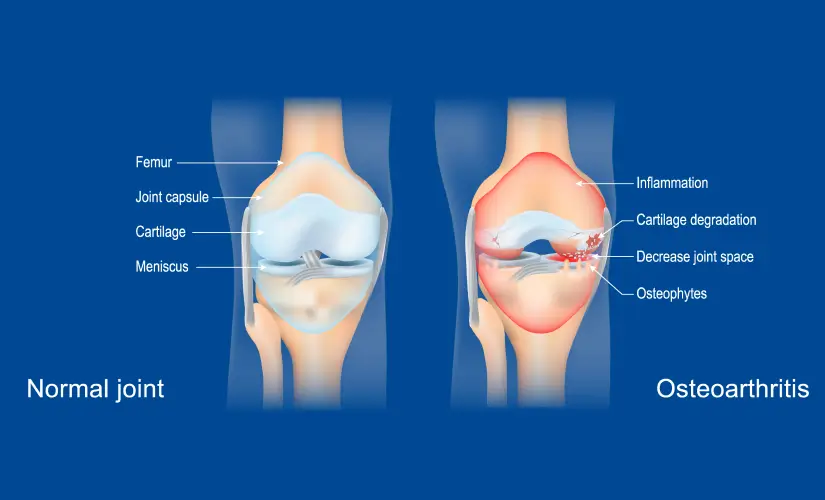
How it Works
Low-dose radiation is applied directly to the affected joint to promote healing and pain relief in osteoarthritis. Here is how LDRT works:
- Reduces Inflammation: The low-dose radiation therapy diminishes the chronic inflammatory cells and chemicals in the joint that cause osteoarthritis pain; hence, by doing so, it interrupts the inflammatory cascade, providing conspicuous and long-lasting relief.
- Reduces Pain: Reduction of chronic inflammation and swelling in the joint is directly proportional to the diminution of pain.
- Facilitates Healing: LDRT helps suppress abnormal cell proliferation seen in some forms of degenerative joint conditions. It does not cause regeneration of cartilage, but it does slow down the cascade of inflammatory processes, thus limiting further damage and allowing the body to heal to some extent.
Ideal Candidates for LDRT for Osteoarthritis
At CARE Hospitals, we specialize in the application of low-dose radiotherapy for osteoarthritis and several arthritis conditions. You might just be an appropriate candidate for LDRT if you have:
- Chronic osteoarthritis: Painful mild to moderate grade osteoarthritis located in the joints—knee, hip, shoulder, or elbow—that does not respond well to other kinds of non-surgical treatment.
- Intolerance to medication: Those suffering adverse effects from long-term use of NSAIDs or other analgesics.
- Not fit for surgery: For those looking for a non-invasive alternative to surgery or medically unfit for a joint replacement, LDRT is perfect.
In studies with LDRT for arthritis, greater than 80% of the patients got significant pain relief. For some, the pain relief could last from several months to years, deemed sufficient to restore the patients' quality of life.
Why Try Low-Dose Radiotherapy for Osteoarthritis?
If chronic pain from osteoarthritis limits your daily life, low-dose radiation therapy could offer the best solution. Patients report that a short course of low-dose radiotherapy lowers joint pain, improves mobility and calms swelling. The treatment is completely noninvasive and demands no needles, no incisions, and no anesthesia—you lie still for a few minutes while the machine delivers the planned dose of x-ray treatment.
Why Choose CARE Hospitals for LDRT?
CARE Hospitals ranks among India’s leading hospitals for Low-Dose Radiation Therapy for painful musculoskeletal conditions. The hospital operates advanced radiotherapy machines and keeps a full care chain in place to reduce pain and improve mobility in musculoskeletal conditions. Internationally trained Radiation oncologists trained in Low-Dose Radiation Therapy plan each session so that pain drops and joint function stay stable. Here we offer:
- Expert Team: The radiation oncologists at CARE Hospitals hold more collective experience with low-dose radiation for pain than any other unit in the country. The same team has worked for twenty-five years plus and has delivered low-dose courses to over twenty thousand patients.
- State-of-the-art Technology: Our linear accelerators, like the VersaHD, provide focused radiation treatment.
- Customized Treatment Plans: Our plans are individualized based on the patient's specific medical condition.
- Patient-Centric Pain Management: LDRT is an important part of our overall approach to treating pain & inflammatory conditions.
- Best Outcomes: LDRT has shown predictable outcomes in the experience of patients: reduced pain and greater mobility.
- Cost-effective Treatment: LDRT is cost-effective, providing long-term relief at a lower cost than the ongoing expenses of continued medications and physical therapy.
- Continuous Support: We provide continuous patient support and care throughout the entire management of an osteoarthritis condition, from the first office visit to aftercare.
Frequently Asked Questions
The radiation oncologist directs a low radiation dose toward the painful joint. The dose slows macrophages that release enzymes plus cytokines inside osteoarthritic cartilage and synovium. The drop in cell traffic lowers intra-articular pressure and also edema, and the pain subsides for months.
LDRT is generally recommended for the knee, hip, shoulder, elbow, ankle, and metacarpophalangeal (in hands) as well as metatarsophalangeal joints in feet, weight-bearing knees and hips receive the highest number of treatments.
The patient lies on the table while the linear accelerator rotates once above the skin mark. No incision, needle or anesthetic is required, plus the beam delivery finishes in under 10 minutes. The procedure feels no different from a routine radiograph.
The total count of sessions varies with the patient's problem, yet the usual plan delivers six to ten visits spread across two to three weeks. A single appointment lasts only a few minutes—the schedule fits normal routines.
The patient rarely notices instant change. Pain eases slowly after the LDRT course, and the sharpest relief commonly appears up to two months after the last session.
Relief endures. For most people the improvement stays for several months and sometimes for a few years. Doctors repeat the course if the condition returns.
More than four out of five patients gain clear pain relief and improved joint mobility . The rate still depends on how far the disease has advanced and on the person's general health.
The best candidates are adults who carry long-standing osteoarthritis pain and who gain little from drugs or physiotherapy. The method suits those with mild to moderate grade joint damage where there is scope to stop inflammation and halt the disease process.
Very young Individuals and those who have certain specific illnesses, pregnant women do not qualify. A radiation oncologist must check each case in advance.
LDRT treats the complaints of osteoarthritis—it does not cure the disease—it manages pain and swelling, it lets the joint move more lightly, and it may slow further damage, yet it cannot rebuild lost cartilage.
Still Have a Question?


