



-
Centre of Excellence
Specialties
Treatments and Procedures
 HyderabadCARE Hospitals, Banjara Hills CARE Outpatient Centre, Banjara Hills CARE Hospitals, HITEC City CARE Hospitals, Nampally Gurunanak CARE Hospitals, Musheerabad CARE Hospitals Outpatient Centre, HITEC City CARE Hospitals, Malakpet
 Raipur
 Bhubaneswar
 Visakhapatnam
 Nagpur
 Indore
 Chh. Sambhajinagar
 Clinics & Medical Centers


-

-

-

-

-

-
Follow Us


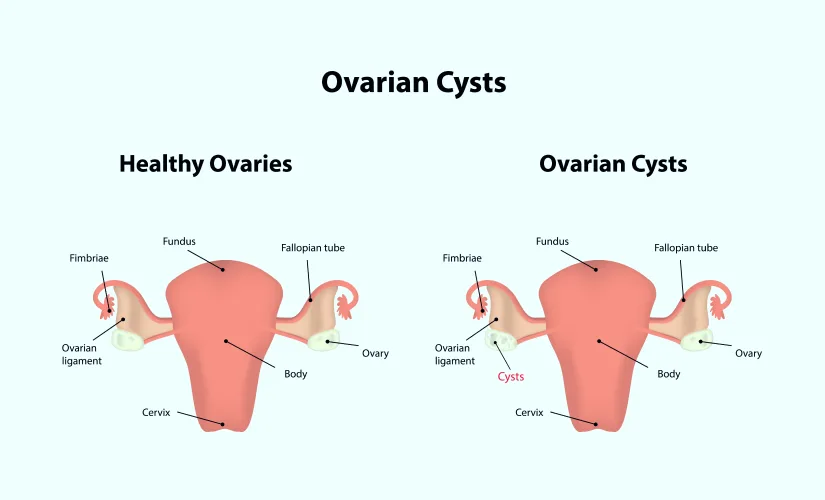
Ovarian cysts are commonly diagnosed during the gynecological check-ups for the evaluation of pelvic pain and irregular menstrual cycles. However, the majority of the ovarian cysts occurring are not harmful and disappear on their own without any therapy, but there are some that may develop, create uncomfortable feelings, or even lead to complications if mistaken for being harmless and left untreated. In support of the reproductive health and well-being of women, the detection of this condition at an early stage and the choice of an appropriate treatment are very crucial.
Why Choose CARE Hospitals for Ovarian Cyst Treatment in Hyderabad
Choosing the right hospital is highly important for keeping ovarian cysts under control and for women's health in the future. Here are the reasons to choose us:
- Expert Gynecologists Who Are Experienced in Diagnosing and Treating Complicated Ovarian Cysts
- Advanced Diagnostic Facilities Offering High-Quality Ultrasounds, CT Scans, and MRIs for Accurate Cyst Evaluation
- Personalized Treatment Plans Specific to Each Patient’s Age, Symptoms, Cyst Characteristics, and Fertility Goals
- Minimally Invasive Surgeries Using Robotic and Laparoscopic Techniques for Faster Recovery and Minimal Scarring
- Fully Integrated Care from Diagnosis to Treatment & Follow-Up, Including 24/7 Emergency Assistance
What is an Ovarian Cyst?
Ovarian cysts are lesions that contain either fluid or semi-solid substances and are formed on or within an ovary. The occurrence of these cysts is a normal phenomenon in women of reproductive age and is usually the result of the menstrual cycle. In most cases, ovarian cysts are non-cancerous and do not produce any symptoms, but in some cases, they can enlarge and become a reason for medical intervention.
Ovarian Cyst Types
Ovarian cysts are classified into the following types as per their origin and structure:
- Functional Cysts: They come about during the menstrual period and, in the majority of cases, resolve on their own. Treating them is usually not necessary, and only slight symptoms are experienced.
- Dermoid Cysts: These are made up of tissues such as fat and hair; these cysts are usually benign but can become very large. It might be necessary to remove them if they are causing any pain.
- Endometriomas: These form when endometrial tissue grows on the ovaries, often leading to pelvic pain. They are commonly linked with endometriosis.
- Cystadenomas: The source of these benign ovarian growths is the ovarian tissue, and cystadenomas can get pretty big, causing a lot of discomfort. Surgical removal is sometimes necessary, but usually these tumors are benign (non-cancerous).
- Polycystic Ovarian Syndrome: The acne, thinning hair, and multiple small cysts on ovaries all reflect a hormonal imbalance, which favors the development of this condition characterized by long menstrual periods and eventually infertility.
Ovarian Cyst Symptoms
The symptoms of ovarian cysts are quite various, and they can be mild at times, while in other cases, they can be very painful, and that will depend on the type and the size of the cyst:
- Pelvic or lower abdominal pain: The dull or sharp pain that is felt on one side of the lower abdomen, and it may become worse with physical activity or during menstruation.
- Bloating or fullness in the abdomen: A constant heaviness or swelling in the abdomen caused by the enlarging cyst.
- Irregular or painful menstrual cycles: Hormonal level fluctuations due to cysts may result in delayed, heavy, and painful periods.
- Pain during intercourse: The pressure exerted on the ovaries might lead to significant discomfort or even pain during or after sex, especially if penetration is deep.
- Frequent urge to urinate: Larger cysts can press on the bladder, causing the need to urinate more frequently, even if you're not drinking more fluids.
Ovarian Cyst Causes
There are a number of reasons why ovarian cysts might be formed. Some of the common causes are explained below:
- Hormonal disorders: The changes in the reproductive hormones might at one point interfere with the normal ovulation, and this could result in the formation of functional ovarian cysts.
- Pregnancy-related factors: In early pregnancy, the cysts might develop in order to support the production of hormones, and it is expected that they would disappear as the pregnancy continues.
- Endometrial tissue: Tissues from the endometrium located outside the uterus can stick to the ovaries and create a type of cyst called an endometrioma.
- Infections in the pelvis: If a person has a severe infection and it is not treated properly, the infection can spread to the ovaries and result in the formation of cysts that are filled with either fluid or pus.
- Polycystic ovary syndrome (PCOS): PCOS causes many small cysts to form on the ovaries due to hormonal imbalance and disrupted ovulation.
Ovarian Cyst Complication
Complications may arise from certain ovarian cysts if they are not treated properly, and these include:
- Ovarian torsion: When a big cyst is there, it can twist the ovary round its tissues that support it, causing sudden and strong abdominal pain along with reduced blood flow.
- Cyst rupture: The bursting of a cyst may result in very sharp pain and bleeding inside the body, at times necessitating hospital admission right away.
- Infection of the cyst: An infected cyst may bring about fever, pain in the pelvic region, and, if not treated, an abscess formation might take place.
- Fertility-related issues: Some cysts or recurrent ovarian surgeries might impair ovarian function and thus fertility in women, some of whom are characterized by a fertility condition.
- Cancerous cyst: Rarely, but still, there may be some ovarian cysts that are cancerous, especially after menopause.
- Peritonitis: A situation when the cyst contents leak into the abdominal cavity can lead to the inflammation of the peritoneum, which results in severe pain and a medical emergency.
Ovarian Cyst Treatment
Treatment for ovarian cysts depends on several factors, such as the cyst's size and type, the symptoms, its causes, the patient's age, and her future plans for having children. The following are the common treatment approaches for the ovarian cyst:
- Observation and Monitoring (Watchful Waiting): Functional cysts, which are usually small, uncomplicated, and without symptoms, often go away on their own. Physicians advise regular pelvic exams and ultrasound imaging to track any shifts in size, visual characteristics, or the emergence of new symptoms as time passes.
- Medical Therapy: Hormonal medications, like birth control pills, are sometimes used to regulate menstrual cycles and prevent the formation of new cysts. Although they don't make existing cysts smaller, these treatments help reduce the chance of new cysts forming in women who are prone to them.
- Pain Management and Supportive Care: For mild to moderate discomfort stemming from ovarian cysts, relief often comes from a combination of painkillers, tweaks to daily habits, and careful monitoring by a healthcare professional to prevent any escalation of the condition.
- Laparoscopic Surgery: Laparoscopic surgery, a form of minimally invasive surgery, is the go-to option when cysts refuse to go away, are enlarging, are causing discomfort, or are otherwise disrupting a person's routine. This approach involves small cuts, which allows for a quicker recovery, less scarring, and the preservation of healthy ovarian tissue when possible.
- Laparotomy: Open surgery, or laparotomy, is the recommended approach when dealing with particularly large cysts, those that are complicated, or when there's a suspicion of cancer. This approach enables surgeons to excise the cyst with confidence while also facilitating a comprehensive assessment of adjacent tissues when cancer is suspected.
- Fertility-preserving Treatments: Fertility-preserving treatments require special attention, especially for younger women or those hoping to conceive in the future. The goal is to safeguard ovarian function. Surgical procedures are designed to remove the cyst while preserving the ovary. This approach helps maintain hormonal balance and preserves the ability to have children.
Conclusion
Ovarian cysts are a usual thing, and many times they are controlled easily just by their medical care being administered within the immediate period. At CARE Hospitals, our highly skilled gynecologists integrate state-of-the-art diagnostics with individualized treatment methods according to the patient's status to give safe, effective, and compassionate ovarian cyst treatment. The sooner one consults, the less likelihood of complications and consequently the more support for long-term women's health.
Our Doctors
-

Dr. Aditi Laad
MBBS, DNB
Woman & Child Institute
View More
-
Dr. Chetna Ramani
MBBS, DGO
Woman & Child Institute
View More
-
Dr. Sushmita Mukherjee Mukhopadhyay
MBBS, DGO, MD, DNB, FICOG
Woman & Child Institute
View More
-

Dr. Neena Agrawal
MBBS, MS, FICOG, Diploma in Gynaecology, Endoscopy
Woman & Child Institute
View More
-

Dr. Abhinaya Alluri
MS (OBG), FMAS, DMAS, CIMP
Woman & Child Institute
View More
-

Dr. Alakta Das
MBBS, MS (O&G), FMIS
Woman & Child Institute
View More
-

Dr. Alka Bhargava
MBBS, MS
Woman & Child Institute
View More
-
Dr. Amatunnafe Naseha
MBBS, DNB, FRM
Woman & Child Institute
View More
-

Dr. Aneel Kaur
DGO
Woman & Child Institute
View More
-

Dr. Anjali Masand
MBBS, MD (OBG)
Woman & Child Institute
View More
-
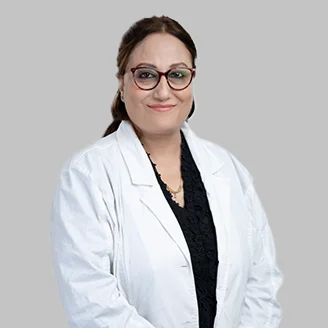
Dr. Arjumand Shafi
MBBS, DGO
Woman & Child Institute
View More
-

Dr. Kranthi Shilpa
MBBS, MS (ObGyn), FRM, Fellowship in Infertility
Woman & Child Institute
View More
-
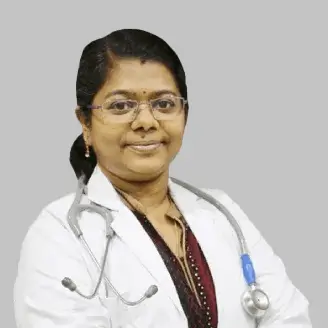
Dr. Krishna P Syam
MBBS, DGO, DNB
Woman & Child Institute
View More
-

Dr. Neha V Bhargava
MS, DNB (obgyn), MNAMS, Fellow (Gynae Oncology)
Woman & Child Institute
View More
-

Dr. Prabha Agrawal
MBBS, MD, FMAS, FICOG, Fellowship in minimal access surgery
Woman & Child Institute
View More
-

Dr. Prathusha Kolachana
MBBS, MS (Obstetrics and Gynecology), Post-Doctoral Fellowship in Endogynecology (Laparoscopy)
Woman & Child Institute
View More
-

Dr. Ruchi Srivastava
MBBS, DGO, DNB
Woman & Child Institute
View More
-

Dr. Sindhuri Gorantla
MBBS, MS(Obgyn, Gold Medalist), FICOG(Rep.Medicine), FMAS, Diploma in ICCG
Woman & Child Institute
View More
-

Dr. Sonal Lathi
MBBS, MD, DNB
Woman & Child Institute
View More
-
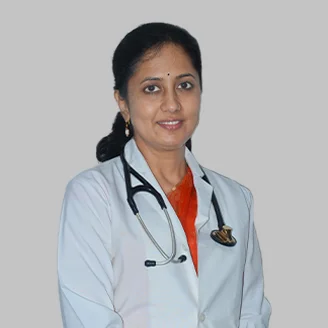
Dr. Sushma J
MBBS, MS (OBG)
Woman & Child Institute
View More
-

Dr. Thajammul Samrin
MBBS, MS, FICOG, FMAS
Woman & Child Institute
View More












Frequently Asked Questions
Couldn’t find what you were looking for?
Need any help? Get a Call Back.

Still Have a Question?


