
Centre of Excellence
Specialties
Treatments and Procedures
Hyderabad
Raipur
Bhubaneswar
Visakhapatnam
Nagpur
Indore
Chh. Sambhajinagar
Clinics & Medical Centers
Online Lab Reports
Book an Appointment
Consult Super-Specialist Doctors at CARE Hospitals
Updated on 6 February 2026
The words 'pulmonary stenosis' can make you uncomfortable if you or your loved one is diagnosed with it. We wonder what it really means and how it could affect someone we care about. This condition starts early in pregnancy when the heart's pulmonary valve does not form the way it should. If you are trying to understand what causes it, how to spot the signs, or what doctors can do to help, you are not alone. Let us walk through the basics together.
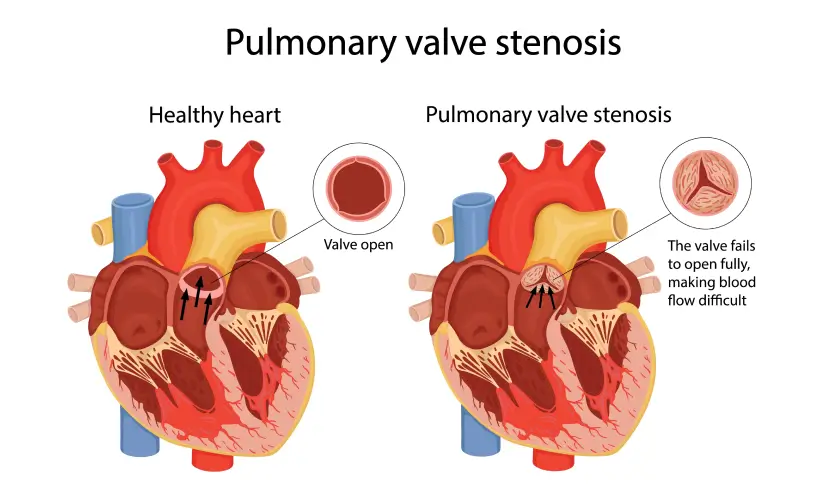
Pulmonary valve stenosis occurs at the valve between the right ventricle and the pulmonary artery, where blood flows from the heart to the lungs. This condition manifests as narrowing of the pulmonary valve, causing the valve flaps to become thick, stiff, or fused together.
The narrowed opening significantly affects blood circulation through the pulmonary artery. As a result, the right ventricle chamber must work harder to eject blood effectively into the lungs. This additional strain on the heart muscle can ultimately result in heart failure if left unattended.
The medical community recognises two primary types of pulmonary stenosis:

Common symptoms of moderate to severe pulmonary stenosis encompass:
Pulmonary stenosis presents unique symptoms in newborns and infants. Babies might display a bluish or greyish tint to their skin, medically termed cyanosis. This discolouration occurs due to insufficient oxygen levels in the blood, indicating reduced blood flow through the narrowed pulmonary valve
The condition stems from abnormal formation of the pulmonary valve during foetal development (resulting in stiff or thick valve cusps that may become fused). Genes can have a big impact here. For example Noonan syndrome (when certain changes in our DNA affect how the heart develops).
But it is not always something you are born with. Sometimes, other health issues can cause pulmonary stenosis as you get older:
If a mother gets German measles while pregnant, it can make it more likely for her baby to have problems with the pulmonary valve.
Pulmonary stenosis often shows up with other heart issues, like:
Untreated pulmonary stenosis leads to various complications that affect heart function and overall health:
Your doctor may come to know that you have pulmonary stenosis through routine physical examinations. When they listen to your heart sounds with a stethoscope, they identify a distinctive whooshing sound (known as a heart murmur and caused by turbulent blood perfusion across the narrowed valve).
Several diagnostic tests help confirm the presence and severity of pulmonary stenosis:
If you have mild pulmonary valve stenosis without symptoms your doctor recommends periodic health assessments to monitor the condition's progression and ensure timely intervention (if needed). Balloon valvuloplasty stands as the primary treatment choice for moderate to severe cases. During this procedure your doctor performs several steps (including but not limited to):
Doctors strongly recommend seeking immediate care for newborns displaying cyanosis (when you see bluish discolouration of lips and nail beds). This condition signals critically blocked pulmonary valves, requiring emergency intervention.
Parents should schedule an urgent consultation with doctors upon observing the following:
Living with pulmonary stenosis means you have to pay close attention to your health. Thankfully doctors have more ways than ever to help. Sometimes, you just need regular check-ups. Other times, you might need a procedure like balloon valvuloplasty to open the vessels or even surgery if things get tough.
Most people do really well with modern treatments but it is still important to see your doctor often. Those regular visits help catch any problems early (which can make a big difference). If you ever notice things like shortness of breath or chest pain do not wait and get help right away.
Congenital cardiac malformations causing blood flow obstruction can occur in either the right or left ventricle. The primary difference lies in their location and affected blood flow. Pulmonary stenosis affects the right side of the heart, restricting blood flow to the lungs. On the other hand, aortic stenosis impacts the left side, limiting blood flow to the rest of the body.
Genetics and congenital cardiac defects are the most common causes of pulmonary stenosis. Some other factors might trigger pulmonary stenosis later in life. They are:
A heart-friendly diet plays a vital role in managing pulmonary stenosis. Doctors recommend:
Pulmonary stenosis severity varies considerably among patients. Mild cases often remain asymptomatic and require only periodic monitoring. If you have moderate to severe stenosis it can lead to health complications without proper treatment.
Modern medical advancements offer promising outcomes for individuals with pulmonary stenosis. Long-term survival rates after valve intervention exceed 90% yet certain complications might arise in one-third of patients.
Tips to Control Asthma During the Rainy Season
Asthma Diet: What to Eat and What to Avoid
3 March 2026
3 March 2026
3 March 2026
3 March 2026
2 March 2026
2 March 2026
2 March 2026
2 March 2026
Have a Question?
If you cannot find answers to your queries, please fill out the enquiry form or call the number below. We will contact you shortly.