

-
Centre of Excellence
Specialties
Treatments and Procedures
 HyderabadCARE Hospitals, Banjara Hills CARE Outpatient Centre, Banjara Hills CARE Hospitals, HITEC City CARE Hospitals, Nampally Gurunanak CARE Hospitals, Musheerabad CARE Hospitals Outpatient Centre, HITEC City CARE Hospitals, Malakpet
 Raipur
 Bhubaneswar
 Visakhapatnam
 Nagpur
 Indore
 Chh. Sambhajinagar
 Clinics & Medical Centers


-

-

-

-

-

-
Follow Us

Best Hospital for Flow Diverter Surgery in Hyderabad
- Advanced Technology
- Shorter Hospital Stay
- Pre & Post-Operative Care
- All Insurance Accepted

Chat With Our Experts
Get second opinion on Whatsapp
25 lakhs+
Happy Patients
Experienced and
skilled surgeons
17
Health Care Facilities
Top most Referral Centre
for Complex Surgeries
Advanced Flow Diverter Surgery
A flow diverter is a high-density braided mesh stent used within the parent artery at the aneurysm neck. Unlike filling the aneurysm directly like coiling the flow diverter is placed inside the main blood vessel to redirect blood flow away from the aneurysm. Over time this reduces pressure inside the aneurysm allowing it to clot and gradually seal off naturally.
The device also helps the blood vessel heal by supporting the growth of new tissue across the weakened area. Flow diverter stents are commonly used for larger, complex or difficult-to-treat aneurysms and provide a minimally invasive alternative to open surgery in selected patients. Rather than treating the aneurysm sac, the device treats the parent artery.
Who Needs a Flow Diverter?
Flow diverters are indicated for aneurysms anatomically unsuitable for coiling or clipping, or where prior treatment has failed:
- Large (10 to 25 mm) and giant (greater than 25 mm) ICA aneurysms
- Wide-necked aneurysms (dome-to-neck ratio below 1.5 or neck width above 4 mm)
- Fusiform and dissecting aneurysms
- Recurrent aneurysms after coiling or clipping, flow diverter addresses the residual sac without repeat coiling
- Blister aneurysms and carotid-ophthalmic or paraclinoid segment aneurysms that are difficult to treat conventionally.
Best Flow Diverter Surgery Doctors in India







Symptoms of Brain Aneurysm
Most intracranial aneurysms are asymptomatic until rupture or mass effect produces symptoms:
- Unruptured - from compression:
- Headache behind or above the eye
- Third cranial nerve palsy (ptosis, diplopia, fixed dilated pupil) from posterior communicating artery aneurysm
- Visual field defects or progressive visual loss from optic chiasm compression
- Ruptured - subarachnoid haemorrhage:
Causes of Brain Aneurysm
Brain aneurysms usually develop when a weak area in the wall of a brain artery gradually bulges outward over time. These weak points are most commonly found where blood vessels branch inside the brain (circle of Willis). Common contributing factors are:
- Congenital tunica media deficiency at bifurcation points
- Hypertension is the most modifiable causative factor
- Atherosclerosis
- Connective tissue disorders (ADPKD, Ehlers-Danlos type IV, Marfan syndrome)
- Mycotic aneurysms from infective endocarditis
- Flow-related aneurysms from abnormal haemodynamic stress on AVM feeding arteries.
Risk Factors of Flow Diverter Treatment
Risk factors for both the underlying aneurysm and the flow diverter procedure:
- Uncontrolled hypertension accelerates aneurysm growth and rupture risk
- Smoking carries two to three times the rupture risk of non-smokers
- Irregular use of blood-thinning medicines is the leading risk factor for in-stent thrombosis
- Resistance to antiplatelet medicines
- A giant aneurysm size (greater than 25 mm) carries a higher procedural stroke risk
- Aneurysms in difficult brain locations have a higher procedural risk
Complications of Flow Diverter Treatment
Flow diversion carries a distinct complication profile from conventional coiling:
- Thromboembolic stroke
- Blood clot formation inside the stent
- Bleeding or aneurysm rupture
- Incomplete occlusion
- Side effects from blood-thinning medications like increased bleeding or bruising
- Access site complications like bleeding, swelling, or bruising
- Mass effect from thrombosing sac - inflammatory swelling transiently worsens cranial nerve compression in giant aneurysms before resolution.
Diagnosis Before Flow Diverter Treatment
Pre-procedural planning is critical the flow diverter must be precisely sized and positioned.
Investigations are:
- CT Angiography (CTA): Defines aneurysm size, neck morphology, parent artery diameter, and branch vessels
- MR Angiography (MRA): Preferred for screening at-risk patients
- Digital Subtraction Angiography (DSA) with 3D rotational angiography: Provides the highest resolution of neck anatomy and parent artery dimensions essential for device sizing
- Platelet function testing: Determines antiplatelet adequacy and strategy
- Blood tests: Renal function, coagulation, FBC, and HbA1c are performed before the procedure.
Flow Diverter Procedure
Performed under general anaesthesia. Dual antiplatelet therapy is commenced 5 to 7 days before, with platelet function testing to confirm adequate inhibition.
Procedure steps are:
- Catheter Insertion: The surgeon inserts a small catheter through an artery in the groin or wrist to provide access for the entire procedure.
- Navigation to the Brain: Using continuous imaging guidance the catheter is carefully advanced through the internal carotid or vertebral artery.
- Diagnostic Angiography: Detailed angiographic imaging is performed to assess the size, shape and location of the aneurysm & to map the surrounding arteries before any device is deployed.
- Stent Positioning: The surgeon positions the specialised flow diverter stent precisely across the neck of the aneurysm rather than inside the aneurysm sac itself.
- Confirmation Imaging: Final angiographic imaging confirms that the stent is correctly positioned and that blood flow through the surrounding vessels is healthy and unobstructed.
The procedure usually takes 60 to 120 minutes. Patients are monitored closely after the procedure, with attention to neurological status, blood pressure and overall recovery progress.
Benefits of Flow Diverter Treatment
Benefits are:
- Treats previously untreatable aneurysms like large, giant, fusiform, and recurrent cases in a single device deployment
- Reduce the risk of aneurysm rupture and re-bleeding
- High occlusion rates - superior to coiling alone for large and wide-necked aneurysms
- No open skull surgery needed
- The device maintains the vessel lumen and covered perforators remain patent in the majority.
When to See a Doctor
Certain presentations require emergency assessment:
- Thunderclap headache (sudden, maximal-intensity, peak within seconds)
- Sudden double vision or drooping eyelid
- Progressive visual loss or field defect
- Any sudden focal neurological deficit even if transient
- Sudden loss of consciousness or new-onset seizure
Known aneurysm patients should seek earlier review if headache pattern changes or neurological symptoms develop.
Conclusion
Flow diversion is the most significant advance in endovascular aneurysm treatment. By redirecting blood flow away from the aneurysm the procedure allows the weakened blood vessel to heal gradually while reducing the rupture and bleeding risk. It is especially useful for large, wide-necked or difficult-to-treat aneurysms that may not be suitable for conventional coiling or clipping. Careful patient selection, structured angiographic follow-up, experienced neurointerventional teams, and regular follow-up are non-negotiable. Second-generation devices continue to expand the treatable anatomy. Early referral to a neurovascular centre with established flow diversion experience determines the options available.
Flow Diverter Surgery Hospitals in India
-
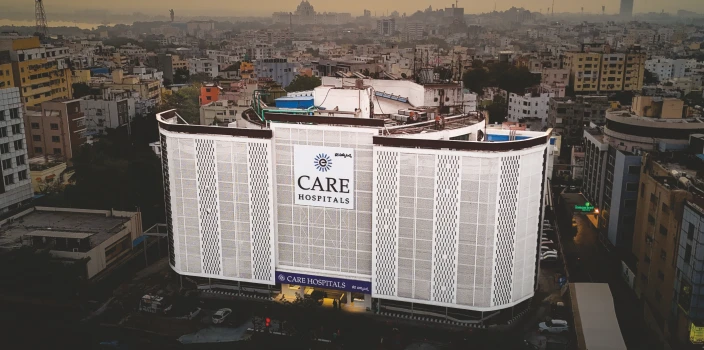
CARE Hospitals, Banjara Hills, Hyderabad

CARE Hospitals Outpatient Centre, Banjara Hills, Hyderabad

CARE Hospitals, HITEC City, Hyderabad

CARE Hospitals Outpatient Centre, HITEC City, Hyderabad

Gurunanak CARE Hospitals, Musheerabad, Hyderabad

CARE Hospitals, Nampally, Hyderabad

CARE Hospitals, Malakpet, Hyderabad

CARE Hospitals, Bhubaneswar

Ramkrishna CARE Hospitals, Raipur
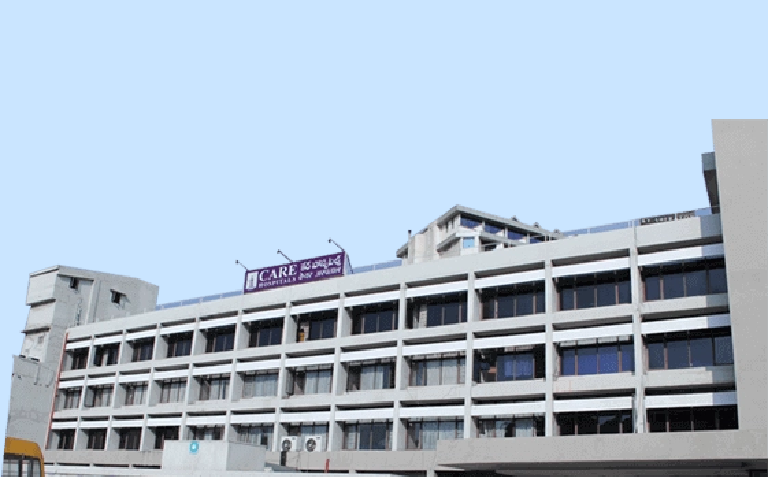
CARE Hospitals, Ramnagar, Visakhapatnam

CARE Hospitals, Health City, Arilova
Frequently Asked Questions
A flow diverter treats large, giant, wide-necked, fusiform, or recurrent intracranial aneurysms where coiling or clipping is unsuitable or has failed. It redirects blood flow away from the sac and promotes progressive thrombosis until the aneurysm is excluded from circulation.
The treatment is safe at experienced centers with rigorous antiplatelet management. Antiplatelet compliance is the single most critical post-procedure safety factor.
The procedure typically takes 60 to 120 minutes. It may take longer for posterior circulation cases or multiple devices.
Flow diverter treatment is not an open surgery. It is a catheter-based endovascular procedure through femoral arterial access under general anaesthesia, avoiding craniotomy morbidity while sharing anaesthetic and neurointerventional procedural risks.
Recovery timeline includes:
- Discharge within 48-72 hours in unruptured aneurysms.
- Light activities within one to two weeks
- Dual antiplatelet therapy for at least 6 months
- Follow-up angiography at 6 months.
- Most return to full activity within one month.
Complete occlusion occurs in 90% at 6 months, exceeding 95% at 12 to 18 months. Small residual filling may exist in giant aneurysms, however rupture risk or regrowth risk is almost nil.
Patients with large, giant, wide-necked, fusiform, or recurrent aneurysms who can reliably take dual antiplatelet therapy. Clopidogrel resistance must be excluded by platelet function testing. Posterior circulation aneurysms carry higher risk; antiplatelet non-compliance is an absolute contraindication.
Still Have a Question?