
-
Centre of Excellence
Specialties
Treatments and Procedures
 HyderabadCARE Hospitals, Banjara Hills CARE Outpatient Centre, Banjara Hills CARE Hospitals, HITEC City CARE Hospitals, Nampally Gurunanak CARE Hospitals, Musheerabad CARE Hospitals Outpatient Centre, HITEC City CARE Hospitals, Malakpet
 Raipur
 Bhubaneswar
 Visakhapatnam
 Nagpur
 Indore
 Chh. Sambhajinagar
 Clinics & Medical Centers


-

-

-

-

-

-
Follow Us

Best Hospital for Carotid Stenting in Hyderabad
- Advanced Technology
- Shorter Hospital Stay
- Pre & Post-Operative Care
- All Insurance Accepted

Chat With Our Experts
Get second opinion on Whatsapp
25 lakhs+
Happy Patients
Experienced and
skilled surgeons
17
Health Care Facilities
Top most Referral Centre
for Complex Surgeries
Advanced Carotid Stenting
Carotid stenting or carotid artery stenting (CAS) is a minimally invasive endovascular procedure treating significant narrowing of the carotid arteries. The carotids supply oxygenated blood to the brain. Narrowing of these arteries due to atherosclerotic plaque increases ischaemic stroke risk by reducing flow or triggering embolisation of plaque fragments into the cerebral circulation.
In a carotid stenting procedure a catheter is advanced through the femoral artery to the stenotic segment and an expandable metallic stent is deployed to restore blood flow. A distal embolic protection filter captures debris released during the procedure. Carotid stenting is the endovascular alternative to carotid endarterectomy (CEA).
Who Needs Carotid Stenting
Carotid stenting is preferred over surgery in:
- Patients with high surgical risk like cardiac comorbidity, prior neck irradiation, prior ipsilateral CEA, contralateral occlusion, or surgically inaccessible lesions
- Symptomatic stenosis of 50 to 99%
- Asymptomatic stenosis of 70% or greater where annual stroke risk exceeds procedural risk
- Restenosis after prior endarterectomy
- Patients declining open surgery or unsuitable for general anaesthesia.
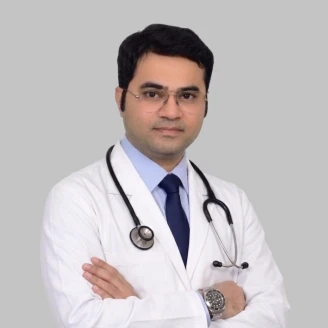
Best Carotid Stenting Doctors in India






Symptoms of Carotid Artery Blockage
Carotid artery disease is frequently asymptomatic until a TIA or stroke occurs. Symptoms reflect reduced flow to the hemisphere supplied by the affected vessel:
- Sudden weakness or numbness on one side of the face, arm, or leg
- Transient monocular blindness (amaurosis fugax) - curtain-like vision loss in one eye, caused by ophthalmic artery embolisation
- Difficulty speaking (dysphasia) or understanding speech
- Sudden severe headache, dizziness, or unexplained loss of balance
- Confusion or sudden difficulty with concentration or memory.
Causes of Carotid Artery Stenosis
Most carotid stenosis requiring intervention is caused by atherosclerosis, plaque accumulating at the carotid bifurcation, where turbulent flow promotes endothelial injury and lipid deposition. Plaque instability features like ulceration, intraplaque haemorrhage and lipid-rich necrotic core increase embolic risk beyond what luminal narrowing alone predicts. Other causes are:
- Fibromuscular dysplasia (FMD)
- Carotid dissection
- Radiation-induced arteriopathy
- Inflammatory vasculitis (Takayasu arteritis, giant cell arteritis).
Risk Factors for Carotid Artery Disease
Risk factors for carotid atherosclerosis:
- Hypertension: The most powerful modifiable risk factor; sustained systolic hypertension accelerates bifurcation endothelial injury
- Tobacco use: Smoking doubles carotid stenosis risk through endothelial dysfunction and a prothrombotic state
- Dyslipidaemia: Elevated LDL drives plaque accumulation
- Diabetes mellitus: Accelerates atherosclerosis through advanced glycation end-products and endothelial dysfunction
- Age, family history, obesity, and inactivity contribute through hypertension, insulin resistance, and dyslipidaemia
- Prior cardiovascular events: Coronary or peripheral arterial disease coexists with carotid stenosis in some patients
Complications of Carotid Stenting
Carotid stenting is safe at well-established neurovascular centers when performed by qualified neurointervention specialists, but few complications can occur rarely:
- Peri-procedural stroke or TIA
- Carotid sinus stimulation causes bradycardia and hypotension
- Hyperperfusion syndrome including headache, seizures, or intracerebral haemorrhage from sudden flow restoration to a chronically ischaemic hemisphere
- Access site complications like haematoma, pseudoaneurysm
- Contrast nephropathy in pre-existing renal impairment
- In-stent restenosis.
Diagnosis of Carotid Artery Stenosis
Diagnosis involves detecting stenosis and characterising plaque. Investigations are:
- Carotid duplex ultrasound: A painless first-line scan that uses sound waves to assess blood flow and detect narrowing in the carotid arteries
- CT angiography (CTA): Shows three-dimensional anatomy, calcification and arch configuration
- MR angiography (MRA): Evaluates blood vessels without radiation exposure
- Digital subtraction angiography (DSA): This advanced imaging procedure provides more precise evaluation of the arteries
- Brain MRI (DWI): Detects recent infarcts or areas of reduced blood supply
- Blood tests: Investigations like fasting lipids, HbA1c, renal function, coagulation and FBC assess overall cardiovascular risk and treatment readiness.
Carotid Stenting Procedure
Carotid stenting is performed under local anaesthesia with sedation, allowing real-time neurological monitoring throughout.
Procedural steps are:
- Dual antiplatelet loading at least 72 hours before
- Femoral arterial access under ultrasound guidance
- Aortic arch angiography identifies the narrowed area and assesses the blood vessel anatomy
- An embolic protection filter placed beyond the stenosis to prevent debris from travelling to the brain during the procedure
- A balloon may be used to gently widen the narrowed artery if the lesion is severely calcified
- A self-expanding stent deployed across the stenosis to keep the artery open and improve blood flow
- The filter is retrieved and a completion angiography is performed to confirm stent position, residual stenosis, and distal patency.
The procedure usually takes about one to two hours. After the procedure patients are closely monitored for neurological status and blood pressure for 48 hours before discharge.
Benefits of Carotid Stenting
Stroke prevention is the primary benefit of carotid stenting. Other benefits are:
- Minimally invasive with local anaesthesia and there is no neck incision
- Shorter stay and faster recovery - discharge within 48 to 72 hours and light activities within one week
- It extends stroke prevention to those unsuitable for open endarterectomy
- Durable - patency exceeds 90% at five years with antiplatelet therapy and risk factor control.
When to See a Doctor
Any sudden neurological change requires immediate evaluation. A TIA resolving in minutes is a warning; disabling stroke may follow within hours.
Emergency assessment is required for:
- Sudden weakness, numbness, or paralysis of one side of the face, arm, or leg (even if transient)
- Sudden vision loss in one eye
- Sudden difficulty speaking or understanding speech
- Sudden severe headache, unexplained dizziness, or loss of balance
Patients with known carotid stenosis should seek earlier review if symptoms develop or prior stenting patients develop recurrent symptoms suggesting in-stent restenosis.
Conclusion
Carotid stenting is an established endovascular intervention for reducing stroke risk in patients with significant carotid artery stenosis. It extends stroke prevention to patients unsuitable for open endarterectomy like cardiac comorbidity, prior neck surgery, radiation exposure, or patient preference. At experienced centres with appropriate case selection and post-procedure management, it delivers durable protection with an acceptable procedural risk profile. Carotid disease is a preventable cause of stroke. The window between a TIA and a disabling stroke is short so early vascular assessment and timely intervention change that outcome.
Carotid Stenting Hospitals in India
-
CARE Hospitals, Banjara Hills, Hyderabad
CARE Hospitals Outpatient Centre, Banjara Hills, Hyderabad

CARE Hospitals, HITEC City, Hyderabad

CARE Hospitals Outpatient Centre, HITEC City, Hyderabad

Gurunanak CARE Hospitals, Musheerabad, Hyderabad

CARE Hospitals, Nampally, Hyderabad
CARE Hospitals, Malakpet, Hyderabad

CARE Hospitals, Bhubaneswar
Ramkrishna CARE Hospitals, Raipur
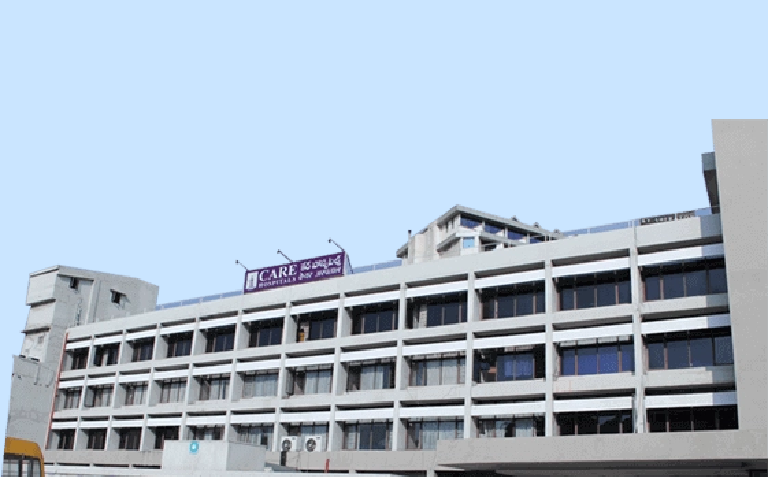
CARE Hospitals, Ramnagar, Visakhapatnam
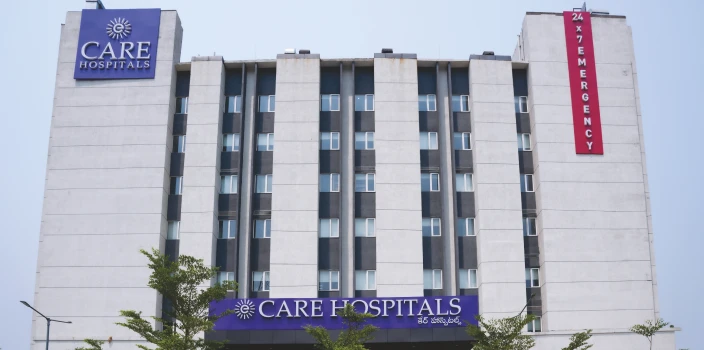
CARE Hospitals, Health City, Arilova
Frequently Asked Questions
It treats significant carotid artery narrowing to reduce stroke risk. It is done in symptomatic patients with 50% or greater stenosis who have had a TIA or minor stroke, and asymptomatic patients with 70% or greater stenosis. It is also the preferred treatment for restenosis after prior surgical endarterectomy.
Neither is universally superior. When performed by qualified Neurointervention specialists, carotid stenting is very safe. Stenting is preferred in high surgical risk, prior endarterectomy, neck irradiation, or contralateral occlusion. Both achieve comparable long-term stroke prevention when matched to the right patient.
Typically 60 to 90 minutes. Complex arch anatomy or severe calcification extends this duration. The patient is then observed for 48-72 hours. Total hospital stay is 2 to 3 days.
Local anaesthesia with sedation is used throughout. Needle placement at the femoral site causes a brief stinging sensation whereas catheter and stent deployment are not felt. Some patients report transient neck pressure during balloon inflation. Mild groin soreness for two to three days post procedure is managed with simple analgesia.
Recovery timeline includes:
- Discharge within 48 - 72 hours.
- Light activities within one week.
- Heavy lifting and strenuous exercise restricted for two weeks.
- Neurological assessment at discharge, four weeks, and three months. Annual duplex ultrasound surveillance of the stented segment.
Complications are:
- Peri-procedural stroke or TIA
- Haemodynamic instability (bradycardia, hypotension)
- Access site complications
- Hyperperfusion syndrome (rare)
- In-stent restenosis.
Symptomatic patients with 50 to 99% stenosis and asymptomatic patients with 70 percent or greater stenosis, particularly those with high surgical risk features. Extensive arch calcification, severe tortuosity, or fresh intraluminal thrombus may preclude the procedure anatomically. A vascular and neurological assessment determines the optimal approach.
In-stent restenosis occurs in a few cases. Most cases are asymptomatic, progress slowly, and are managed with repeat angioplasty. Smoking, poorly controlled diabetes, and small-calibre vessels increase risk. High-intensity statins, blood pressure control, smoking cessation, and lifelong antiplatelet therapy maintain long-term patency.
Still Have a Question?