
-
Centre of Excellence
Specialties
Treatments and Procedures
 HyderabadCARE Hospitals, Banjara Hills CARE Outpatient Centre, Banjara Hills CARE Hospitals, HITEC City CARE Hospitals, Nampally Gurunanak CARE Hospitals, Musheerabad CARE Hospitals Outpatient Centre, HITEC City CARE Hospitals, Malakpet
 Raipur
 Bhubaneswar
 Visakhapatnam
 Nagpur
 Indore
 Chh. Sambhajinagar
 Clinics & Medical Centers


-

-

-

-

-

-
Follow Us

Best Hospital for Joint Replacement Surgery in Bhubaneswar
- Advanced Technology
- Shorter Hospital Stay
- Pre & Post-Operative Care
- All Insurance Accepted

Chat With Our Experts
Get second opinion on Whatsapp
25 lakhs+
Happy Patients
Experienced and
skilled surgeons
17
Health Care Facilities
Top most Referral Centre
for Complex Surgeries
Advanced Joint Replacement Surgery in Bhubaneswar
In joint replacement surgery, the surgeon removes damaged and diseased articular surfaces of the joint and replaces them with prosthetic implants like metal alloys, high density polyethylene or ceramics, restoring the mechanical function that arthritis, post traumatic deformity or avascular necrosis has compromised. Outcome quality depends on implant selection, surgical precision, and structured rehabilitation. CARE Hospitals, Bhubaneswar, performs knee, hip and shoulder replacement procedures under the orthopaedic programme led by highly experienced surgeons with training in primary and revision arthroplasty.
What is Joint Replacement Surgery?
Arthroplasty replaces the diseased joint surface with an implant that replicates the joint's biomechanical function. Total replacement resurfaces both sides of the articulation, including the femur and tibia in the knee and the femoral head and acetabulum in the hip. Partial or unicompartmental replacement addresses only the damaged compartment where the disease is localised and the remaining cartilage is structurally intact. Robotic-assisted arthroplasty at CARE Hospitals Bhubaneswar uses intraoperative haptic guidance to achieve precise implant positioning.
Best Joint Replacement Surgery Doctors in Bhubaneswar

Reasons for Joint Replacement Surgery
Arthroplasty is considered when pain limits daily activity and at least six months of physiotherapy, analgesic medication and guided injection have not produced adequate relief. Conditions requiring replacement are:
- Osteoarthritis: Progressive cartilage loss producing bone-on-bone contact, varus or valgus deformity, and severe functional limitation.
- Rheumatoid arthritis: Synovial pannus eroding cartilage and subchondral bone in multiple compartments.
- Post-traumatic arthritis: Malunited periarticular fractures and cartilage injury producing early-onset joint degeneration.
- Avascular necrosis: Segmental collapse of the femoral head or femoral condyle following corticosteroid use, alcohol excess, or idiopathic ischaemia.
- Childhood joint disorders: Sequelae of developmental dysplasia of the hip, Perthes disease, or septic arthritis producing premature joint failure.
Types of Joint Replacement
Joint replacement surgery types are:
- Total knee replacement (TKR): Distal femur and proximal tibia resurfaced with implant components and patellar resurfacing added selectively. Posterior-stabilised or cruciate-retaining design selected based on PCL integrity.
- Unicompartmental knee replacement (UKR): Medial or lateral compartment replacement only. This surgery preserves the native ACL, PCL, and the unaffected compartment and has smaller incisions and faster rehabilitation than TKR.
- Total hip replacement (THR): Femoral head and neck replaced with a cementless titanium stem and ceramic or cobalt-chromium head and acetabular cup fixed with press-fit or cemented technique based on bone quality.
- Shoulder replacement: Anatomical total shoulder arthroplasty with intact rotator cuff or reverse total shoulder arthroplasty where cuff deficiency has altered joint biomechanics.
- Robotic-assisted arthroplasty: The MAKO Robotic System provides patient-specific preoperative 3D planning and intraoperative real time haptic guidance for knee and hip replacement, reducing outlier positioning.
When is Joint Replacement Recommended
Surgery is recommended when radiographic joint space obliteration corresponds with severe functional limitation unresponsive to conservative care. Age alone is not a contraindication, but physiological fitness, bone quality, and functional demand determine candidacy. Younger patients under 55 are counselled on higher revision probability over a lifetime and offered joint-preserving procedures like osteotomy or cartilage grafting, where technically feasible, before arthroplasty is considered.
Diagnostic Tests
Investigations include:
- Weight-bearing radiographs: Standing AP, lateral, and long-leg alignment views quantify joint space, coronal deformity, and flexion contracture. Rosenberg's view (45-degree flexion weight-bearing) identifies posterior compartment narrowing missed on the standard AP projection
- MRI: Used for cartilage mapping, assessment of ligamentous integrity, and identification of avascular necrosis stage
- CT scan: Three-dimensional templating for implant sizing, deformity correction planning, and assessment of rotational alignment in complex revision cases
- DEXA scan: Measures bone mineral density in patients over 65 or with risk factors for osteoporosis
- Pre-anaesthetic panel: Includes full blood count, renal and liver function, coagulation screen, HbA1c in diabetic patients, and blood grouping
Joint Replacement Surgery Procedure
Before the Procedure: Preoperative assessment seven to ten days prior. Doctors also advise:
- Temporary stoppage of anticoagulants and NSAIDs for five to seven days beforehand.
- Diabetic patients target HbA1c below 8% before elective arthroplasty, as the surgical site infection risk rises above this threshold.
- Physiotherapy pre-habilitation like quadriceps strengthening and gait training commences four to six weeks before surgery where time permits.
During the Procedure: Steps are:
- Anaesthesia: Spinal anaesthesia is the preferred primary technique for knee and hip replacement, combined with a femoral nerve block or adductor canal block for knee procedures. General anaesthesia is used where a spinal is contraindicated.
- Surgical approach: Medial parapatellar approach for TKR or posterior or anterolateral approach for THR (selected by surgeon preference and soft tissue considerations). Robotic-assisted cases use pre-operatively registered CT data to define haptic boundaries intra-operatively.
- Implant fixation: The doctor uses cementless press-fit fixation, cemented fixation or hybrid fixation (cementless cup, cemented stem) based on the joint requirements. All implants were irrigated with pulsed lavage before insertion.
After the Procedure:
- Physiotherapy begins within 24 hours, including sit-to-stand transfers, partial weight-bearing with a walker, and ankle pump exercises for DVT prophylaxis. Low-molecular-weight heparin and compression stockings are standard. Most patients mobilise on a walking frame by day one; discharge is at two to four days for uncomplicated primary arthroplasty.
Risks Associated with Joint Replacement
Common complications are the following:
- Deep vein thrombosis and pulmonary embolism
- Periprosthetic joint infection
- Aseptic loosening
- Instability and dislocation of the implant
- Leg length discrepancy
- Periprosthetic fracture.
Recovery after Joint Replacement Surgery
Full weight-bearing with a walking aid begins the day after surgery for knee and hip replacement. Walking without a frame is typically achieved within four to six weeks. Return to driving at six to eight weeks. Functional recovery like stair climbing or low impact activity is largely complete by three months. Formal physiotherapy continues for eight to twelve weeks (with home exercises continued throughout).
Why Choose CARE Hospitals for Joint Replacement Surgery
CARE Hospitals, Bhubaneswar, performs primary and revision joint replacement under the orthopaedic programme, supported by dedicated arthroplasty theatres with laminar airflow systems, robotic-assisted surgical capability, and an in-house physiotherapy centre.
Preoperative planning is CT-based for robotic cases, with implant size and alignment targets established before the patient reaches the operating table. Post-operative review at six weeks, three months, and one year with tracking functional recovery against national benchmarks.
Conclusion
For anyone who has spent months or years living with severe joint damage, joint replacement surgery can genuinely be a turning point. The chronic pain that made simple tasks feel exhausting, the stiffness that limited independence and the reluctance to move freely - surgery addresses all of it in a way that conservative treatment often cannot.
The field has also come a long way. Advances in surgical technique, implant design and perioperative care have made these procedures safer and more precise than ever before, with implants built to last significantly longer than earlier generations. That progress translates directly into better outcomes and faster recoveries for patients. At CARE Hospitals, joint replacement care is delivered with advanced technology and a patient-first approach, because the goal was never just a successful surgery. It was a successful recovery.
Joint Replacement Surgery Hospitals in India
-
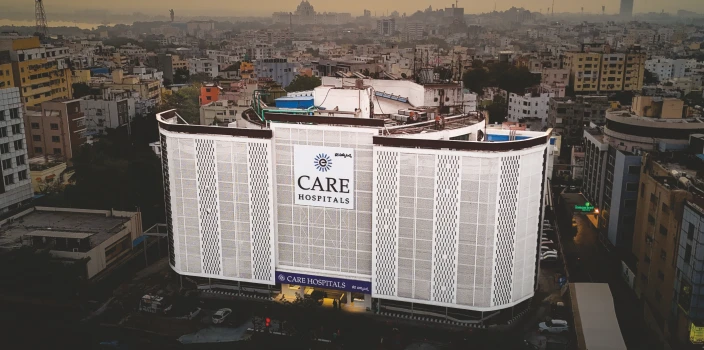
CARE Hospitals, Banjara Hills, Hyderabad
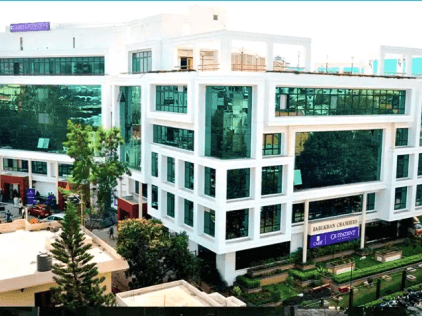
CARE Hospitals Outpatient Centre, Banjara Hills, Hyderabad
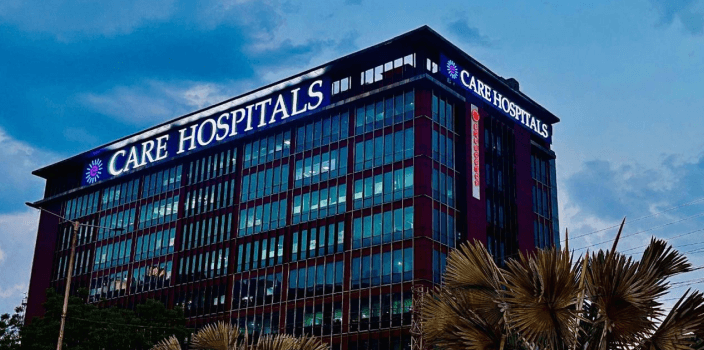
CARE Hospitals, HITEC City, Hyderabad
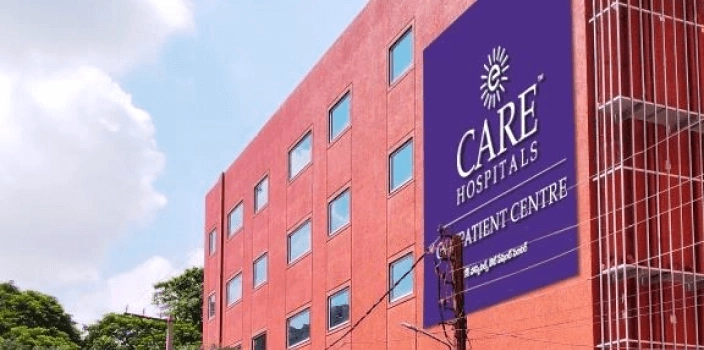
CARE Hospitals Outpatient Centre, HITEC City, Hyderabad
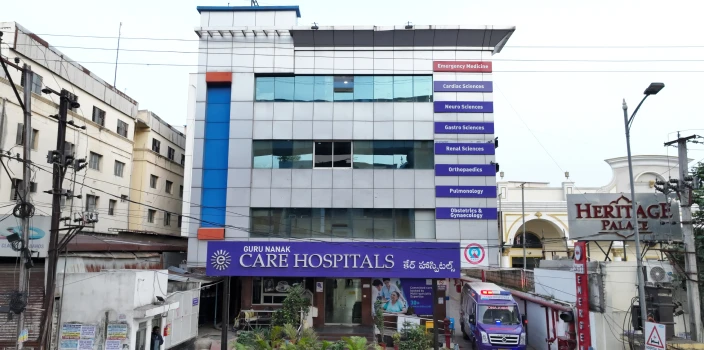
Gurunanak CARE Hospitals, Musheerabad, Hyderabad
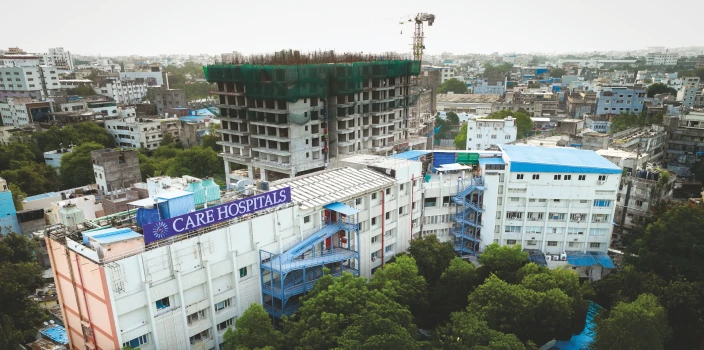
CARE Hospitals, Nampally, Hyderabad
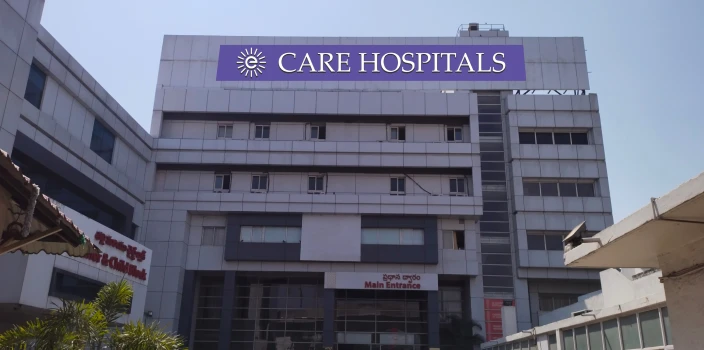
CARE Hospitals, Malakpet, Hyderabad

CARE Hospitals, Bhubaneswar

Ramkrishna CARE Hospitals, Raipur
CARE Hospitals, Ramnagar, Visakhapatnam
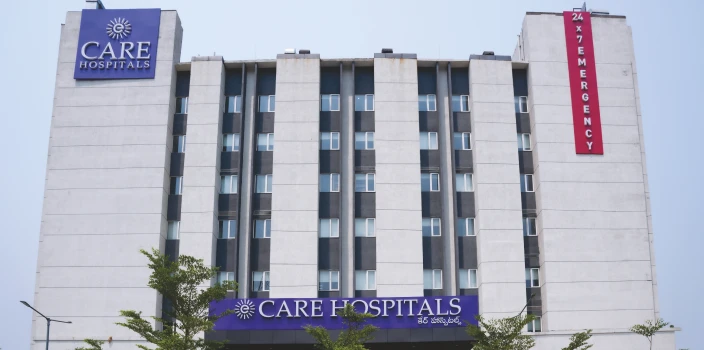
CARE Hospitals, Health City, Arilova
Frequently Asked Questions
According to records, the 15-year implant survival is above 93% for primary total knee and hip replacements. Longevity depends on patient weight, activity level, implant fixation quality, and surgical alignment. Patients who maintain BMI below 30 and avoid high-impact loading like running & jumping consistently achieve better long-term outcomes.
Cementless implants rely on osseointegration (bone ingrowth into a porous titanium surface) for fixation and they are preferred in patients with good bone quality. Cemented fixation uses acrylic bone cement to achieve immediate mechanical stability and it remains the preferred option in osteoporotic bone where cementless ingrowth is unreliable.
Robotic assistance improves implant positioning accuracy more than conventional instrumentation. Whether superior positioning translates to improved functional outcomes and longer implant survival. It is a precision tool, not a substitute for surgical judgement and implant selection and soft tissue balancing remain surgeon-dependent.
Walking with a frame begins within 24 hours of surgery. A walking stick replaces the frame at four to six weeks. Low-impact activity like swimming, cycling, and walking is encouraged from three months. High-impact sport is permanently discouraged to protect implant longevity.
Still Have a Question?