
-
Centre of Excellence
Specialties
Treatments and Procedures
 HyderabadCARE Hospitals, Banjara Hills CARE Outpatient Centre, Banjara Hills CARE Hospitals, HITEC City CARE Hospitals, Nampally Gurunanak CARE Hospitals, Musheerabad CARE Hospitals Outpatient Centre, HITEC City CARE Hospitals, Malakpet
 Raipur
 Bhubaneswar
 Visakhapatnam
 Nagpur
 Indore
 Chh. Sambhajinagar
 Clinics & Medical Centers


-

-

-

-

-

-
Follow Us

Best Hospital for Elbow Replacement Surgery in Bhubaneswar
- Advanced Technology
- Shorter Hospital Stay
- Pre & Post-Operative Care
- All Insurance Accepted

Chat With Our Experts
Get second opinion on Whatsapp
25 lakhs+
Happy Patients
Experienced and
skilled surgeons
17
Health Care Facilities
Top most Referral Centre
for Complex Surgeries
Advanced Elbow Replacement Surgery in Bhubaneswar
The elbow is among the least frequently replaced major joints. Therefore, it requires subspecialty experience on the part of the treating team. Elbow replacement, or total elbow arthroplasty (TEA), resurfaces the distal humerus and proximal ulna with linked or unlinked metal and polyethylene implant components. This surgery restores a functional arc of motion where severe arthritis, post-traumatic deformity, or rheumatoid destruction has rendered the joint mechanically inadequate. CARE Hospitals, Bhubaneswar, performs elbow arthroplasty within its orthopaedic programme, managed by surgeons with specialist upper limb reconstruction training from the United Kingdom.
What is Elbow Replacement Surgery?
Total elbow arthroplasty replaces the articular surfaces of the humeroulnar and humeroradial joints with prosthetic components. It is a procedure designed for patients whose elbow joint has been severely damaged by arthritis, fracture, or other conditions that have made daily movement painful and restricted. When performed in the right patient, elbow replacement reliably restores a functional range of motion, giving patients the ability to carry out everyday tasks with significantly less pain and far greater ease.
Best Elbow Replacement Surgery Doctor in Bhubaneswar

Reasons for Elbow Replacement Surgery
TEA is indicated when elbow joint destruction has produced pain and functional limitation refractory to non-operative management. Necessary indications are the following:
- Rheumatoid arthritis
- Primary osteoarthritis of the elbow
- Post-traumatic arthritis
- Comminuted distal humerus fracture in osteoporotic bone
- Tumour resection
- Failed prior elbow surgery or revision following previous internal fixation, interposition arthroplasty, or radial head arthroplasty that has not maintained adequate function.
Types of Elbow Replacement
The principal categories are the following:
- Total elbow arthroplasty (linked): The upper arm and forearm components are connected through a hinged mechanism, offering strong built-in stability.
- Total elbow arthroplasty (unlinked): Relies on collateral ligament integrity to hold the joint in place, resulting in lower stress on the bone and cement over time. This option works best when the soft tissues around the elbow are still in good condition.
- Radial head arthroplasty: Metallic radial head prosthesis restoring lateral column stability and radiocapitellar contact pressure. It is used in unreconstructable comminuted radial head fractures and as an adjunct to elbow stabilisation procedures
- Hemiarthroplasty: Replacement of the distal humeral articular surface alone. It is used in acute distal humeral fractures where the ulnar articular surface is preserved and full TEA is not yet indicated
- Revision total elbow arthroplasty: Removal of failed primary components, bone graft reconstruction of cavitary defects, and reimplantation with longer-stemmed revision implants.
When is Elbow Replacement Recommended?
TEA is recommended when pain from elbow joint destruction significantly limits daily activities and when at least six months of non-operative management including NSAIDs, activity modification and intra-articular corticosteroid injection has not provided adequate relief. In acute comminuted distal humeral fractures in patients over 65 with osteoporotic bone, primary TEA may be recommended.
Diagnostic Tests
Pre-operative assessment characterises the degree of joint destruction, the residual bone stock, the neurovascular status and the fitness for anaesthesia. Standard investigations are:
- X-ray: Anteroposterior and lateral views of the elbow quantify joint space loss, osteophyte burden, deformity pattern, and bone quality
- CT scan: Three-dimensional reconstruction of the distal humerus and proximal ulna for pre-operative templating, assessment of intramedullary canal dimensions, and quantification of bone loss in revision cases
- MRI: Evaluation of periarticular soft tissue integrity, collateral ligament status, and extent of synovial disease in rheumatoid patients
- Nerve conduction studies: Detect ulnar nerve function
- Pre-anaesthetic blood panel: Includes full blood count, renal and liver function, coagulation screen, C-reactive protein and erythrocyte sedimentation rate (particularly in rheumatoid patients on biologic therapy).
Elbow Replacement Surgery Procedure
Before the Procedure:
- Pre-anaesthetic assessment is conducted seven to ten days before surgery. Certain medications like disease-modifying antirheumatic drugs (DMARDs) and biologic agents are withheld to reduce surgical infection risk. The patient fasts from solid food for six hours and clear fluids for two hours before the scheduled start.
During the Procedure:
Steps are:
- Anaesthesia: General anaesthesia combined with an ultrasound-guided infraclavicular or axillary brachial plexus block for intra-operative anaesthesia and post-operative analgesia. The patient is positioned in lateral decubitus with the operative arm draped over a padded bolster.
- Approach: Doctors use the Bryan-Morrey posterior approach to get broad exposure of the distal humerus without splitting the extensor mechanism.
- Bone preparation and implant insertion: The distal humerus is resected using a cutting guide. Intramedullary canals of the humerus and ulna are sequentially broached to accept the trial and definitive implant stems. Components are cemented with pressurised low-viscosity acrylic bone cement; the humeral and ulnar components are coupled via the hinge mechanism under direct vision.
- Closure: The triceps sleeve is reattached to the olecranon through transosseous drill holes with non-absorbable sutures. The wound is closed in layers; a drain is placed for 24 hours. The elbow is splinted in 90 degrees of flexion and neutral forearm rotation for 48 to 72 hours to protect the triceps repair.
After the Procedure:
- Active assisted elbow flexion and forearm rotation exercises commence at 48 to 72 hours under physiotherapy supervision. Full active elbow extension through the triceps is deferred for six weeks to protect the reattached extensor mechanism. The patient is counselled that a permanent lifting restriction of 1 kg for repetitive tasks and 5 kg for single lifts applies to the replaced elbow for life, to protect the implant from fatigue failure.
Risks Associated with Elbow Replacement Surgery
Elbow arthroplasty carries a higher complication rate than hip or knee replacement. Common complications are:
- Ulnar nerve injury
- Deep periprosthetic infection
- Aseptic loosening
- Implant bushing wear and fracture
- Triceps weakness or avulsion
- Periprosthetic fracture.
Recovery after Elbow Replacement Surgery
Hospital stay is two to three days for primary TEA. A thermoplastic splint is worn for six weeks with the elbow at 90 degrees during rest. Active assisted flexion and passive extension exercises begin at 48 to 72 hours and active triceps extension is withheld for six weeks. Most patients achieve a functional arc of 30 to 130 degrees of flexion within three months. The permanent lifting restriction (1 kg repetitive, 5 kg single) is non-negotiable and applies indefinitely to protect implant longevity. Formal physiotherapy continues for three to four months post-operatively.
Why Choose CARE Hospitals for Elbow Replacement Surgery?
Total elbow arthroplasty is a technically demanding procedure so experience at the institutional and individual surgeon level directly influences implant survival and complication rates. At CARE Hospitals, Bhubaneswar, elbow replacement is performed by skilled orthopaedic surgeons trained in upper limb reconstruction. Dedicated orthopaedic theatres, intra-operative fluoroscopy for implant positioning verification, and a post-operative physiotherapy programme specifically designed for elbow arthroplasty rehabilitation are available within the same facility.
Conclusion
For patients who have exhausted conservative treatment options and are still living with severe elbow pain, stiffness or loss of function, elbow replacement surgery offers a genuine restoration of movement and quality of life. By replacing the damaged joint surfaces with carefully selected prosthetic components, the procedure addresses the root of the problem rather than managing symptoms around it. Pain reduces. Movement returns. Everyday tasks that once felt impossible start to feel manageable again.
The progress made in surgical technique and implant design over recent years has made this procedure more precise and more durable than earlier generations of surgery. At CARE Hospitals, elbow replacement surgery is carried out by specialists who bring together advanced surgical expertise and comprehensive post-operative care, because a successful procedure and a successful recovery are two different things, and both matter equally.
Elbow Replacement Surgery Hospitals in India
-
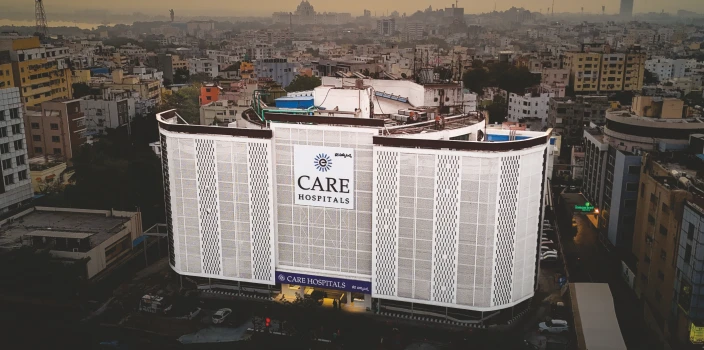
CARE Hospitals, Banjara Hills, Hyderabad
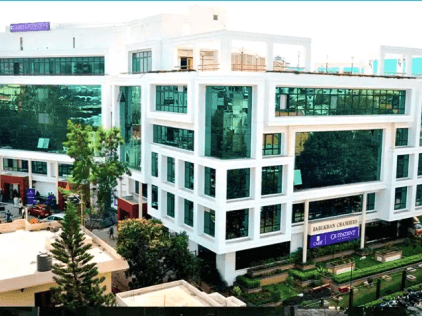
CARE Hospitals Outpatient Centre, Banjara Hills, Hyderabad
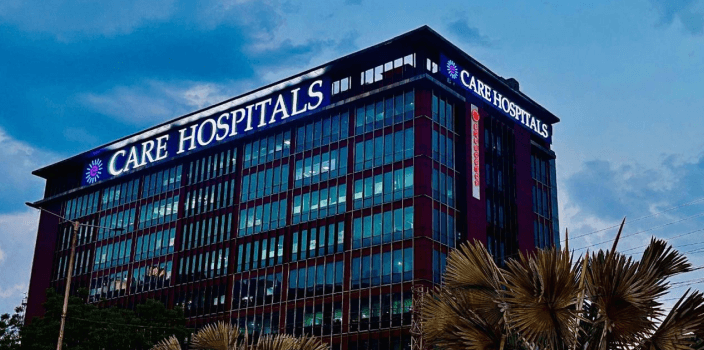
CARE Hospitals, HITEC City, Hyderabad
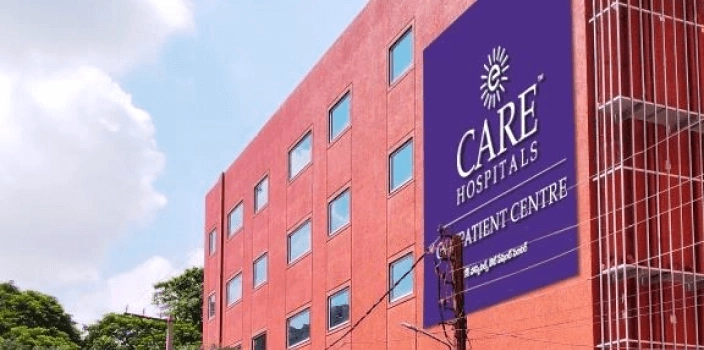
CARE Hospitals Outpatient Centre, HITEC City, Hyderabad
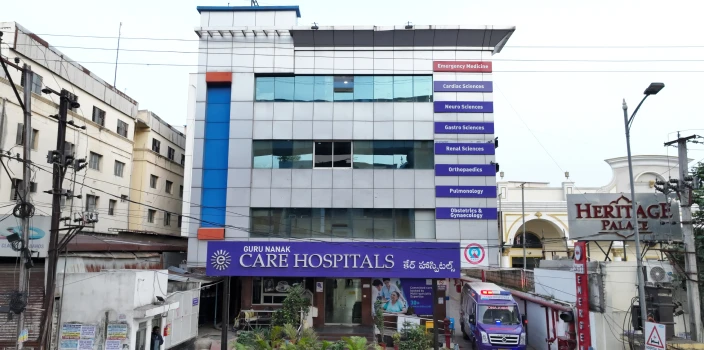
Gurunanak CARE Hospitals, Musheerabad, Hyderabad
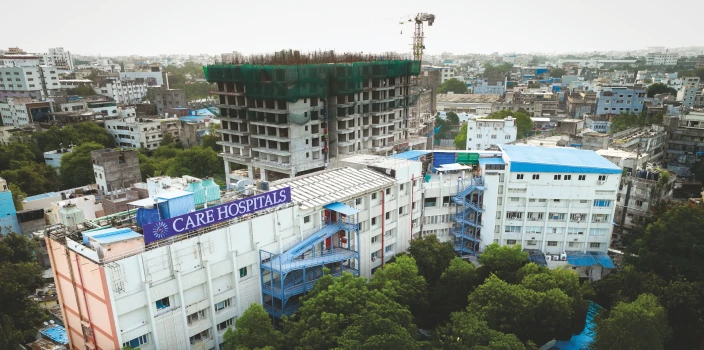
CARE Hospitals, Nampally, Hyderabad

CARE Hospitals, Malakpet, Hyderabad
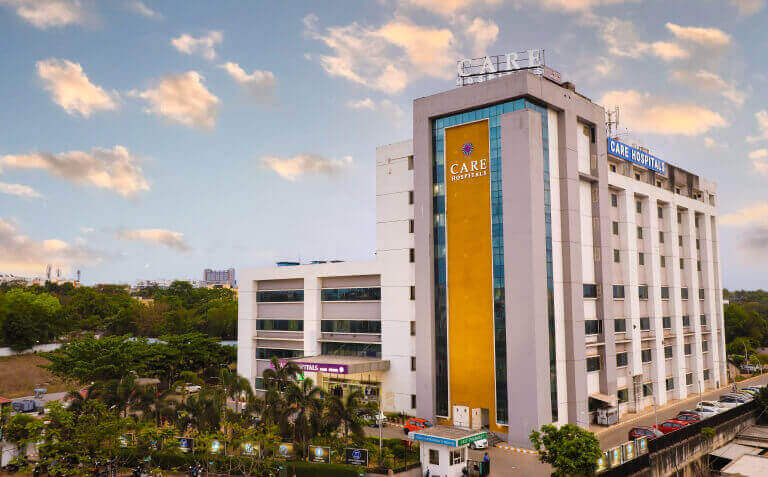
CARE Hospitals, Bhubaneswar
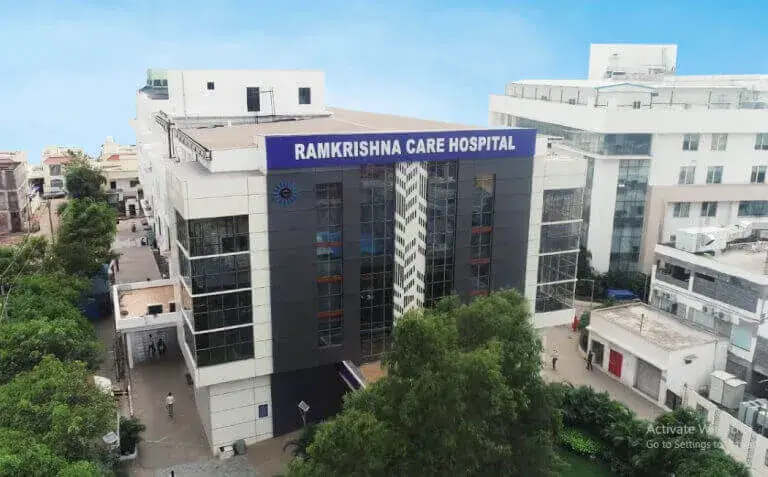
Ramkrishna CARE Hospitals, Raipur
CARE Hospitals, Ramnagar, Visakhapatnam
CARE Hospitals, Health City, Arilova
Frequently Asked Questions
Linked total elbow prostheses demonstrate cumulative ten year survival rates of 85 to 90%. Longevity is directly related to adherence to the permanent lifting restriction. Younger, more active patients carry a higher revision risk.
No. A permanent lifting restriction of 1 kg for repetitive tasks and 5 kg for a single unrepeated lift applies to the replaced elbow for life. This is not a post-operative precaution that resolves with healing but it is a permanent implant protection measure. Patients who do not accept this restriction are at significantly increased risk of periprosthetic fracture, component loosening, and early revision.
Post-operative pain is managed with the brachial plexus nerve block placed at the time of surgery, which provides analgesia for 12 to 18 hours after the procedure. Oral analgesics manage residual discomfort in the days following. Most patients find discomfort manageable and rate post-operative pain as significantly less than their pre-operative arthritic pain within the first two weeks.
Revision total elbow arthroplasty is technically feasible but considerably more demanding than primary replacement, owing to bone loss at the humeral and ulnar stems, compromised soft tissue, and the risk of periprosthetic infection in a previously operated field.
Linked designs couple the humeral and ulnar components mechanically via a hinge, providing stability independent of the soft tissues and are indicated where collateral ligaments are incompetent or absent, as in severe rheumatoid arthritis. Unlinked designs rely on intact collateral ligaments for joint stability; they produce lower constraint forces at the bone-cement interface, resulting in lower loosening rates in appropriately selected patients with preserved ligamentous anatomy.
Still Have a Question?