
Centre of Excellence
Specialties
Treatments and Procedures
Hyderabad
Raipur
Bhubaneswar
Visakhapatnam
Nagpur
Indore
Chh. Sambhajinagar
Clinics & Medical Centers
Online Lab Reports
Book an Appointment
Consult Super-Specialist Doctors at CARE Hospitals

Updated on 3 March 2026
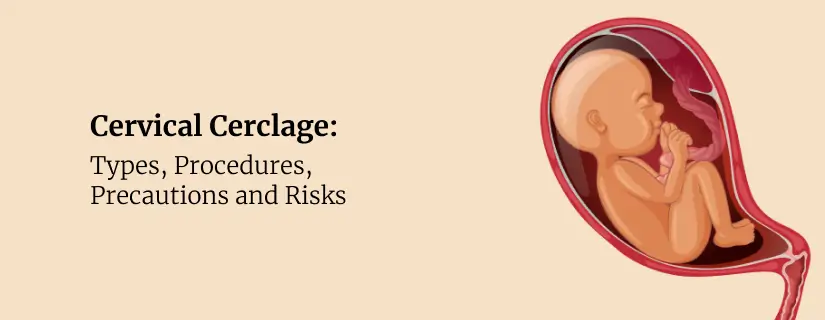
Many medical advancements can help expectant mothers facing the risk of preterm birth to carry a pregnancy to full term. Cervical cerclage stands as one of the most effective medical interventions for preventing premature births in women with cervical insufficiency (weakened cervix).
If you are wondering about cervical cerclage, you are not alone. This article explains what the procedure is, when doctors might suggest it, how you recover after the procedure, and some things to watch out for along the way.
Cervical cerclage is a procedure doctors sometimes use during high risk pregnancy. They place a stitch or a special tape around the cervix to help keep it closed. This helps the pregnancy last longer, lowering the risk of early labour. It can feel scary to hear you might need this but knowing what it is can make things a little less overwhelming.
The following are the two main cervical cerclage types:
The surgical stitches provide additional support by securely closing the cervix throughout pregnancy. This reinforcement is particularly crucial for women with cervical insufficiency, a condition where the cervix begins to dilate without contractions, typically leading to second-trimester delivery.
Doctors typically perform cervical cerclage between 12 to 14 weeks of pregnancy before the cervix begins to thin out (this timing allows for optimal cervical support during pregnancy development).
There are three well-established indications for cervical cerclage placement:
Past surgical procedures, such as LEEP operations or other cervical tissue surgeries, can lead to cervical weakness, necessitating cerclage. If you have a history of miscarriages (due to uterine abnormalities or cervical damage) your doctor may recommend it for you.
Key precautions after cervical cerclage include:
The following are some potential cervical cerclage complications:
The timing of cervical cerclage removal is a crucial aspect of pregnancy management. Doctors typically schedule removal between 36 to 37 weeks of gestation. This timing ensures the pregnancy has reached a safe stage (while avoiding complications from leaving the cerclage in place during labour).
Certain circumstances may necessitate early cerclage removal. They are:
In patients contracting premature rupture of membranes (PPROM), doctors may leave the cerclage in place until steroid treatments for foetal lung maturity are completed. For patients with transabdominal cerclage the approach differs significantly - these stitches typically remain in place for cesarean delivery and can even be retained between pregnancies to prevent future preterm births.
Patients should contact their gynaecologist immediately if they experience:
Cervical cerclage can make a real difference for women aspiring for pregnancy and are struggling due to a weak cervix. If you or someone you love has faced pregnancy loss or been told their cervix is weak, this procedure might offer hope. Of course, every surgery has risks, but staying connected with your doctor and following their advice can really help things go smoothly.
Success rates remain highest when patients maintain regular communication with their doctors and respond promptly to any warning signs. Most women who receive cervical cerclage experience positive results (many carrying their pregnancies close to full term).
Patients experience minimal discomfort during the procedure due to appropriate anaesthesia administration. After the operation, mild cramping and light bleeding may occur for a few days, manageable with medicines.
The procedure demonstrates an 85-90% success rate in preventing preterm births. It mainly benefits women with cervical insufficiency helping maintain pregnancy until full term.
There are a few things you should not do after cervical cerclage. They are:
The procedure is typically performed between 12-14 weeks of pregnancy. Although it can be done up to 24 weeks in emergency cases.
Doctors diagnose cervical insufficiency through regular ultrasound monitoring between weeks 16-24 of pregnancy. They measure cervical length and check for early dilation.
Most patients need 2-3 days of rest at home following the procedure. They can return to normal activities within 1 to 2 weeks.
Yes vaginal delivery is possible after transvaginal cerclage. The stitches are typically removed around 37 weeks of pregnancy to allow for natural delivery. However, patients with transabdominal cerclage will require a cesarean section.
To Book an Appointment, call:
What is a Good AMH Level to Get Pregnant
Bloating During Ovulation: Symptoms, Causes and Remedies
31 March 2026
31 March 2026
31 March 2026
31 March 2026
31 March 2026
31 March 2026
31 March 2026
31 March 2026
Have a Question?
If you cannot find answers to your queries, please fill out the enquiry form or call the number below. We will contact you shortly.
Get A Call Back From Our Health Advisor Now
Enter your details, and our advisor will call you back shortly!
Thank You!
Our health advisor will get in touch with you shortly.