-
Centre of Excellence
Specialties
Treatments and Procedures
 HyderabadCARE Hospitals, Banjara Hills CARE Outpatient Centre, Banjara Hills CARE Hospitals, HITEC City CARE Hospitals, Nampally Gurunanak CARE Hospitals, Musheerabad CARE Hospitals Outpatient Centre, HITEC City CARE Hospitals, Malakpet
 Raipur
 Bhubaneswar
 Visakhapatnam
 Nagpur
 Indore
 Chh. Sambhajinagar
 Clinics & Medical Centers


-

-

-

-

-

-
Follow Us

Best Hospital for Cranioplasty Surgery in Hyderabad
- Advanced Technology
- Shorter Hospital Stay
- Pre & Post-Operative Care
- All Insurance Accepted

Chat With Our Experts
Get second opinion on Whatsapp
25 lakhs+
Happy Patients
Experienced and
skilled surgeons
17
Health Care Facilities
Top most Referral Centre
for Complex Surgeries
Advanced Cranioplasty Surgery
Cranioplasty repairs a missing or damaged section of the skull, most often after a prior surgery called a decompressive craniectomy. Surgeons remove a piece of bone during that earlier operation to relieve dangerous pressure inside the skull, usually following severe trauma, a major stroke, or a large tumour. That missing bone leaves the brain protected only by skin and soft tissue for weeks or months afterwards. Cranioplasty closes that gap once brain swelling has settled enough to make reconstruction safe. Beyond restoring physical protection, the surgery often improves symptoms tied to the imbalance in pressure that an open skull defect can cause, along with the visible indentation itself. Timing varies considerably from patient to patient, guided by how quickly swelling resolves and by imaging that confirms the brain has stabilised enough for surgery to proceed.
Why CARE Group Hospitals Is Your Top Choice for Cranioplasty Surgery in Hyderabad
CARE Group Hospitals in Hyderabad brings together neurosurgeons experienced in both standard and complex cranioplasty cases, including patients with prior infections or multiple earlier surgeries. Detailed imaging guides every case from the first consultation, helping the surgical team choose the implant material and technique best suited to each patient's specific skull defect.
Recovery from the original brain injury often continues along with cranioplasty planning, and the team here coordinates closely with rehabilitation specialists so surgery fits naturally into a patient's broader recovery rather than interrupting it.
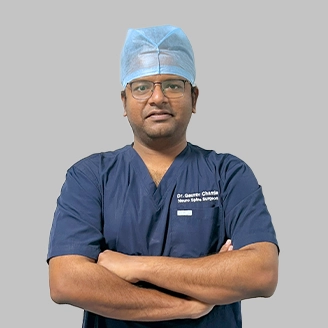
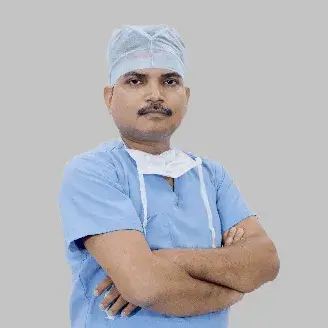
Best Cranioplasty Surgery Doctors in India















Cutting-Edge Surgical Innovations at CARE Hospitals
CARE Hospital uses CT-based three-dimensional planning to design implants that match each patient's skull contour with high precision. Custom implants, milled or 3D-printed from materials such as titanium, fit defects that would be difficult to reconstruct using older, hand-shaped techniques. Surgical navigation systems help guide implant placement during the operation itself, improving both symmetry and long-term stability. For patients whose original bone flap was preserved and stored properly, that bone remains the first choice whenever it is still viable, as nothing matches the body's own tissue quite as well.
Conditions for Cranioplasty Surgery
Doctors recommend cranioplasty for several situations. They are:
- A decompressive craniectomy performed after severe head trauma often leaves a skull defect needing later reconstruction.
- Bone removal to manage swelling after a major stroke or brain haemorrhage frequently requires cranioplasty once the patient stabilises.
- Tumour removal sometimes involves taking out a section of skull along with the growth, creating a defect that later needs repair.
- An infection at a previous surgical site can force removal of the bone flap entirely, requiring reconstruction once the infection clears.
- Some patients seek cranioplasty mainly for the visible skull indentation left behind by an earlier procedure.
Types of Cranioplasty Surgery Procedures
Several materials and techniques are available, and the right choice depends on defect size, prior infection history, and patient preference.
- Autologous bone flap replacement uses the patient's own bone (preserved from the original surgery) whenever it remains intact and infection-free
- Titanium mesh cranioplasty shapes a lightweight metal mesh to fit the defect, which gives strength with minimal added weight
- PEEK implants, a strong and biologically inert plastic, work well for larger or more complex defects where a custom fit matters most
- Bone cement cranioplasty is shaped directly during surgery and suits smaller or simpler defects
- Custom 3D-printed implants (designed from the patient's own CT scan) offer the most precise fit for irregular or unusually large defects.
Pre-Surgery Preparation
Careful planning before surgery helps ensure the chosen implant fits well and the procedure goes smoothly.
- A detailed CT scan maps the exact shape and size of the defect (it helps in guiding implant selection or custom design)
- Blood tests confirm the patient is fit for surgery and screen for any signs of lingering infection
- Doctors usually pause blood-thinning medication several days beforehand, only after checking with the treating doctor
- Fasting for a set number of hours is required before surgery when general anaesthesia is planned.
- Family members are often briefed on the expected hospital stay, as recovery from cranioplasty typically involves several days of monitoring.
Cranioplasty Surgical Procedure
The operation follows a consistent sequence, outlined in the steps below.
- General anaesthesia keeps the patient fully unconscious and comfortable throughout the procedure.
- The surgeon reopens the incision along the original scar line to access the skull defect directly.
- The chosen implant (preserved bone, titanium, PEEK or bone cement) is positioned carefully into the defect
- Small plates and screws secure the implant firmly to the surrounding skull bone
- The scalp is then closed in layers, restoring a smooth contour over the reconstructed area
- Surgery typically takes between ninety minutes and three hours, depending on defect size and implant complexity.
Post-Surgery Recovery
Most patients stay in the hospital for several days following surgery, allowing the surgical team to monitor healing closely. You may have some swelling around the incision is expected and generally eases over the first week or two. Doctors closely monitor for any fluid collecting beneath the scalp, as it occasionally needs to be drained. Pain is usually manageable with standard medication and tends to improve each day steadily. Physical activity is limited at first with a gradual return to normal routines over several weeks as the surgical site heals. Follow-up imaging will help your doctor to ascertain that the implant sits correctly and that healing is progressing as expected. Some surgeons recommend protective headwear for a short period, particularly for patients returning to more active daily routines.
Risks and Complications
As with any skull surgery, cranioplasty carries certain risks. They are:
- Infection at the surgical site is one of the more serious risks, particularly in patients with a history of prior infection.
- Bleeding beneath the scalp or implant can occur and occasionally requires a return to the operating room.
- Fluid can collect under the skin near the implant, sometimes needing drainage to resolve fully.
- The implant itself can shift or become exposed in rare cases, which usually requires further surgical correction.
- Seizures are a recognised risk after any brain-adjacent surgery and are monitored closely in the days following the procedure.
- A degree of cosmetic asymmetry can remain even after successful surgery, particularly with very large or irregular defects.
Benefits of Cranioplasty Surgery
Cranioplasty offers benefits that extend well beyond simply closing a visible gap in the skull. Restoring the skull's natural shape protects the brain from injury during everyday activity in a way that skin alone cannot. Many patients also notice an improvement in symptoms linked to altered pressure dynamics inside the skull, sometimes called sinking skin flap syndrome, once the defect is properly closed.
Cosmetic improvement matters considerably too, and many patients describe a real boost in confidence once the visible indentation is gone. For some, cranioplasty also supports further neurological recovery by normalising pressure relationships within the skull that an open defect can otherwise disrupt.
Insurance Assistance for Cranioplasty Surgery
CARE Group Hospitals offers dedicated support to help patients and families navigate insurance coverage for cranioplasty. The billing team clarifies what a specific policy covers and assists with the documentation required for claims.
Get Second Opinion for Cranioplasty Surgery
Families considering cranioplasty are always welcome to seek a second opinion. CARE Group Hospitals supports this by providing full imaging, surgical notes and treatment history for review by another specialist. A specialist can confirm the diagnosis, evaluate alternative approaches, and clarify what outcomes to expect. Seeking a second opinion isn't a reflection of doubt in your current doctor; it simply supports a well-informed decision.
Conclusion
Cranioplasty plays an important role in restoring both function and appearance after a skull defect from trauma, stroke, tumour removal or infection. Advances in custom implant design have made reconstruction more precise than ever, even for complex or irregular defects. Anyone facing this surgery should feel free to discuss implant options, timing and expected recovery openly with their neurosurgical team before moving forward.
Cranioplasty Surgery Hospitals in India
-
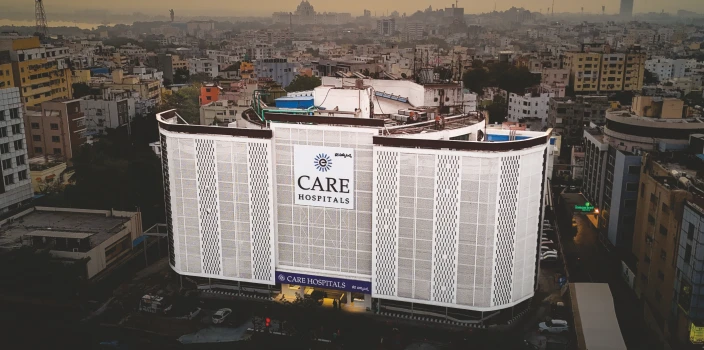
CARE Hospitals, Banjara Hills, Hyderabad
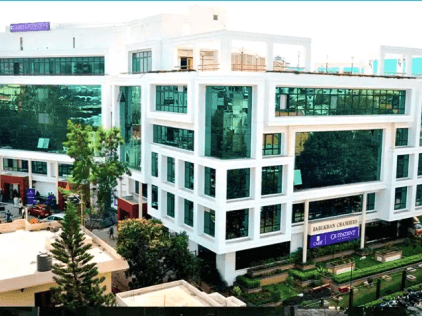
CARE Hospitals Outpatient Centre, Banjara Hills, Hyderabad
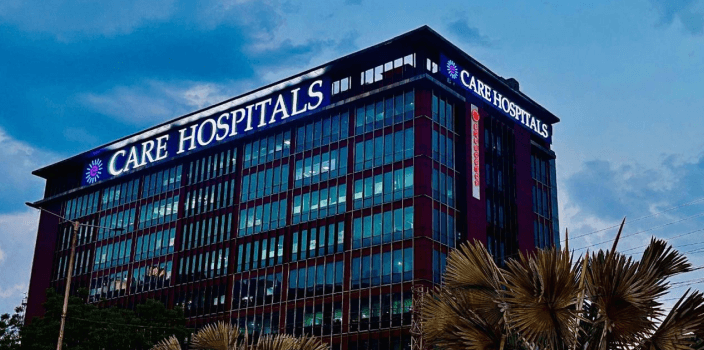
CARE Hospitals, HITEC City, Hyderabad
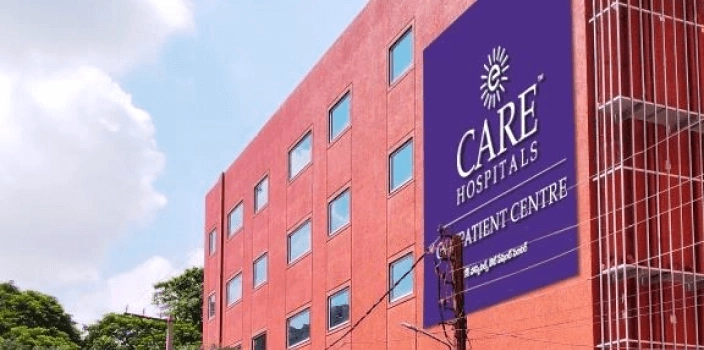
CARE Hospitals Outpatient Centre, HITEC City, Hyderabad

Gurunanak CARE Hospitals, Musheerabad, Hyderabad
CARE Hospitals, Nampally, Hyderabad

CARE Hospitals, Malakpet, Hyderabad

CARE Hospitals, Bhubaneswar

Ramkrishna CARE Hospitals, Raipur
CARE Hospitals, Ramnagar, Visakhapatnam

CARE Hospitals, Health City, Arilova
Frequently Asked Questions
Cranioplasty surgery repairs a missing or damaged section of the skull, most often after a prior operation to relieve brain swelling.
Cranioplasty restores skull protection and normal contour after bone has been removed due to trauma, stroke, tumour or infection.
Anyone with a skull defect following a prior craniectomy, whether from injury, stroke, tumour surgery or infection, may need cranioplasty.
Timing varies, but most surgeons wait until brain swelling has settled and imaging confirms the patient is stable enough for reconstruction.
Yes, traumatic brain injury requiring a decompressive craniectomy is one of the most common reasons for later cranioplasty.
A surgeon reopens the original incision, positions the chosen implant into the defect and secures it with small plates and screws.
Surgery generally takes between ninety minutes and three hours, depending on the size and complexity of the defect.
Yes, cranioplasty is considered major surgery, as it involves the skull and requires general anaesthesia.
The doctor gives you general anaesthesia to keep the patient fully unconscious throughout the procedure.
Anaesthesia prevents pain during surgery, and discomfort afterwards is generally manageable with standard pain medication.
Most patients recover over several weeks with gradual improvement in comfort and activity levels throughout that period.
Usually you need to stay in hospital for several days, allowing the surgical team to monitor healing closely.
Light activities often resume within a couple of weeks. Whereas more strenuous activity is to wait until full clearance from the surgeon.
Protecting the head from impact, avoiding strenuous exercise and attending all follow-up appointments support safe healing.
Possible risks include infection, bleeding, fluid collection, implant issues and a small risk of seizures.
Most implants (particularly titanium and PEEK) are designed to last a lifetime without needing replacement.
A neurosurgeon (trained specifically in brain and skull procedures) performs cranioplasty.
Larger hospitals with dedicated neurosurgery departments, such as CARE Group Hospitals have surgeons experienced in cranioplasty.
Still Have a Question?