

-
Centre of Excellence
Specialties
Treatments and Procedures
 HyderabadCARE Hospitals, Banjara Hills CARE Outpatient Centre, Banjara Hills CARE Hospitals, HITEC City CARE Hospitals, Nampally Gurunanak CARE Hospitals, Musheerabad CARE Hospitals Outpatient Centre, HITEC City CARE Hospitals, Malakpet
 Raipur
 Bhubaneswar
 Visakhapatnam
 Nagpur
 Indore
 Chh. Sambhajinagar
 Clinics & Medical Centers


-

-

-

-

-

-
Follow Us

Best Hospital for Pyelolithotomy Surgery in Hyderabad
- Advanced Technology
- Shorter Hospital Stay
- Pre & Post-Operative Care
- All Insurance Accepted

Chat With Our Experts
Get second opinion on Whatsapp
25 lakhs+
Happy Patients
Experienced and
skilled surgeons
17
Health Care Facilities
Top most Referral Centre
for Complex Surgeries
Advanced Pyelolithotomy Surgery
Pyelolithotomy has emerged as a highly effective solution for managing kidney stones. New surgical techniques have substantially expanded the role of this procedure in treating stone disease, especially when you have large or multiple renal stones. Extended pyelolithotomy offers a method for removing problematic stones with minimal bleeding or damage to kidney tissue. This detailed guide explores the pyelolithotomy surgery meaning, surgical process, and what patients can anticipate before, during, and after the operation.
Why CARE Group Hospitals is Your Top Choice for Pyelolithotomy Surgery in Hyderabad
CARE Hospitals is the best known destination for pyelolithotomy surgery in Hyderabad. Patients receive care from trained surgeons known for their expertise in robot assisted and minimally invasive techniques. The hospital's commitment extends beyond the operating theatre with detailed support services including imaging, laboratory facilities and blood bank access around the clock. Our skilled urologists carefully evaluate each case to determine the best surgical method aiming to achieve the best results.
Best Pyelolithotomy Surgery Doctors in India






















Innovative Surgical Breakthroughs at CARE Hospital
CARE Hospitals pioneers urological surgery with its technological capabilities. The facility uses advanced robot assisted systems (specifically the da Vinci and Hugo RAS systems). These systems have revolutionised how complex kidney stones are managed. These systems enable surgeons to preserve renal function and remove stones intact. reducing the risk of fragmentation of stones. Patients with anatomically anomalous kidneys benefit from the improved precision these technologies provide especially.
Indications for Pyelolithotomy Surgery
Doctors recommend pyelolithotomy for patients facing specific challenges. These include:
- Large renal pelvis stones
- Partial staghorn calculi with a wide extra-renal pelvis
- Complex large-volume stones that resist conventional access methods
- Cases involving anatomic abnormalities that preclude percutaneous nephrolithotomy are resolved with pyelolithotomy.
Types of Pyelolithotomy Surgery Procedures
Three primary approaches address different stone presentations. They are:
- Robot-assisted pyelolithotomy for large renal pelvis stones and partial staghorn calculi
- Robot-assisted nephrolithotomy which your doctor may use for targeting stones within calyceal diverticulum or those eroding into renal parenchyma
- Robot-assisted Anatrophic Nephrolithotomy that is reserved for complete staghorn stones where other approaches fail.
Pre-surgery Preparation
Doctors conduct blood tests, urine analysis and imaging studies before surgery to assess stone location and kidney function. Patients must avoid blood-thinning medications for at least two weeks to minimise bleeding risk. Fasting after midnight on surgery day is mandatory. A liquid diet 24 hours before helps prepare the body.
Pyelolithotomy Surgical Procedure
The pyelolithotomy surgery steps are:
- The surgical team administers general anaesthesia before positioning patients on their side.
- Surgeons create small incisions for instrument access and mobilise the colon.
- Surgeons open Gerota's fascia to expose the renal pelvis.
- The surgeon extracts the stone using specialised instruments therafter closing the incision with absorbable sutures.
- A ureteral stent often remains in place for 4-6 weeks to make healing easier.
Post Surgery Recovery
Most patients remain hospitalised for 1-3 days after robot-assisted procedures. Open pyelolithotomy surgery requires 2-5 days of hospitalisation. Pain management involves standard medications and rest. Complete recovery spans 3-4 weeks for laparoscopic approaches and 4-6 weeks for open procedures.
Risks
Common complications are:
- Urinary tract infections
- Bleeding
- Changes in kidney function
- Development of urinary stricture.
- Urine leakage can occur if the renal pelvis doesn't seal properly.
Benefits of Pyelolithotomy Surgery
Pyelolithotomy surgery offers numerous benefits. These are:
- Laparoscopic pyelolithotomy effectively removes stones that cannot be treated with other minimally invasive methods.
- The procedure results in less blood loss and lower fever rates.
- Provides a durable solution for complex or large renal stones.
- Fewer complications compared to percutaneous nephrolithotomy.
Insurance Assistance for Pyelolithotomy Surgery
Many health insurance covers hospitalisation expenses, surgeon's fees and nursing charges. Pre-hospitalisation costs are included. Many policies also cover ambulance services and post-hospitalisation expenses.
Second Opinion for Pyelolithotomy Surgery
Getting a second opinion proves beneficial when diagnosed with complex stones or unusual kidney anatomy. Studies show that many second opinions lead to major changes in diagnosis or treatment. At CARE Hospitals, our experienced urologists offer expert second opinion services by carefully reviewing medical history, imaging reports, and diagnostic findings. The team provides clear guidance on surgical approaches, expected outcomes, and recovery.
Conclusion
Pyelolithotomy offers patients a reliable path towards freedom from kidney stones. This procedure helps in getting rid of stones and keeps complications to a minimum. Pyelolithotomy has helped a lot of people who have struggled with tough to remove kidney stones. Choosing between robot-assisted or traditional surgery depends on your medical and anatomical conditions. If you are facing a complication, it is worth talking to a skilled surgeon about this option. At CARE Hospitals, you will find caring experts, the latest equipment, and an ecosystem focussing on your safety and recovery. All of this can help you feel better in the long run and keep your kidneys healthy.
Pyelolithotomy Surgery Hospitals in India
-
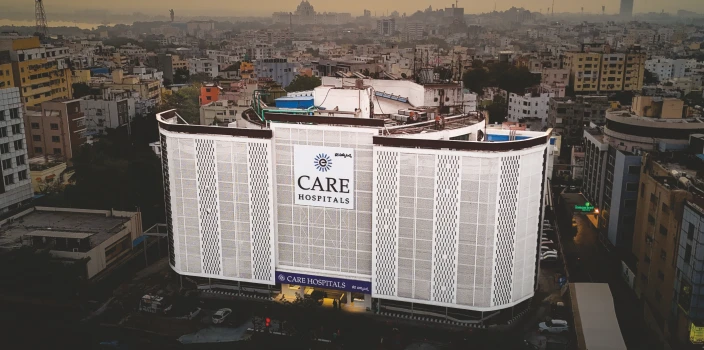
CARE Hospitals, Banjara Hills, Hyderabad

CARE Hospitals Outpatient Centre, Banjara Hills, Hyderabad

CARE Hospitals, HITEC City, Hyderabad

CARE Hospitals Outpatient Centre, HITEC City, Hyderabad

Gurunanak CARE Hospitals, Musheerabad, Hyderabad

CARE Hospitals, Nampally, Hyderabad

CARE Hospitals, Malakpet, Hyderabad

CARE Hospitals, Bhubaneswar

Ramkrishna CARE Hospitals, Raipur

CARE Hospitals, Ramnagar, Visakhapatnam

CARE Hospitals, Health City, Arilova
Frequently Asked Questions
Pyelolithotomy removes large kidney stones from the renal pelvis through surgical intervention. Surgeons access the kidneys via incisions in the abdomen and extract stones directly using specialised instruments. Non-invasive methods that fail to address complex stone formations make this approach necessary.
Pyelolithotomy removes large kidney stones from the renal pelvis through surgical intervention. Surgeons access the kidneys (via incisions in the abdomen) and extract stones directly using specialised instruments. If the non invasive methods are unable to give you relief from complex stone formations this method may become necessary.
Patients experience mild pain at incision sites during the first few days. Most people find the pain tolerable and well-controlled throughout recovery. Standard pain medication manages pain well.
Open pyelolithotomy requires between 1.5 and 3 hours. Minimally invasive techniques like robot-assisted procedures and laparoscopic approaches require 2 to 4 hours. Stone size and anatomical complexity influence the exact duration.
Common complications are:
- Bleeding.
- Urinary tract infections.
- Minimal kidney function changes.
- Injury to surrounding structures.
- Surgical incision infection.
- Healing problems.
- Blood clot formation.
Recovery varies by technique. Laparoscopic procedures require 2-4 weeks. On the other hand open pyelolithotomy needs 4-6 weeks. Your body heals from surgical intervention during this period.
Stop blood-thinning medications two weeks beforehand. Maintain a liquid diet 24 hours before the procedure and fast after midnight. Your doctor will arrange pre-admission tests.
Surgeons position you laterally under general anaesthesia. Small incisions allow instrument access to reach the renal pelvis. Stone extraction takes 2-4 hours based on complexity.
Blood spotting at incision sites appears normal at first. Pink-tinged urine may persist for several days. You should walk soon after surgery to prevent clots.
Follow-ups occur at two weeks after surgery. Stent removal happens after 4-6 weeks through cystoscopy. Ultrasound scans confirm stone clearance.
Refrain from lifting objects exceeding 10 pounds for four weeks. Avoid strenuous exercise and smoking during recovery.
Laparoscopic pyelolithotomy has higher stone-free rates than PCNL. Your stone characteristics determine the ideal approach.
Still Have a Question?